
Engineered Backing Paper & Adhesive Substrates
Explore specialized release materials engineered for high-speed automated dispensing, anti-curling stability, extreme thermal endurance, and precise die-cutting integrity.



Engineering Excellence in Backing Paper Materials & Release Liners
In modern high-speed pressure-sensitive labeling systems, automated packaging operations, and die-cut component manufacturing, the backing paper material—commonly designated as the release liner—serves as an unsung yet structurally critical foundation. While end consumers and brand owners focus on face stock aesthetics and surface print durability, packaging engineers and material scientists understand that a self-adhesive label system is only as reliable as its release liner carrier. The backing paper governs mechanical tension control during high-speed rotary die-cutting, dictates matrix stripping efficiency, protects the pressure-sensitive adhesive layer during prolonged storage, and determines optical sensor readability during automatic label application.
Established in February 1992, Xiamen Lianhua Printing Co., Ltd. has dedicated over three decades to advancing the material science of converting backing papers, self-adhesive labels, ABS dual-color plates, ticket cards, and instruction manuals. Operating out of Xiamen, China under rigorous ISO 9001 and ISO 14001 quality management systems, Lianhua Printing integrates advanced solventless silicone coating technology, precision calendering, and dynamic release force formulation to produce export-grade backing paper solutions that exceed global RoHS and REACH environmental standards.
1. Substrate Classification & Material Chemistry of Backing Papers
Selecting the appropriate backing paper requires a meticulous evaluation of substrate physical density, caliper uniformness, internal tear propagation, surface smoothness, and moisture equilibrium. Backing materials generally fall into three distinct structural categories:
Supercalendered Glassine (SCG)
Glassine backing paper is manufactured through intensive wet-end refining followed by multi-nip supercalendering. This process compresses cellulose fibers into a high-density, translucent sheet with exceptional dimensional stability and uniform thickness (typical caliper 54–80 gsm). Glassine's high translucency allows photo-electric optical sensors on automatic labeling lines to instantly detect label gaps, making it the global standard for high-speed roll-to-roll labeling.
Clay-Coated & Poly-Coated Kraft (CCK / PCK)
Kraft backing papers utilize long-fiber virgin wood pulp to deliver superior tensile strength and puncture resistance. Clay-Coated Kraft (CCK) features a kaolin clay surface seal that prevents silicone absorption while maintaining lay-flat stability for sheeted labels. Poly-Coated Kraft (PCK) incorporates a polyethylene barrier layer extruded onto both sides of the kraft base, providing an impervious moisture barrier ideal for graphic films and outdoor decals.
Synthetic Polymeric Films (PET / PP)
Polyester (PET) and Polypropylene (PP) filmic release liners represent the pinnacle of mechanical precision. Biaxially Oriented PET release liners (typically 19 to 30 microns thick) offer near-zero thickness variation and immunity to humidity fluctuations. PET liners eliminate matrix stripping web-breaks during ultra-high-speed rotary die-cutting and enable crystal-clear label presentation ("no-label look") without optical distortion.
Technical Information Gain: Release Force & Silicone Cross-Linking Dynamics
The performance of a backing paper relies on its silicone release coating. Lianhua Printing utilizes platinum-catalyzed thermal-cure silicone chemistry system applied via multi-roll smooth coater heads. The release force—measured in Grams per 25mm width (g/25mm) at a standardized 180° peel angle—is engineered into specific operational tiers:
- Ultra-Light Release (5–12 g/25mm): Engineered for wide-format graphic films, heavy high-tack acrylic adhesives, and automatic labeling applications requiring instant release without label stretch.
- Medium/Standard Release (15–30 g/25mm): The industry standard for prime packaging labels, logistics barcodes, and thermal transfer paper label conversions.
- Tight/Heavy Release (35–80+ g/25mm): Designed for intricate die-cut parts, micro-labels, and double-sided adhesive mounting tapes where differential release values are critical for sequential liner stripping.
2. Comparative Engineering Specifications Table
To assist procurement directors and converting engineers in identifying the optimal backing paper substrate for specific manufacturing environments, the following technical matrix outlines key physical performance metrics:
| Substrate Type | Grammage Range (gsm) | Caliper Tolerance (μm) | Tensile Strength (MD/CD) | Translucency (%) | Primary Industrial Application |
|---|---|---|---|---|---|
| Supercalendered Glassine (Yellow/White/Blue) | 54 – 80 gsm | ± 2.5 μm | High / Medium | 45% – 65% | High-speed roll label auto-applicators, pharmaceutical labeling. |
| Clay-Coated Kraft (CCK) | 65 – 120 gsm | ± 4.0 μm | Very High / High | Opaque (< 10%) | Sheeted offset labels, promotional stickers, office A4 sheets. |
| Poly-Coated Kraft (PCK) | 80 – 140 gsm | ± 3.5 μm | Superior / High | Opaque (< 5%) | Outdoor PVC decals, automotive graphics, moisture-sensitive storage. |
| Biaxially Oriented PET Film | 25 – 42 gsm (19–30μm) | ± 0.8 μm | Ultra-High Tensile | 90% – 95% | Beverage clear-on-clear labels, RFID inlay carriers, electronic die-cuts. |
| Super-Thick Heavy-Duty Kraft Liner | 120 – 180 gsm | ± 5.0 μm | Maximum Tear Load | Opaque | Tire tread labels, industrial double-coated tape backings, GHS chemical drums. |
Global Commercial Landscape & China Supply Chain Resilience
Leveraging Xiamen's maritime logistics port infrastructure, deep raw material access, and advanced converting automation to deliver cost-optimized, resilient backing paper supply chains.
Global Industrial Market Drivers
The global release liner and backing paper market is expanding rapidly, fueled by booming e-commerce fulfillment, cold-chain food distribution, variable-data logistics labeling, and pharmaceutical serialization tracking. Modern manufacturing lines operate automatic labeling heads at speeds exceeding 300 meters per minute. At these velocity levels, any variation in release liner thickness, any pinhole in silicone coverage, or any micro-fracture from rotary die anvil blades will cause catastrophic webbing breaks and production downtime. Global buyers require backing paper suppliers who combine raw material paper stability with advanced inline surface defect detection.
China Manufacturing Efficiency & Infrastructure
China's integrated industrial supply chain provides an unmatched ecosystem for specialty paper making, silicone chemistry synthesis, and multi-station rotary converting. At Xiamen Lianhua Printing Co., Ltd., our strategic location near major ocean container terminals allows us to source premium virgin kraft and glassine base stocks while maintaining direct relationships with chemical suppliers. By operating integrated precision silicone coating, slit-rewinding, and rotary flexographic converting lines under one roof, Lianhua Printing dramatically reduces lead times, optimizes yield efficiency, and passes substantial cost savings to international OEM clients.
Specialized Localized Application Scenarios
From extreme freezer environments to high-precision electronics die-cutting, engineered backing paper formulations resolve specific operational challenges.
Cold-Chain & Freezer Packaging
In sub-zero food processing and cryogenic pharmaceutical storage (-40°C to -80°C), condensation and humidity soften standard backing papers, causing moisture expansion and edge curling. Lianhua’s moisture-resistant sealed CCK and anti-curl backing paper utilize dual-side moisture barrier sealing, preventing water vapor absorption during rapid freezing and thaw cycles.
Automotive & High-Tack Rubber Labels
Tire manufacturing and rubber hose identification require aggressive vulcanization-grade rubber adhesives. These adhesives exhibit high initial tack and plasticizer migration. Our heavy-duty thick kraft backing paper (120–150 gsm) delivers exceptional burst resistance and features a high-density silicone barrier that prevents aggressive adhesive chemistry from penetrating the paper fiber.
Electronics & PCB Insulation Labels
Surface-mount technology (SMT) assembly and battery insulation involve thermal exposure exceeding 260°C. Utilizing polyimide (PI) face stocks combined with ultra-smooth 25-micron PET backing liners ensures zero silicone transfer or outgassing during reflow soldering operations, preserving circuit board electrical integrity.
Technology Roadmap & Sustainability Outlook (2026–2035)
Pioneering eco-friendly release chemistries, ultra-thin film liners, and closed-loop liner recycling to drive sustainable pressure-sensitive packaging worldwide.
1. Substrate Caliper Reduction & Resource Efficiency
The global labeling industry is aggressively pursuing material downsizing to reduce freight carbon footprints and landfill waste volume. Traditional 60 gsm glassine liners are rapidly giving way to ultra-dense 48 gsm and 45 gsm glassine formulations, while standard 30-micron PET release films are transitioning to 19-micron and 12-micron ultra-thin carriers. Lianhua Printing is investing in next-generation tension-control rewinding machinery designed to handle light-gauge liners without web deformation.
2. Bio-Based & Solventless Silicone Systems
Moving away from solvent-borne silicones, 100% solventless thermal platinum-cure and UV-led cure silicone systems eliminate volatile organic compound (VOC) emissions during coater drying. Furthermore, material scientists are developing bio-based silicone release agents synthesized from plant-derived organosilicon precursors, enabling true biodegradable liner options for compostable packaging labels.
3. Spent Liner Circular Economy & Upcycling
Historically, spent silicone-coated backing papers posed recycling challenges due to the hydrophobic cross-linked silicone layer. Lianhua Printing supports global circular economy initiatives by partnering with paper repulping mills utilizing eco-friendly de-siliconization enzymes. Collected spent glassine liners are de-siliconized, pulped, and converted back into high-grade recycled tissue and linerboard substrates.
Linerless Labeling Technology Synergy
As linerless labeling technology grows in variable-data direct thermal shipping applications, Lianhua Printing provides dual-track solutions: manufacturing high-performance release backing paper for complex die-cut prime labels while engineering silicone top-coat release varnish layers for linerless roll conversions.
Localization Support & Regulatory Compliance
Our products undergo rigorous multi-point testing to guarantee adherence to international environmental regulations, food contact standards, and strict physical tolerances.
RoHS 3 & REACH SVHC
All backing papers, silicone releases, and face stocks comply fully with EU Directive 2015/863 (RoHS 3) and candidate lists of Substances of Very High Concern (SVHC) under REACH, ensuring clean compliance for global exports.
FDA Food Contact & ISEGA
For food and beverage packaging, our backing papers comply with FDA 21 CFR 175.300 and ISEGA certification standards for indirect and direct dry food contact, guaranteeing zero toxic migration.
ISO 9001 Process Control
Every production batch undergoes dynamic release force testing (FINAT FTM 3 & FTM 4 test methods), electronic caliper mapping, and tensile breaking strength analysis prior to export packaging.
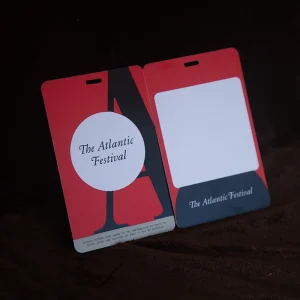
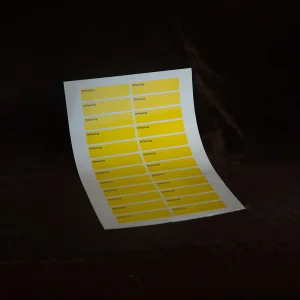
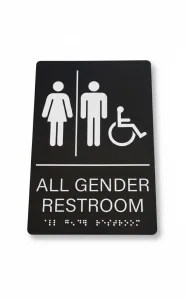
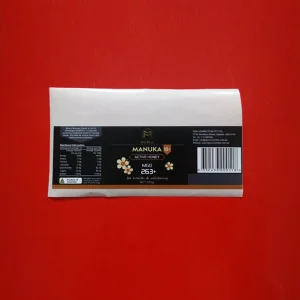
Specialized Industrial Cards, ABS Boards & Specialty Labels
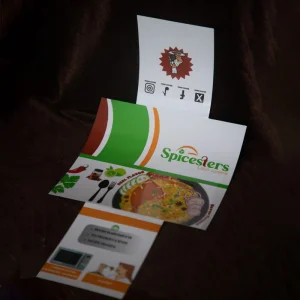
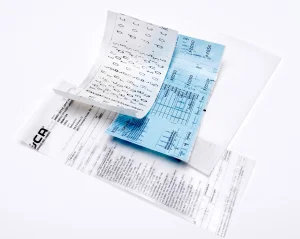
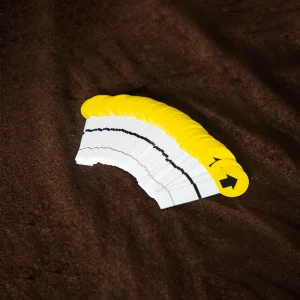
Discover our full manufacturing range including high-temperature PI labels, durable PET cards, tactical tactile braille ABS boards, and flexible PE substrates.

Frequently Asked Technical Questions (FAQ)
Clear answers to complex technical queries regarding backing paper selection, release force mechanics, silicone migration, and customs shipping.
Is Xiamen Lianhua Printing a direct factory or a trading agent?
Xiamen Lianhua Printing Co., Ltd. is a direct OEM/ODM manufacturing factory established in February 1992 in Xiamen, China. We operate fully integrated coated paper, flexo printing, rotary die-cutting, ABS engraving board production, and ticket card converting facilities in-house under an ISO-certified quality system.
What is the difference between Glassine and CCK backing paper?
Supercalendered Glassine (SCG) is a translucent, high-density paper ideal for roll labels used on automated labeling machines equipped with optical gap sensors. Clay-Coated Kraft (CCK) is an opaque, lay-flat paper liner treated with a kaolin clay coating, specifically designed for sheeted labels, offset printing, and manual application where dimensional flat stability is paramount.
How do you measure and control silicone release force accuracy?
Release force is evaluated using standardized FINAT Test Methods (FTM 3 for low-speed 300mm/min release, FTM 4 for high-speed 10m/min release). We test release values using digital tensile testers at 180° peel angles. Silicone coat weight is monitored in real-time using X-ray fluorescence (XRF) sensors to maintain coating uniformity within ± 0.05 g/m².
What causes label matrix stripping web-breaks during die-cutting?
Web breaks are typically caused by uneven liner caliper, deep die-blade anvil marks ("die strike") that fracture the paper fibers, or inconsistent silicone cross-linking. Lianhua’s high-density glassine and PET liners feature high internal bond strength and uniform caliper tolerances (± 2.5μm) to withstand intense tension during fast matrix stripping.
Are Lianhua's backing papers RoHS and REACH compliant for export?
Yes. We enforce strict green purchasing policies. All raw wood pulps, PET films, silicone release chemistry, and solventless thermal-cure formulations are certified compliant with EU RoHS 3, REACH SVHC, FDA food contact regulations, and FSC chain-of-custody standards.
What technical parameters are required to obtain a custom quotation?
To provide an exact engineering quote, please provide: 1) Backing paper type & gsm/caliper (e.g., 62gsm Glassine or 25μm PET), 2) Face stock material, 3) Desired release force range (Light, Medium, Tight), 4) Label dimensions & roll/sheet format, 5) Application temperature environment, and 6) Target order volume.
Need Custom Backing Paper Materials or Specialty Label Conversion?
Consult with our Senior Converting Engineers to receive free material samples, release force test reports, and factory-direct OEM pricing.