
How to Choose Waterproof Labels for Your Products?

Time:2026-11-24 Author:Madeline
0%

Waterproof Labels help products stay identifiable when they face condensation, splashes, or routine cleaning. Yet “waterproof” does not describe one universal performance level. A label that holds on a dry glass jar may lift from a chilled bottle, especially around its edges. Small details matter.

Choosing well starts with the product’s real conditions. Consider the surface material, temperature changes, moisture exposure, and how long the label must remain readable. A smooth plastic container and a textured paperboard box need different adhesive behavior. So do a beverage bottle stored in ice and a bathroom product exposed to occasional splashes. The label face material, adhesive, and printing method all contribute to the result. One strong material cannot fix every mismatch.

This guide explains how to compare these factors and ask useful questions when reviewing samples. Check whether the supplier can provide technical specifications, recommended applications, and test guidance for your intended use. Then try labels on the actual container, not just a clean sample sheet. Apply them as directed and observe them after exposure to moisture, handling, and temperature changes. That simple test can reveal curling, fading, or weak adhesion. It is not perfect, though; real storage and use may differ. A careful choice balances durability, appearance, cost, and the product’s journey from filling line to customer.
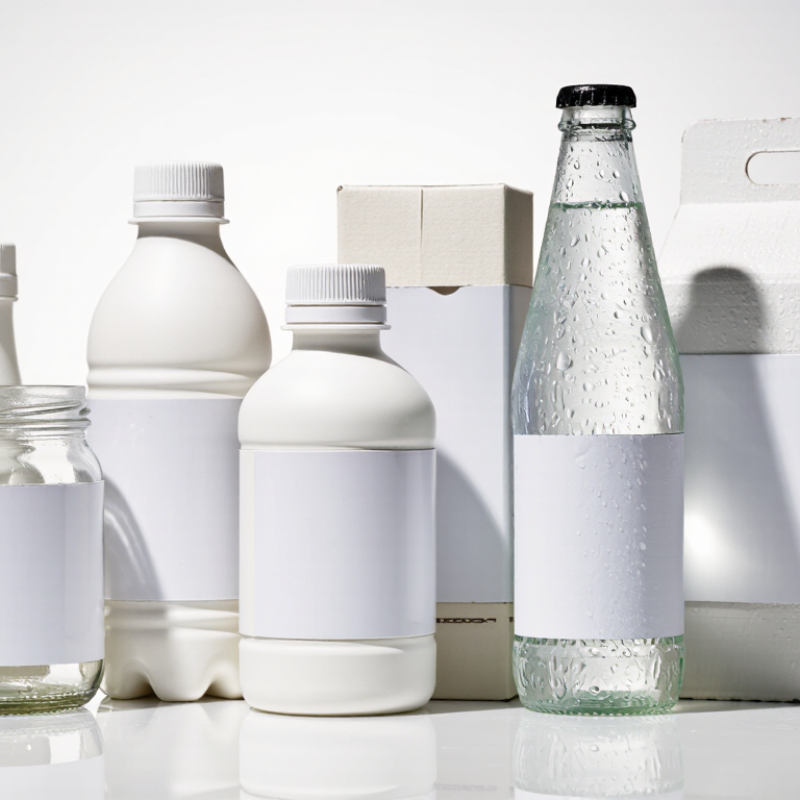
How to Choose Waterproof Labels for Your Products?

Identify the Product’s Exposure to Water and Other Environmental Conditions

Before choosing a waterproof label, map where the product travels and how people handle it. A jar in a chilled display may collect condensation, while a detergent bottle may get splashed near a sink. Brief contact differs from soaking. Note the water source, temperature, exposure time, and whether staff wipe the surface. Small details matter.

Check more than water. Outdoor packages may face sunlight, rain, dust, and temperature swings. Containers moving from cold storage to warm counters can develop moisture beneath the label. Oils, cleaners, or hand lotions may weaken adhesive or blur printed information. Consider the container material, too: glass, textured plastic, and flexible film can hold labels differently.

Test labels on filled products, not just clean sample sheets. Apply them to dry and damp surfaces, then recreate realistic splashes, refrigeration, and handling. Check for lifted corners, fading, smearing, or bubbles. One overlooked factor is the wipe-down routine. It may be harsher than the water itself. If conditions vary, record the toughest likely exposure and review material and adhesive data with a qualified supplier. A quick test helps, but it may not reflect months of use; that uncertainty deserves attention.

How to Choose Waterproof Labels for Your Products?

Identify the Product’s Exposure to Water and Other Environmental Conditions

IEC 60529 specifies minimum test durations for these enclosure water-resistance ratings. Use the exposure your product actually faces—such as splashes, water jets, or immersion—to guide label material and adhesive selection. These are enclosure test durations, not waterproof-label ratings; test the complete label on the product under real use conditions.

Compare Waterproof Label Materials and Their Durability

Waterproof label performance depends on both the face material and the adhesive. Coated paper can resist splashes, but its edges may soften after repeated soaking. It may suit dry goods or brief contact with moisture. Not a long bath.

Polypropylene and polyester films handle water better because they absorb less than paper. Polypropylene is flexible and can work well on curved bottles, though heat and abrasion may still affect the print. Polyester is generally more dimensionally stable and suited to tougher handling, but it may cost more and feel stiffer. The film is only part of the choice. Compatible ink or an overlaminate can help reduce smearing and fading. The adhesive must also suit the container’s surface, temperature, and exposure time. A label tested on clean glass may behave differently on a chilled, textured plastic bottle.

Recreate real conditions before selecting a material: chill a filled container, wipe it repeatedly, then leave it wet overnight. Check the corners and text. Test it wet. It is easy to focus on the film and overlook a weak adhesive edge. That small detail can undo an otherwise durable label. “Waterproof” is a performance goal, not a guarantee for every material combination.

How to Choose Waterproof Labels for Your Products? — Compare Waterproof Label Materials and Their Durability
Label Material Water Resistance Typical Durability Temperature Considerations Best-Suited Applications Important Limitations
Coated Paper Low to moderate. A coating can help resist splashes, but unlaminated paper may soften or lose strength when soaked. Generally suited to short-term indoor use; performance drops with prolonged moisture, rubbing, or outdoor exposure. Usually best in ordinary indoor conditions. Heat and condensation can affect the paper and its adhesive. Dry goods, short-term packaging, and products that may encounter occasional splashes. Not a reliable choice for frequent washing, immersion, or long-term outdoor use.
Polypropylene (PP) High. The non-porous film does not absorb water and performs well in wet environments. Good resistance to moisture, tearing, and everyday handling. A laminate can improve scuff resistance. Suitable for many refrigerated and room-temperature applications; verify the specific label and adhesive for freezer or high-heat use. Bottles, food containers, personal-care packaging, and products exposed to splashes or condensation. Can stretch or tear under demanding conditions; compatibility depends on the surface and adhesive.
Polyethylene (PE) High. The film resists water and is often selected for damp or frequently handled products. Flexible and resistant to cracking when bent or squeezed; typically less stiff and less dimensionally stable than PET. Can work well on flexible containers. Check the adhesive’s stated application and service-temperature range. Squeeze bottles, curved containers, flexible packaging, and products handled in wet areas. May stretch during application or use, which can affect label alignment and barcode readability.
Polyester (PET) High. PET film resists water and maintains its shape in many demanding environments. High resistance to tearing, abrasion, and dimensional change; often chosen for longer-lasting identification labels. Often suitable for wider temperature ranges than paper labels, but actual limits vary by film and adhesive construction. Equipment, chemical containers, appliances, and products requiring durable, legible labels. Usually stiffer than PE and may not conform as well to highly flexible or sharply curved surfaces.
Vinyl (PVC) High. Flexible vinyl films commonly withstand rain, splashes, and repeated wet handling. Good flexibility and outdoor weather resistance; durability depends on the film grade, printing, adhesive, and any protective coating. Check the product specification for prolonged heat, cold, or outdoor temperature cycling. Outdoor equipment, curved surfaces, safety markings, and applications where conformability is important. Not every vinyl construction is suitable for every chemical or regulated application; verify material requirements.
Waterproof Film with Laminate Very high when the film, print, laminate, and adhesive are designed to work together. Added laminate can improve resistance to abrasion, moisture, and some cleaning agents. Overall temperature performance is limited by the least-resistant component, often the adhesive or laminate. Labels exposed to repeated handling, cleaning, or demanding service conditions. More layers do not guarantee suitability for immersion, solvents, or extreme temperatures; test the complete label construction.
Selection note: “Waterproof” performance depends on the complete label system—not just the face material. Confirm the adhesive, print method, laminate, surface type, application temperature, and exposure conditions. For critical uses, test samples on the actual product.

Choose an Adhesive That Bonds to Your Product’s Surface

How to Choose Waterproof Labels for Your Products?
Choose an Adhesive That Bonds to Your Product’s Surface

Water resistance starts at the bond, not just the label face. A waterproof film can remain intact while its edges peel from a bottle, jar, or tool. Match the adhesive to the actual surface: glass, treated metal, textured plastic, and flexible packaging behave differently. Low-surface-energy plastics, such as some polyethylene containers, often need adhesives designed for them. Dust, oil, condensation, and residue can weaken contact, even when a surface looks clean. Wipe and dry it before application.

Think about use conditions, too. Will the product sit in a refrigerator, get splashed, or face repeated handling? Some adhesives need time to build bond strength, so test after the label has rested under real conditions. Apply it to a sample container and check the corners after chilling, wiping, or squeezing. A label that holds indoors may lift outdoors. There is no universal adhesive, and a small test may miss production variation. That limitation matters.

Tips: Ask your label supplier for adhesive guidance based on your exact substrate and temperature range. Test containers from different batches. Press from the center outward, especially on curved surfaces. Keep the application area dry. If the label wrinkles or lifts, revisit surface preparation and adhesive choice before changing the label material.

Select Printing Methods and Finishes for Clear, Lasting Labels

For waterproof labels, choose a printing method that suits both the material and the production run. Digital printing works well for short runs, changing product details, and several design versions. Flexographic printing can be efficient for larger, repeat orders. For labels exposed to water, ask whether the ink is compatible with the chosen film; a durable face material cannot prevent ink from smearing. Small text needs special attention. Check a printed sample under the lighting where customers will read it.

Finishes help protect the print and shape the label’s appearance. A clear laminate can guard against abrasion, splashes, and frequent handling, while a varnish may provide a lighter protective layer. Gloss can make colors feel brighter; matte can reduce glare on curved bottles. Neither finish fixes poor adhesion. Condensation, cold storage, and textured surfaces can all affect performance. One detail is easy to overlook: the label’s edges may lift even when its center stays firmly attached. Test finished labels on the actual packaging, then expose them to water, rubbing, and temperature changes before ordering at scale.

Tips: Keep a few samples in a damp refrigerator. Rub the print with a clean cloth, and inspect the edges after drying. If results vary, adjust the adhesive or finish—not just the artwork.

Test Label Performance and Verify Relevant Compliance Needs

How to Choose Waterproof Labels for Your Products?

Test Label Performance and Verify Relevant Compliance Needs

A waterproof claim needs testing on the actual container, not just the label stock. Try the intended surface: a curved bottle, a textured jar, or a chilled pouch. Apply labels using the expected production method, then allow adhesive to settle. In a small pilot, test at least ten samples. It is not a perfect scientific threshold, but one successful label proves very little.

Expose samples to water, condensation, cleaning agents, and temperature changes your product may encounter. Check for edge lifting, ink smearing, fading, and loss of readability. Record results before and after exposure. FINAT’s Technical Handbook describes peel-adhesion testing, with results commonly reported in newtons per 25 millimetres. ASTM D3330 also provides methods for measuring pressure-sensitive tape peel adhesion. These methods help compare materials; they do not guarantee performance in every real-world condition.

Check compliance separately from durability. Requirements may depend on the product, destination market, and label claims. Food packaging, for example, can raise questions about ink and adhesive suitability, even when the label never touches food directly. Review applicable regulations and supplier documentation before printing. Keep material declarations and test records with the product file.

Small details matter. A label may survive a sink test yet fail after weeks in a damp refrigerator. I would retest when the container, ink, or adhesive changes. That extra check can feel repetitive. It is still useful.

FAQS

Why can a waterproof label still peel off?

The film may resist water while the adhesive fails on the container. Glass, textured plastic, and treated metal need different adhesive choices.

How should I prepare a container before applying a label?

Remove dust, oil, and residue, then let the surface dry. Even a clean-looking bottle may have a thin film that weakens the bond.

What conditions should I consider when choosing an adhesive?

Consider refrigeration, splashes, repeated handling, and squeezing. Test a sample after chilling or wiping; indoor results may not predict outdoor performance.

How can I check whether a label stays attached?

Apply samples to the actual packaging and let the adhesive settle. Try several containers, then inspect the corners after water exposure and drying.

Which printing method works for waterproof labels?

Digital printing suits short runs and changing details. Flexographic printing may suit larger repeat orders. Check that the ink works with the label material.

Do laminate and varnish protect labels in the same way?

A clear laminate can help protect against rubbing and splashes. Varnish offers a lighter protective layer. Neither fixes weak adhesion.

How should I test label performance before a large order?

Try at least ten samples in a small pilot, using the expected application method. Check for lifting, smearing, fading, and unreadable text. Ten is not a guarantee.

What compliance details should I review before printing?

Check requirements for the product and destination market, including ink and adhesive suitability for food packaging. Keep supplier documents and test records together.

When should I repeat label testing?

Retest when the container, ink, or adhesive changes. A label may pass a sink test but fail after weeks in a damp refrigerator.

Conclusion

Choosing Waterproof Labels begins with understanding how a product will encounter water, moisture, heat, sunlight, chemicals, or frequent handling. These conditions help determine the level of durability required. Compare label materials for resistance to fading, tearing, peeling, and prolonged exposure, then consider the product’s surface, such as glass, plastic, or a textured container. The right adhesive should create a reliable bond without lifting or slipping during storage, transport, or use.

Printing methods and protective finishes also affect how clearly information remains visible over time. Select options that suit the label material and the environment, while keeping text and graphics easy to read. Before using labels at scale, test them under realistic conditions, including exposure to moisture and temperature changes. Check that they stay attached and legible, and verify any relevant product, industry, or packaging requirements. These steps help ensure Waterproof Labels perform consistently and meet the practical needs of the product.

Madeline

Madeline

Madeline is a dedicated marketing professional with a wealth of expertise in our company's core offerings. With a keen understanding of the industry, she brings a unique perspective to her role, consistently delivering high-quality content that highlights the superior aspects of our products. As......