
How to Choose the Best Product Labels and Printing in 2026?

Time:2026-11-24 Author:Isabella
0%

Choosing product labels in 2026 means balancing shelf appeal with everyday performance. A label must look clear, stay attached, and carry essential information throughout a product’s life. Labels And Printing choices affect all three. The right option depends on the product, its packaging, and how it will be stored, shipped, or handled. Small details matter.

Start with the surface. Glass, flexible film, and textured paper each behave differently. Match the adhesive to the package and expected conditions, such as moisture, cold storage, or frequent handling. Then consider print method, color accuracy, text size, and finish. A glossy coating can look premium, but glare may make small text harder to read. Test a sample before ordering a large run. It is a modest step, but it can reveal problems that a screen preview misses.

There is no perfect label for every product. A durable material may cost more, while an attractive finish may not suit rough handling. That trade-off deserves a second look. This guide explains how to compare materials, adhesives, printing options, and suppliers, then choose based on practical needs rather than appearance alone. Clear specifications and sample checks make decisions more reliable. When details are uncertain, ask the printer to confirm how the label will perform on your actual packaging. Even a careful plan can miss something. A real-world test helps catch it early.
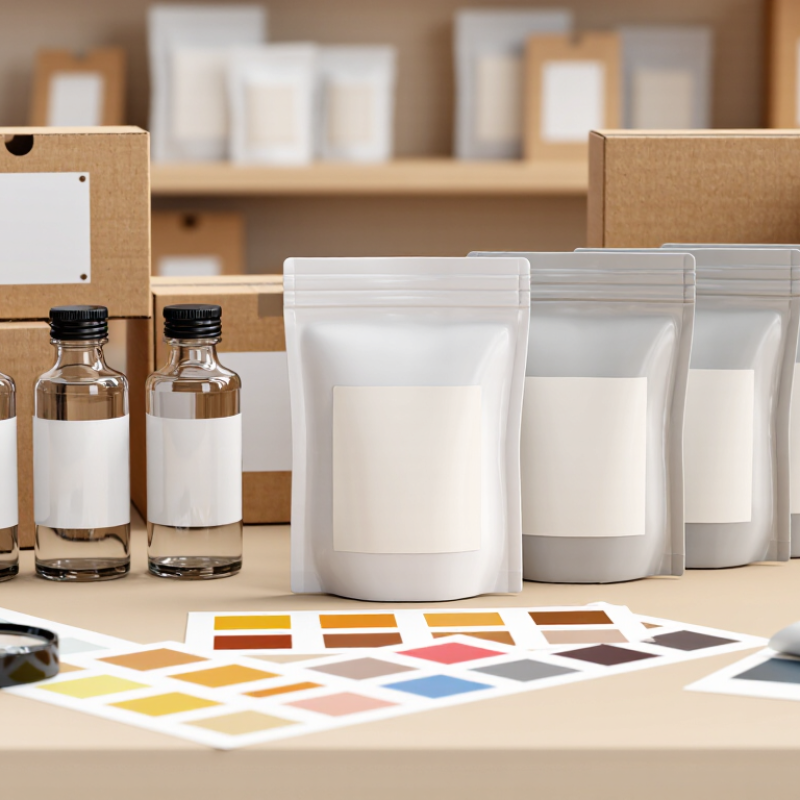
How to Choose the Best Product Labels and Printing in 2026?

Identify the Product’s Requirements and Labeling Regulations

A label should be specified only after the product, package, and sales market are clear. List every required element: product identity, ingredients, net quantity, manufacturer details, traceability code, and any category-specific warnings. Rules vary by country and product type. For example, food labels sold in the United States must declare applicable major allergens, while EU food information follows Regulation (EU) No 1169/2011. Check current local requirements before artwork approval; a familiar template may still be wrong for a new market.

Material choice follows the real conditions. A chilled bottle may collect condensation, while a carton can face scuffing during shipping. Test adhesion and legibility on the actual package, including small text and curved surfaces. Small type matters. Leave enough contrast for required information, and verify barcode readability after printing. A printer proof is useful, but it cannot replace a production-line test.

The commercial stakes are substantial. Smithers’ 2023 report, The Future of Labels to 2028, valued the global label market at $49.9 billion in 2023 and forecast $67.9 billion by 2028. That growth does not make every finish necessary. A common oversight is approving attractive artwork before checking mandatory copy, available label space, and print tolerances. Review the final proof with regulatory and packaging specialists; even then, changing rules deserve another check.

Select Label Materials, Adhesives, and Finishes

Choosing label stock starts with the product’s real environment. A chilled glass bottle faces condensation; a bathroom container meets water and repeated handling. Paper offers a tactile, often economical surface, while film resists moisture and tearing. Neither is universally better. Match adhesive to the container, too: removable grades suit temporary labeling, while permanent adhesives need to hold through storage and use. Ask your printer for samples and test them on actual containers, not just clean sheets.

Finish changes both appearance and performance. A matte coating can reduce glare; gloss can sharpen color but may show scuffs. Foil and embossing add texture, yet extra layers may complicate recycling.

The U.S. EPA’s 2018 materials report recorded a 68.2% recycling rate for paper and paperboard; the American Forest & Paper Association reported about 68% for the same year. These figures describe broad material streams, not every label construction.

Small detail. Big difference.

Check whether the label, adhesive, ink, and coating work with the package’s local recycling process. I’d still insist on a short production trial: humidity, cold storage, and abrasion can expose problems that a specification sheet misses.

Compare Printing Methods for Quality, Volume, and Cost

How to Choose the Best Product Labels and Printing in 2026?

Compare Printing Methods for Quality, Volume, and Cost

Start with the order size, artwork, and deadline. Digital printing skips printing plates, making it practical for short runs, seasonal designs, and frequent updates. It can also print variable details, such as batch codes. Short runs win. But the unit cost may stay high when quantities grow.

Flexographic printing requires plate preparation, so setup costs matter. Once production reaches larger volumes, its fast output and consistent color can lower the cost per label. It suits long, repeat orders, though changing artwork means new plates. Smithers’ The Future of Labels to 2028 estimated the global label market at $67.9 billion in 2022 and forecast $78.9 billion by 2028. That expanding market makes production flexibility worth considering, not assuming every job needs the same method.

Compare finished samples, not just screen proofs. Check small text, color matching, adhesive performance, and how labels look on curved containers under store lighting. Ask printers to quote the same quantity and material across methods, including setup, finishing, and waste. The break-even point varies. I’d also test a small batch before committing; it can reveal a finishing issue that a price sheet won’t show.

How to Choose the Best Product Labels and Printing in 2026?

Compare printing methods for quality, volume, and cost

Indicative ratings from 1 (lower suitability) to 5 (higher suitability), not measured industry benchmarks. Digital printing is often a practical fit for short runs and variable data, while flexography tends to become more cost-efficient at higher volumes. Actual print quality and cost depend on the press, materials, finish, order size, and supplier.

Evaluate Suppliers, Proofs, and Production Standards

Choosing a label supplier in 2026 starts with clear questions about the product and its environment. Will the label face condensation, sunlight, friction, or repeated handling? Ask which material and adhesive suit those conditions, and request a reason for the recommendation. A low quote can hide differences in stock, finishing, or inspection. Compare like with like.

Proofs deserve more than a quick glance. Request a physical sample when color, texture, or fit matters; a screen cannot show how a label wraps around a curved bottle. Check small type, fine lines, barcode readability, and placement against the actual package. Look at the sample under ordinary indoor light, too. Colors may shift between proofing and press, so agree on an acceptable range before production. If a detail feels unclear, pause and ask. That costs less than a full reprint.

Ask how the supplier controls each production run: material identification, color checks, print alignment, and checks for smudges or missed labels. Find out how defects are recorded and who reviews them. A dependable process should be explained plainly, not hidden behind impressive terminology. Request a written specification with dimensions, finish, adhesive, and approved artwork version. I would not treat a flawless sample as a guarantee; machines, batches, and handling can vary. That uncertainty deserves attention. Keep one approved sample for comparison when the finished rolls arrive.

Verify Label Performance, Sustainability, and Total Value

How to Choose the Best Product Labels and Printing in 2026?

A label must survive the product’s real journey, not just look sharp on a sample. Test it on the actual container after chilling, rubbing, moisture, or handling. Check whether small text stays readable and barcodes scan after abrasion. Ask printers for material, adhesive, and ink specifications. A successful test on glass may fail on a curved, squeezable bottle. No label wins everywhere.

Sustainability needs evidence, not green-sounding claims. The US Environmental Protection Agency’s 2018 materials report recorded 82.2 million tons of containers and packaging waste, with 53.9% recycled. That national figure covers many materials; it does not prove a specific label is recyclable. Confirm whether the label, adhesive, and container work with the intended local recovery process. Smithers projected the global label-printing market could reach $49.9 billion by 2028, reflecting sustained demand and many competing options. Compare total value, not unit price: include setup fees, waste, print consistency, storage, and replacement costs. That trade-off is easy to miss.

Tips: Request production samples, then test them under realistic conditions. Compare three-year costs per usable label, including rejected rolls. Ask for supporting test records and clear material disclosures. If results are mixed, record that uncertainty before committing.

How to Choose the Best Product Labels and Printing in 2026? - Verify Label Performance, Sustainability, and Total Value

Label option Typical applications Performance profile Printing considerations Sustainability considerations Relative total value What to verify before ordering
Uncoated paper, direct thermal Short-life shipping, warehouse, and retail identification labels. Economical for indoor use; image can darken or fade with heat, sunlight, friction, or some chemicals. Not a good default for long-term display. Prints without ink or ribbon, reducing consumables. Confirm printer compatibility and test readability throughout the required label life. Paper face stock may fit paper-recycling streams when clean and accepted locally; adhesive, coatings, and release liner can affect disposal. Low upfront cost
Strong value for short-duration use; replacements can erase savings if labels need to last longer.
Required readable life, exposure to heat and light, scanner contrast, adhesive performance, and disposal route.
Coated paper, thermal transfer Product identification, inventory, and general-purpose labels for indoor products. Good print clarity and a smooth surface; generally less moisture- and tear-resistant than film labels. Uses a ribbon. Wax ribbons are commonly used for paper; ribbon and coating compatibility should be tested for smudge and abrasion resistance. Paper may be recyclable where local systems accept the label construction. Ribbon use and silicone-coated release liners add waste considerations. Balanced
Often a practical choice when clear printing and moderate service life matter more than moisture resistance.
Print contrast, ribbon match, application temperature, surface cleanliness, and whether the label will encounter condensation or rubbing.
Polypropylene (PP) film, thermal transfer Personal-care, household, and other products that may encounter splashes or handling. Typically resists water and tearing better than paper and conforms well to many curved packages. Resistance to oils, solvents, and heat depends on the film, adhesive, and ribbon combination. A compatible resin or resin-enhanced ribbon is often used for improved durability. Validate print adhesion and scuff resistance on the actual label stock. PP film may be recyclable in some systems, but a film label, adhesive, container material, and local sorting rules determine practical recyclability. Moderate
Can reduce reprinting on moisture-exposed products; usually costs more than paper.
Container material, squeeze or curve requirements, water exposure, adhesive compatibility, and local packaging-recycling guidance.
Polyester (PET) film, thermal transfer Durable equipment, electronics, laboratory, and industrial identification. Generally offers good dimensional stability and resistance to tearing; specific heat and chemical resistance vary by face stock and adhesive. Usually paired with a resin ribbon for durable printing. Test the complete construction under the actual temperature, chemical, and abrasion conditions. Durability can extend service life, but PET labels are not automatically compatible with every container-recycling stream. Check local guidance and package design. High durability value
Higher material cost may be justified where label failure would cause relabeling, downtime, or traceability issues.
Maximum and minimum temperatures, chemicals, surface energy, required service life, and removal or recycling requirements.
Wet-strength paper, flexographic or digital print Premium dry goods, cartons, and products needing a paper-based appearance. Can provide a paper look with improved resistance to brief moisture exposure compared with standard paper; it is not equivalent to a waterproof film label. Flexographic printing can suit repeat, higher-volume runs; digital printing can support shorter runs and variable artwork. Confirm ink, varnish, and adhesive compatibility. Paper content may support fiber recovery, but coatings, inks, adhesives, and label size can affect repulpability and acceptance by recycling facilities. Good for appearance
Value depends on run length, finish, and whether paper aesthetics are a product requirement.
Moisture duration, finish and scuff needs, print quantity, color consistency, and recyclability of the complete label construction.
Removable paper or film label Temporary promotions, reusable containers, price changes, and applications requiring clean removal. Designed to release more easily than permanent labels, but removal behavior varies with surface, age, temperature, and dwell time. Available for several print processes. Verify that the printed surface remains legible and that adhesive does not transfer or leave residue in use. Clean removal may help reuse or sorting, but the removed label and liner still require appropriate disposal; verify the package’s recycling instructions. Use-case dependent
Can save labor during removal or reuse, but is not a substitute for permanent adhesion where security or durability is needed.
Surface type, removal timing, residue tolerance, storage conditions, and performance after aging or refrigeration.

Selection note: These are typical material and process characteristics, not guaranteed specifications. Performance depends on the full construction—including face stock, adhesive, ink or ribbon, finish, container surface, and application conditions. Request current technical data and test production samples in the intended environment. Cost comparisons are relative; obtain quotes for the required quantity, finish, tooling, setup, waste, and shipping.

FAQS

How should I choose label material?

Start with the product’s real environment. Paper feels tactile and may cost less, while film resists moisture and tearing. Neither works best everywhere. Test samples on the actual container.

How do I select the right adhesive?

Removable adhesive suits temporary labels. Permanent adhesive is intended to hold through storage and use. Try it on the container, especially if its surface is curved or squeezable.

Which finish should I choose?

Matte finishes can reduce glare, while gloss may make colors look sharper but show scuffs. Foil and embossing add texture. Looks can mislead. Extra layers may also complicate recycling.

What conditions should I test before ordering?

Chill, wet, rub, and handle the labeled container. Check whether small text stays readable and barcodes still scan after abrasion. Test on the real package, not only a clean sheet.

What should I check on a proof?

Inspect small type, fine lines, color, and placement. Wrap a physical sample around the actual bottle. Screen previews cannot show every curve or texture. Keep one approved sample.

How can I assess a supplier’s production quality?

Ask about material identification, color checks, print alignment, and defect records. Request written specifications for dimensions, finish, adhesive, and artwork version. A flawless proof is not a guarantee.

How can I tell whether a label is recyclable?

Check whether the label, adhesive, ink, coating, and container fit the local recovery process. General recycling figures do not prove that a specific label can be recycled. I would verify the details twice.

How should I compare label costs?

Compare total value, not just the unit price. Include setup fees, wasted or rejected rolls, storage, consistency, and replacement costs. Cheap labels can become expensive. I might still overlook something.

When should I run a production trial?

Run a short trial before committing to a large order. Test humidity, cold storage, and abrasion. Record mixed results rather than treating them as a pass. Some conditions are hard to reproduce.

Conclusion

Choosing the best product labels in 2026 starts with understanding what the product needs to communicate and which labeling requirements apply. Consider where and how the label will be used, then compare material, adhesive, and finish options for durability, appearance, and compatibility with the package. These choices help ensure the label remains clear and securely attached throughout storage, handling, and use.

When comparing Labels And Printing options, weigh print quality, production volume, cost, and turnaround time. Review supplier capabilities, request proofs, and confirm consistent production standards before approving an order. Finally, assess how labels perform in real conditions, consider their environmental impact, and compare the full costs over time—not just the initial price. A thoughtful evaluation of requirements, materials, printing, and supplier reliability can help deliver labels that meet practical needs and provide lasting value.

Isabella

Isabella

Isabella is a dedicated marketing professional with a sharp focus on driving brand growth and engagement through strategic content creation. With an extensive background in digital marketing, she combines her passion for storytelling with her keen understanding of industry trends to deliver......