
Precision Engineered Medical & Industrial Solutions
Explore high-performance adhesive substrates, compliant label converting materials, and medical device identification products built for global enterprise demands.


Executive Summary: Engineering & Sourcing Catheter Leg Straps
Catheter leg straps and stabilization devices represent a critical niche in medical device manufacturing. Designed to secure urinary drainage systems (such as Foley catheters, nephrostomy tubes, and leg bags), these devices prevent accidental extubation, skin traction, mechanical trauma, and central line-associated bloodstream or urinary tract infections (CAUTI). For global healthcare procurement officers, OEM device brands, and medical distributors searching for qualified Catheter Leg Strap Manufacturers & Companies, evaluating suppliers requires a thorough analysis of material engineering, skin irritation profiles, manufacturing hygiene, and supply chain resiliency.
This comprehensive technical whitepaper addresses the core requirements for sourcing medical leg straps and high-tack, medical-grade adhesive fixations. It explores how state-of-the-art Chinese manufacturing facilities leverage advanced textile conversion, skin-safe pressure-sensitive adhesive (PSA) coating, precise thermal die-cutting, and automated packaging to meet European Union MDR (2017/745) and United States FDA Class I/II regulatory frameworks.
Key Material Benchmarks & Mechanical Specifications
A high-performance catheter leg strap must balance secure retention with patient comfort. When procuring from qualified OEM factories, buyers must benchmark five essential material layers:
| Strap Component | Material Options | Performance Benchmark | Clinical Advantage |
|---|---|---|---|
| Primary Band Substrate | Breathable Velour / Spandex Blend / Perforated Neoprene | Elongation 150-200%; Tensile Strength > 85N | Prevents venous constriction; maintains uniform compression without rolling. |
| Skin Contact Layer | Hypoallergenic Cotton Terry / Micro-Fleece / Hydrocolloid | ISO 10993-5 (Cytotoxicity Pass); MVTR > 2500 g/m²/24h | Minimizes moisture accumulation, skin maceration, and contact dermatitis. |
| Anti-Slip Mechanism | Wave-Pattern Silicone Inks / Thermoplastic Elastomer (TPE) | Frictional Coefficient > 0.8 against human skin | Eliminates distal slipping during ambulatory patient movement. |
| Tube Locking Device | Hook & Loop (Velcro® equivalent) / Dual-Tab Adhesive Clip | Shear Hold Strength > 35N; Peel Life > 500 cycles | Ensures rigid tube fixation while allowing rapid catheter repositioning. |
| Adhesive Anchor (Optional) | Medical-Grade Acrylic / Silicone Pressure Sensitive Adhesive | Initial Tack > 12N; Gentle Peel Force < 2.5N/cm | Trauma-free removal for fragile, geriatric, or pediatric epidermis. |
China Factory Supply Chain Advantages in Medical Textiles & Converting
Sourcing catheter leg straps and associated medical labeling products from specialized Chinese manufacturing clusters (such as Fujian, Zhejiang, and Guangdong) provides global B2B buyers with unmatched cost-efficiency, technical agility, and manufacturing capacity. China's integrated supply chain ecosystem enables seamless execution from raw polymer resin compounding to finished, sterile medical packaging.
Vertical Raw Material Integration
Local access to high-grade non-wovens, silicone coating chemical plants, and specialized hook-and-loop weaving mills dramatically reduces raw material lead times by up to 60% compared to Western converters.
Economies of Scale & Cost Efficiency
High-speed rotary ultrasonic welding and automated robotic slitting allow Chinese factories to deliver unit cost savings of 30% to 45%, enabling distributors to maintain competitive margins.
Rapid Prototyping & OEM Customization
Custom die-cut development, CAD strap sizing, logo printing, and specialized backing paper release adjustments can be prototyped and sample-tested within 5 to 7 business days.
Integrated Printing & Medical Labeling Synergy
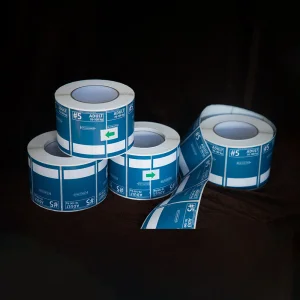
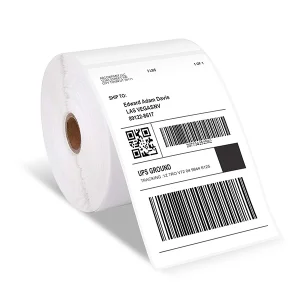
In addition to fabric conversion, modern medical device packaging demands precise, anti-curl backing paper, UDI (Unique Device Identification) barcode printing, and moisture-resistant labeling. Partners like Xiamen Lianhua Printing Co., Ltd. (established in 1992) deliver complementary expertise in custom pressure-sensitive adhesive labels, heat-resistant synthetic films, and multi-language instruction manuals required inside sterilized catheter strap kits.
Global Enterprise Procurement Needs: Evaluating Manufacturers
Procurement directors for healthcare systems, OEM medical device brands, and regional medical distributors must execute strict due diligence when qualifying a catheter leg strap manufacturer. Sourcing decisions must extend beyond price per unit to encompass quality control, regulatory adherence, and packaging compliance.
1. Regulatory Compliance Frameworks
Healthcare buyers in North America and Western Europe operate under stringent regulatory oversight. Suppliers must maintain up-to-date certification portfolios including:
- ISO 13485:2016 Certification: Demonstrates an audited Quality Management System specific to medical devices.
- FDA Registration & Device Listing: Essential for US market access (Class I 510(k) exempt or Class II medical device listings).
- EU MDR 2017/745 Compliance: Technical documentation files (TDF), CE marking, and assigned UDI-DI tracking numbers.
- REACH & RoHS Material Safety: Verification that synthetic foams, dyes, and adhesives are free from SVHC (Substances of Very High Concern), phthalates, and heavy metals.
2. Biocompatibility Testing Protocols (ISO 10993)
Because catheter leg straps remain in direct contact with skin for extended periods (often up to 7 consecutive days), third-party lab testing must validate three core biological evaluation endpoints:
ISO 10993-5: Cytotoxicity
Ensures that chemical leachables from synthetic rubbers, adhesives, or dyes do not cause cell lysis or inhibit cell growth.
ISO 10993-10: Irritation
Validates that topical skin exposure does not trigger intracutaneous reactivity or primary skin erythema/edema.
ISO 10993-10: Sensitization
Confirms through guinea pig maximization testing (GPMT) or LLNA that repeated exposure produces zero allergic cutaneous reactions.
Localization Support & Regulatory Compliance Packaging
Cross-border medical procurement requires localized packaging adaptations. Medical leg straps sold in multi-regional markets (e.g., EU, LATAM, Middle East) must feature compliant multi-language labeling, symbols matching ISO 15223-1, and robust primary/secondary packaging that preserves sterility during transit.
Multi-Language Instruction Manuals & Medical Packaging
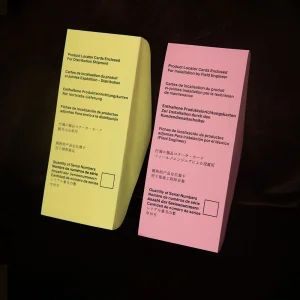
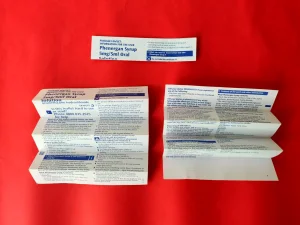
Every commercial catheter strap unit must be paired with clear, compliant patient and clinical instructions. Lianhua Printing's capability in manufacturing custom single-sheet instruction manuals, folded multi-panel inserts, and detailed booklet manuals ensures that medical device brands meet language requirements across EU member states without requiring multiple regional packaging vendors.
| Target Region | Required Regulatory Standards | Packaging & Labeling Nuance |
|---|---|---|
| United States (FDA) | 21 CFR Part 820 / UDI Compliance | GS1 Datamatrix barcode, English IFU, Latex-Free explicit warning. |
| European Union (CE/MDR) | MDR 2017/745 / ISO 15223-1 | Authorized Representative (EC REP) address, multi-language IFU (up to 12 languages), Single Patient Use icon. |
| Japan (PMDA) | Pharmaceutical and Medical Devices Act | Japanese label over-stickers using moisture-resistant synthetic paper, JIS standard symbol compliance. |
| Latin America (ANVISA/COFEPRIS) | Local Sanitary Registration | Spanish/Portuguese localized instruction cards, tamper-evident outer box sealing labels. |
Localized Application Scenarios & Field Usage
Catheter leg straps are deployed across diverse clinical and homecare settings. Understanding localized application demands enables procurement teams to specify the correct strap geometry and closure mechanism.
Intensive Care & Post-Surgical Wards
High-friction silicone-lined straps are preferred in ICUs where unconscious or semi-conscious patients may twist or shift, risking accidental catheter dislodgement.
Home Healthcare & Ambulatory Dialysis
Lightweight, low-profile elastic leg bag straps allow outpatient users to wear everyday apparel comfortably while maintaining discrete drainage bag stability.
Geriatric & Long-Term Nursing Facilities
Ultra-soft fleece or hydrocolloid adhesive anchor straps protect fragile skin from shear tension, reducing the incidence of skin tears and pressure injuries.
Industry Trends & Next-Generation Innovations
The global market for catheter stabilization devices and leg straps is projected to expand significantly over the next decade. Sourcing leaders must align with manufacturers adopting cutting-edge production technologies and sustainable material formulations.
1. Eco-Friendly & Bio-Based Materials
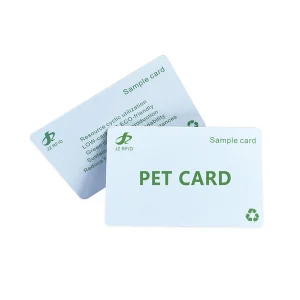
As healthcare systems strive for net-zero carbon footprints, demand for single-use plastic reduction is reshaping product design. Modern manufacturers are transitioning to bio-derived Thermoplastic Polyurethane (TPU), solvent-free hot-melt adhesive coatings, and recyclable PET liners. Combining eco-friendly cards and recyclable PET substrates (such as Lianhua Printing's Recyclable Eco-Friendly PET Cards) allows medical brands to offer sustainable solution packaging.
2. Smart Sensing & Anti-Bacterial Coatings
Innovations currently entering clinical trials include catheter straps integrated with passive moisture-sensing indicators that alert nursing staff to urine leakage or sweat buildup. Additionally, silver-ion and chlorhexidine-impregnated anti-bacterial fabric treatments are being incorporated into strap linings to reduce bacterial colonization near the insertion site.
3. Automated Converting & Zero-Defect Inspection
Tier-1 Chinese factories are heavily investing in CCD vision inspection systems integrated directly onto high-speed rotary die-cutting lines. These optical scanners inspect 100% of finished leg straps for fraying, defective hook-and-loop stitching, or adhesive coat voids, guaranteeing zero-defect shipments to global clients.
Frequently Asked Questions (FAQ) for Global B2B Buyers
Expert answers to critical technical, regulatory, and sourcing questions when purchasing catheter leg straps and specialized medical adhesive products.
What is the minimum order quantity (MOQ) for custom OEM catheter leg straps?
Standard custom OEM orders typically start at 5,000 to 10,000 units depending on strap customization (e.g., custom width, branded silicone print, custom color dyeing). For standard catalog designs with custom label packaging, lower MOQs starting from 2,000 units are available.
How do manufacturers ensure that adhesives do not cause skin tears during removal?
Medical-grade adhesives utilize specialized silicone or low-tack acrylic formulations engineered for gentle peel strength (< 2.5 N/cm). Additionally, hydrocolloid anchor pads can be specified, which absorb skin moisture and release smoothly without pulling epidermal cells.
Are Chinese manufacturers capable of supplying EO (Ethylene Oxide) sterilized straps?
Yes. Fully qualified manufacturers operate cleanroom packaging lines and partner with certified sterilization facilities to deliver ready-to-use, EO-sterilized or Gamma-irradiated catheter leg strap kits packaged in breathable Tyvek® pouching.
Can we integrate custom UDI barcode labels and multi-language manuals with our order?
Absolutely. Working with comprehensive printing partners like Xiamen Lianhua Printing Co., Ltd. allows seamless integration of ISO-compliant multi-language instruction manuals, high-tack UDI tracking labels, anti-curl backing paper materials, and custom outer packaging boxes directly with your product shipment.
What is the typical production lead time for full-scale OEM manufacturing?
Upon sample approval and art sign-off, standard production lead time is 15 to 20 business days. Accelerated production runs are available for urgent supply chain contracts.
How do I request biocompatibility documentation (ISO 10993 reports) for audit review?
Full third-party laboratory test reports (including cytotoxicity, sensitization, and skin irritation evaluations) are provided upon execution of a Non-Disclosure Agreement (NDA) and preliminary project evaluation.
High-Durability Industrial & Commercial Printing Products
Explore our complete range of specialized industrial materials, temperature-resistant labels, synthetic cards, and custom manual inserts.

Initiate Your OEM Custom Sourcing Project Today
Connect with engineering specialists for tailored catheter leg straps, biocompatible adhesive conversion, and high-precision medical printing solutions. Experience unmatched quality control and streamlined global delivery.
Request Technical Proposal