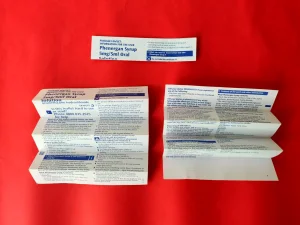
Custom Multi-Panel Folded Instruction Manuals for Product Manufacturers, Factories
Explore Product Spec

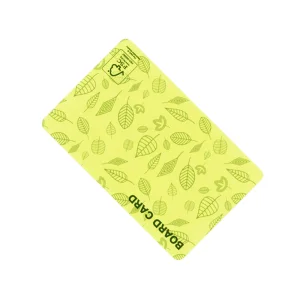
High-Quality Luxury Premium Paperboard Cards for Business Branding Company, Products
Explore Product Spec
Navigating EPDM Gasket Sourcing: Chemistry, Compression Set & Die-Cut Conversion
When procurement executives and engineering directors evaluate enterprise-grade B2B manufacturing partners to buy EPDM gaskets, technical competency extends far beyond basic dimensional tolerances. It requires a fundamental mastery of Ethylene Propylene Diene Monomer (EPDM) polymer synthesis, cross-linking density, and pressure-sensitive adhesive (PSA) laminations.
Peroxide Curing vs. Sulfur Vulcanization
For high-reliability applications such as automotive cooling systems, HVAC fluid loops, and renewable energy enclosures, specifying the correct curing agent is paramount. Peroxide-cured EPDM gaskets yield superior thermal resistance (up to +150°C), lower compression set deformation, and exceptional resistance to hot water and steam. Conversely, sulfur-vulcanized EPDM provides higher tensile strength and tear resistance at a lower unit cost, serving general enclosure seals and light-duty HVAC weatherstrips.
Adhesive Backing Integration (PSA Converting)
To accelerate automated industrial assembly line speeds, modern manufacturing enterprises require EPDM gasket strips integrated with high-tack pressure-sensitive adhesives. Utilizing modified acrylic, synthetic rubber, or silicone PSAs with tear-resistant PET carriers or high-translucency glassine release liners ensures zero flagging, effortless kiss-cutting, and permanent adhesion to low-surface-energy (LSE) substrates like powder-coated aluminum and ABS plastics.
Engineered EPDM Sealing Solutions Across Critical Industrial Sectors
From extreme environmental enclosure sealing to dynamic mechanical dampening, our precision-converted EPDM gasket profiles and adhesive die-cuts provide robust fluid, gas, and dust isolation.
Automotive & EV Battery Enclosures
EV battery packs require IP67/IP68 ingress protection against water, dust, and hazardous electrolyte fluid migration. Flame-retardant (UL94 V-0 formulation) sponge EPDM gaskets with high-tack backing provide thermal barrier isolation, vibration dampening, and chemical resistance across long service lifetimes.
HVAC Systems & Architectural Facades
Commercial air handling units (AHUs) and structural glass curtain walls demand weather-resistant gaskets that endure continuous solar irradiation, wind pressure, and thermal expansion cycles without shrinking or losing elasticity over decades.
Renewable Energy & Solar Inverters
Photovoltaic junction boxes and outdoor power inverters operate under brutal environmental extremes. Dense and cellular EPDM seals maintain hermetic enclosure integrity against driving rain, sandstorms, and extreme diurnal temperature swings (-40°C to +125°C).
EPDM Gasket Technology Roadmap: 2026–2035 Horizon
As global manufacturing transitions toward net-zero carbon footprints, intelligent automation, and next-generation mobility, elastomeric sealing technology is undergoing a massive paradigm shift.
Bio-Based EPDM & Circular Elastomers
Traditional EPDM relies on petroleum-derived ethylene and propylene monomers. The next decade will see rapid industrial adoption of bio-EPDM synthesized from sugarcane-derived bio-ethylene. Matching the exact performance profile of fossil-based polymer molecules, bio-EPDM reduces cradle-to-gate carbon intensity by up to 60%, empowering global OEMs to meet Scope 3 emissions goals.
Conductive & EMI-Shielding EPDM Gaskets
With the proliferation of 5G infrastructure, autonomous radar systems, and high-frequency power electronics, sealing components must dual-function as electromagnetic interference (EMI) shields. Advanced EPDM compounds filled with nickel-coated graphite, silver-plated copper micro-spheres, or carbon nanotubes deliver >80 dB attenuation across 30 MHz to 10 GHz frequencies.
| Elastomer Type | Weather & Ozone Resistance | High Temp Limit | Low Temp Limit | Oil & Fuel Resistance | Relative Cost Factor |
|---|---|---|---|---|---|
| EPDM Rubber | Excellent (Grade A+) | +150°C | -50°C | Poor (Polar fluid safe) | Economical / High Value |
| Nitrile (NBR) | Fair (Ozone vulnerable) | +120°C | -30°C | Excellent | Moderate |
| Silicone (VMQ) | Excellent | +230°C | -60°C | Fair | Premium |
| Fluorocarbon (FKM) | Excellent | +250°C | -20°C | Outstanding | Ultra-Premium |
Localization Support, International Standards & Compliance Framework
Navigating global supply chain compliance requires robust material traceability, rigorous laboratory testing, and adherence to international environmental directives.
RoHS & REACH Compliance
In full alignment with European Union Directives 2011/65/EU (RoHS 3) and Regulation (EC) No 1907/2006 (REACH), all rubber compounds and adhesive release liners undergo strict chemical auditing to ensure zero SVHCs (Substances of Very High Concern), polycyclic aromatic hydrocarbons (PAHs), heavy metals, or phthalates.
ASTM D2000 Material Classification
Our engineering team formulates EPDM materials according to standardized ASTM D2000 / SAE J200 callout systems (e.g., ASTM D2000 M3BA714 A14 B13 C12). Procurement teams can specify hardness (Durometer Shore A 40 to 80), tensile strength, and heat resistance requirements with absolute precision.
Flame & Food Grade Certifications
For specialized deployments, select EPDM compounds comply with UL94 V-0 flame retardancy for electrical enclosures, FDA 21 CFR 177.2600 for indirect food contact, and EN 45545-2 hazard level ratings for mass transit rail applications.
China Factory 4.0: Precision Converting, Quality Control & Supply Chain Resilience
Leveraging over 30 years of enterprise converting experience since 1992 in Xiamen, China, our advanced manufacturing hub pairs high-speed automated die-cutting with rigorous quality management.
High-Speed Rotary & Flatbed Die-Cutting
State-of-the-art multi-station rotary die-cutting lines allow high-speed precision kiss-cutting, slit-rewinding, and complex multi-layer lamination of EPDM foams, solid rubbers, and adhesive transfer tapes. Optical CCD registration camera systems maintain tight dimensional tolerances down to ±0.1mm, eliminating material waste and preventing assembly fitment issues.
Continuous Quality Assurance Protocols
Operating under ISO-certified quality management frameworks, every production lot is subjected to empirical testing: Shore A hardness verification, tensile elongation testing, rheometer cure curves, and thermal aging assessments. Full batch traceability ensures international buyers receive consistent quality across multi-ton production shipments.
Global Buyers Sourcing Guide: Specifying EPDM Gaskets for Total Cost Optimization
Systematic criteria enterprise purchasing directors must define to ensure zero-defect procurement, competitive FOB/CIF landed costs, and flawless manufacturing integration.
1. Density & Cellular Structure
Select between Solid EPDM (high tear strength, maximum mechanical seal pressure) and Sponge / Cellular EPDM (closed-cell foam for low closing-force requirements, thermal insulation, and lightweight vehicle applications).
2. Adhesive Carrier Selection
Match the adhesive system to assembly mechanics: Tissue-backed PSAs for flexible curve conformity, PET film carriers for high dimensional stability during die-cut application, or linerless hot-melt systems for high-speed robotic placement.
3. Packaging & Dispensing Format
Specify delivery format based on production line automation: continuous spooling reels for high-volume automated stripping, kiss-cut sheets for manual assembly, or individual die-cut pieces in anti-static polybags for field service kits.
Frequently Asked Questions for EPDM Gasket Sourcing
Expert engineering answers addressing common questions from OEM procurement managers and design engineers.
What makes EPDM gaskets superior to Neoprene and NBR for outdoor sealing applications?
Can EPDM gaskets be used in contact with petroleum fuels and oils?
How do I choose between Peroxide-Cured and Sulfur-Cured EPDM for my order?
What custom pressure-sensitive adhesive (PSA) options can be applied to EPDM rubber strips?
What technical information is required to receive a fast, accurate OEM manufacturing quote?
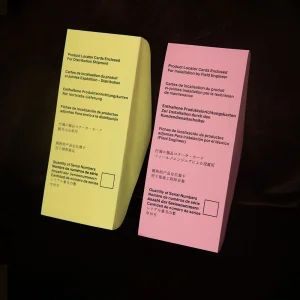

China Detailed Booklet-Style Instruction Manuals for equipment or products Company, Products
Explore Product Spec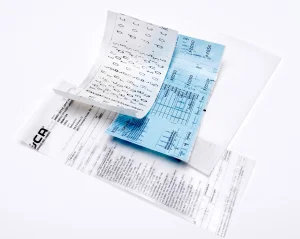
Buy Tear-Proof PET Electrical Insulation Paper (Polyester Film) Manufacturer, Products
Explore Product Spec