Featured Identification Card & Substrate Manufacturing Lines
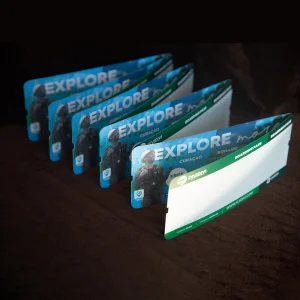
Explore our precision-engineered thermal adhesive labels, PET eco-friendly substrates, instant event card printing stock, and polyimide high-durability solutions.
The Evolution of Global Identification Card Manufacturing & Substrates
An in-depth analysis of material science transitions, micro-encapsulation shifts, digital-physical security convergence, and green manufacturing compliance in global credential production.
1. Paradigm Shift in Substrate Chemistry: From Monolithic PVC to Multi-Layer Polycarbonate (PC) & PETG
The global identity management market has undergone an aggressive technological transformation. Historically dominated by standard Polyvinyl Chloride (PVC) laminates, modern sovereign entities, enterprise corporations, and healthcare institutions now mandate advanced thermoplastic polyesters—specifically Polycarbonate (PC) and Polyethylene Terephthalate Glycol (PETG). Monolithic PVC cards, while economical for short-term access badges, suffer from plasticizer migration, structural degradation under thermal stress, and high vulnerability to physical alteration.
In contrast, Multi-Layer Polycarbonate (PC) cards utilize fused thermoplastic layers that bond under precise thermal and pressure conditions without liquid adhesives. During the lamination process, individual PC film sheets—comprising core layers, offset-printed security layers, optical clear cover films, and laser-reactive layers—interlock at a molecular level. This results in a solid, non-delaminable monolithic block. Any attempt by counterfeiters to physically split the card layers destroys the internal printed features and integrated contactless chips, fulfilling ISO/IEC 7810 ID-1 mechanical durability standards for a service life exceeding 10 years.
2. Security Feature Convergence: Physical Tactility and Contactless Cryptography
Current industrial procurement trends highlight a strict requirement for dual-layer security defense: overt physical tactile features paired with covert electronic cryptographic mechanisms. Enterprise buyers purchasing from identification card factories must evaluate manufacturers capable of integrating high-definition tactile relief, metallic optoelectronic variable inks (OVI), holographic diffractive optical elements (DOEs), and dual-interface smart microcontrollers within a singular automated manufacturing line.
Global Enterprise Procurement Evaluation Framework
A comprehensive comparison matrix and operational checklist for sourcing executives, technical engineers, and government contract managers acquiring identity credentials.
When selecting a supplier or factory for identification cards, procurement decision-makers must evaluate substrate performance parameters, thermal stress limits, mechanical wear factors, and environmental regulatory compliance. Below is an engineering comparison matrix analyzing the primary card materials utilized in enterprise and government programs.
| Substrate Type | Delamination Resistance | Thermal Tolerance Range | Flexural Fatigue (ISO 10373-1) | Laser Engravable | Target Application |
|---|---|---|---|---|---|
| Polycarbonate (PC) | Fused / Non-Delaminable | -30°C to +135°C | > 100,000 Flex Cycles | Yes (High Contrast Black) | National ID, Driver Licenses, High-Security Access |
| PETG Substrate | High Bond Strength | -20°C to +80°C | > 60,000 Flex Cycles | Partial / Specialized Formulations | Corporate Smart Badges, University Campuses |
| Recyclable PET | Medium-High Strength | -10°C to +75°C | > 40,000 Flex Cycles | No (Surface Print Only) | Eco-Friendly Loyalty, Hotel Keycards, Events |
| Standard PVC | Adhesive Layer Dependent | -10°C to +50°C | > 10,000 Flex Cycles | No (Surface Thermal/Re-transfer) | Short-Term Membership, Visitor Badges |
Specialized Industry Credential Solutions
Architected for sovereign identity projects, automated corporate access hubs, healthcare multi-application cards, and high-durability logistics tags.
Localization Support, Regulatory Compliance & Supply Chain Security
Navigating international trade standards, regional data privacy laws, and robust factory packaging to ensure zero delivery disruption.
1. Regional Data Privacy Compliance (GDPR, CCPA & Local Mandates)
In modern B2B identity card manufacturing, data security extends beyond the factory walls. When producing personalized smart credentials containing employee or citizen personal data, factories must strictly follow localized privacy regulations. Our automated personalization lines utilize ephemeral RAM buffers where variable data (portraits, biometrics, names) is automatically overwritten post-encoding, ensuring compliance with European Union GDPR (General Data Protection Regulation) and US CCPA guidelines.
2. Anti-Tamper Packaging & Tamper-Evident Transport Protocols
To prevent credential interception, theft, or blank chip cloning during transcontinental transit, credentials are sealed in vacuum-packed, tamper-evident anti-static barrier bags. Shipping cartons incorporate serial-numbered security holographic seals. Any attempt at unauthorized box opening in transit leaves permanent visual warnings ("VOID"), protecting the integrity of government and enterprise supply chains.
Identification Engineering: 2026–2030 Horizon
Forecasting advancements in biometric card sensors, quantum-safe hardware chips, and bio-based circular polymers.
Frequently Asked Questions for Identification Card Sourcing
In-depth engineering and commercial responses regarding factory production, card technologies, customization options, and procurement lead times.
Specialized Wire Labels, PE Films, Cards & Security Products
Explore our secure wire labels, synthetic paper materials, high-tack adhesive labels, premium polycarbonate cards, and specialty envelopes.