
Executive Summary: The Evolution of QR Code Sticker Manufacturing
From static product identifiers to intelligent, dynamic cloud-connected physical data nodes in global supply chains.
In the modern global industrial landscape, QR Code (Quick Response) Stickers have transcended their original role as simple retail web links. Today, they constitute the foundational physical-to-digital (Phygital) data layer for global supply chain traceability, automated inventory management, pharmaceutical authentication, anti-counterfeiting serialization, and direct-to-consumer (D2C) brand engagement. As enterprise requirements shift toward multi-variable data printing (VDP), extreme environmental durability, and micro-code precision, selecting the right manufacturing partner has become a strategic priority for OEMs, logistics providers, and consumer goods brands worldwide.
China has firmly established itself as the global epicenter for precision label converting and variable printing technology. By combining high-speed digital web printing presses, automated optical inspection systems (AOI), and advanced adhesive formulation chemistry, leading Chinese sticker manufacturers deliver unprecedented cost efficiencies, scalabilities, and technical compliance across high-stress application environments.
High-Performance Industrial Label Solutions (Part I)
Engineered pressure-sensitive labels, high-tack films, and low-temperature adhesives custom-manufactured in China.
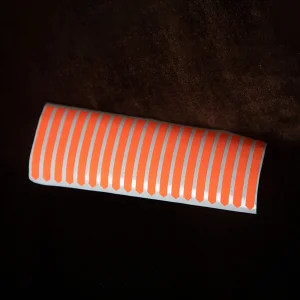
Buy High-Strength Double-Coated Adhesive Labels Manufacturer, Factory
Explore Specifications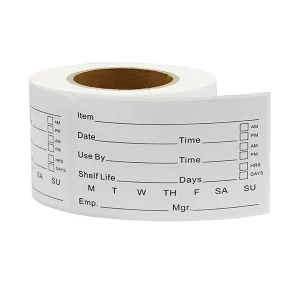
Custom Low Temperature Resistant Freezer Adhesive Labels Manufacturers, Factories
Explore Specifications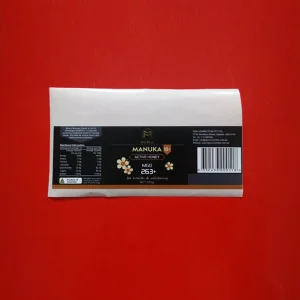
China Flexible PE-Based Adhesive Labels Factory, Companies
Explore Specifications
China High-Durability Flexible PVC Cards Manufacturers, Companies
Explore Specifications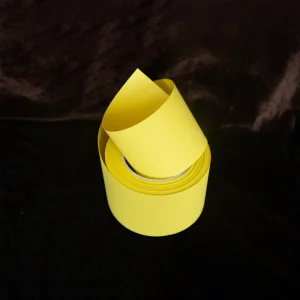
High-Quality Secure, Durable and High-Tack Wire Adhesive Labels Factories, Company
Explore Specifications
High-Quality Durable Paper Hangers for Clothing Display Companies, Product
Explore Specifications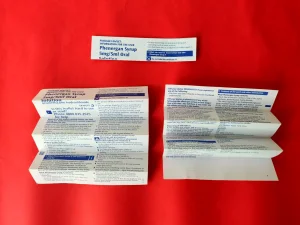
Custom Single-Sheet Instruction Manual Company, Products
Explore Specifications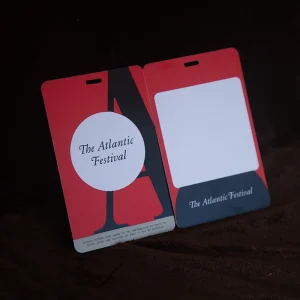
Custom Paperboard Cards with Custom Printed for Events, Gift Cards Factory, Products
Explore SpecificationsChina's Manufacturing Supremacy in QR Code Label Production
Vertical supply chain integration, automated Variable Data Printing (VDP), and stringent quality verification.
High-Speed Industrial VDP Printing
Modern Chinese label factories utilize digital press units running HP Indigo, Domino, and Screen inkjet engines capable of printing 100% unique variable QR codes at speeds up to 120 meters per minute without dropping resolution.
Inline Optical Grade Verification
Every single QR sticker undergoes real-time vision system scanning (ANSI/ISO 15415 standards). Unreadable, duplicate, or misaligned codes are automatically flagged, die-severed, or logged to ensure 0% scanning failure at destination points.
Advanced Chemical & Material R&D
China's raw material ecosystem provides immediate access to specialized facestocks—from heat-proof Polyimide and flame-retardant PET to low-surface-energy (LSE) rubber adhesives—reducing procurement lead times by over 40%.
Substrate Performance Matrix for Custom QR Code Stickers
| Substrate Material | Temp Tolerance Range | Chemical / Water Resistance | Adhesive Tack Type | Primary Industry Applications |
|---|---|---|---|---|
| Biaxially Oriented PP (BOPP) | -20°C to 90°C | High Waterproof & Oil Resistant | Emulsion Acrylic / Hot-Melt | Cosmetics, FMCG Packaging, Beverage Labels |
| Synthetic PET (Polyester Film) | -40°C to 150°C | Extreme Solvent & UV Resistant | High-Shear Solvent Acrylic | Electronics Rating Plates, Automotive QR Tags |
| Direct Thermal / Thermal Transfer Paper | -10°C to 60°C | Moderate Moisture Resistance | Permanent Pressure-Sensitive | Logistics Shipping Labels, Warehouse Racks |
| Tamper-Evident VOID Film | -30°C to 80°C | High Water & Tamper Proof | Permanent High-Tack Custom Residue | Anti-Counterfeiting Brand Seals, Security Tech |
| Freezer-Grade Cryogenic Vinyl | -80°C to 50°C | High Frost & Condensation Resistant | Specialized Rubber-Based Cold Adhesive | Bio-pharma Vials, Cold Chain Food Packaging |
Localized Application Scenarios & Global Industry Integration
How customized QR stickers solve complex operational challenges across global sectors.
1. Smart Cold Chain & Logistics Traceability
Standard paper stickers fail under condensation and sub-zero temperatures. Chinese freezer-grade QR stickers utilize specialized rubber adhesives that prevent moisture crystallization from lifting the label edges. When attached to frozen seafood boxes or pharmaceutical vaccine vials, smartphone scans instantly retrieve temperature history logs and origin certifications.
2. High-Security Anti-Counterfeiting & Tamper Seals
For luxury goods, electronics, and automotive original parts, dual-layer QR stickers combining microscopic QR codes with holographic foils or destructible vinyl matrices are deployed. Upon unauthorized removal, the sticker reveals a hidden "VOID" pattern while invalidating the QR code’s digital twin in the cloud verification system.
3. Industrial Equipment & High-Tack Wire Wrapping
In electrical engineering, small-diameter cables and curved pipe surfaces present severe flagging risks for rigid stickers. Self-laminating flexible PE and PVC wire QR stickers feature dynamic wrap-around tails that protect the printed code from oil, friction, and UV exposure in industrial control panels.
4. Interactive Smart Retail Packaging (D2C)
Retail brands leverage custom-printed QR stickers on paperboard packaging and hangtags to bypass static printing limitations. A single dynamic QR code directs customers to localized multilingual user manuals, promotional video tutorials, warranty registration portals, or re-order workflows based on their geographic IP.
Next-Generation Trends Shaping the QR Sticker Industry
Technological convergence driving green packaging, smart sensors, and micro-serialization.
1. Sustainable Linerless & Bio-Films
Environmental mandates are driving adoption of linerless QR stickers—eliminating silicon release backings to reduce waste by 40%. Concurrently, ocean-recycled PET face stocks and compostable PLA films are replacing fossil-fuel polymers.
2. Hybrid RFID / NFC + QR Smart Labels
Manufacturers are embedding ultra-thin RFID inlays directly underneath printed QR sticker surfaces. This dual-technology setup allows automated bulk warehouse scanning via RFID alongside instant optical smartphone scans for field operators.
3. Micro-QR & Encrypted Secure Pattern
To prevent high-resolution code copying or cloning, advanced UV flexo printing now embeds encrypted micro-dots and secure graphic noise inside the QR module matrix, readable only by authorized enterprise software.
Global B2B Procurement Protocol for Custom QR Stickers
A technical verification framework for international procurement teams evaluating OEM supplier proposals.
When sourcing custom QR stickers from Chinese suppliers, procurement officers must look beyond unit pricing to ensure long-term performance and seamless integration into automated application lines. Below is the technical procurement checklist established by industry quality engineers:
1. Adhesive Property Evaluation
Request explicit testing documentation for three critical metrics: Initial Tack (immediate grab speed), 90° Peel Adhesion (force required to pull the label off), and Shear Resistance (holding strength against vertical slide under load or elevated temperatures).
2. Barcode Quality Grading Standards
Specify minimum acceptable barcode grading per ISO/IEC 15415 for 2D matrix codes. Quality suppliers should guarantee overall Grade A or Grade B performance across modulation, symbol contrast, axial non-uniformity, and edge determination.
3. Release Liner Compatibility
For high-speed automated label applicators, ensure the release liner thickness and silicone release force are calibrated to prevent liner breakage or premature label flagging. Glassine liners (typically 60-80 GSM) are optimal for high-speed sensor detection.
4. Regulatory Environmental Compliance
Verify that face materials, inks, and adhesives comply with target market regulations including EU RoHS 3.0, REACH SVHC, California Proposition 65, and UL 969 standards for durable marking and labeling systems.
High-Performance Industrial Label Solutions (Part II)
Specialized dual-color boards, thermal transfer stocks, instruction inserts, and eco-friendly PET card products.
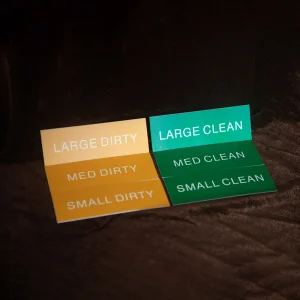
Buy Ordinary ABS Dual-Color Board Factories, Company
Explore Specifications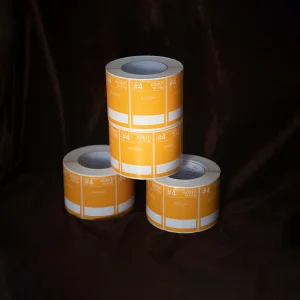
China Affordable and Printer-Friendly Paper-Based Labels Product, Products
Explore Specifications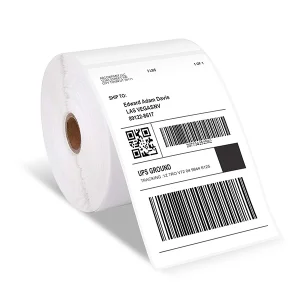
High-Quality Heat-Resistant Thermal Paper Adhesive Labels Factory, Company
Explore Specifications
China Detailed Booklet-Style Instruction Manuals for equipment or products Company, Products
Explore Specifications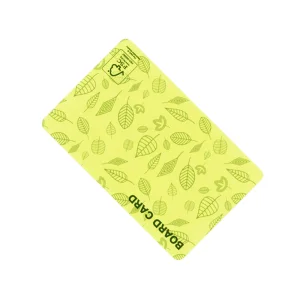
High-Quality Luxury Premium Paperboard Cards for Business Branding Company, Products
Explore Specifications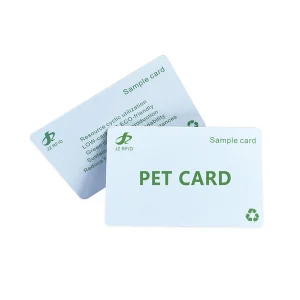
Buy Recyclable Eco-Friendly PET Cards Product, Products
Explore Specifications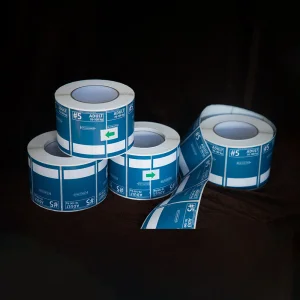
High-Quality Adhesive Labels with Anti-Curl & Moisture-Resistant Sealed Backing Paper
Explore Specifications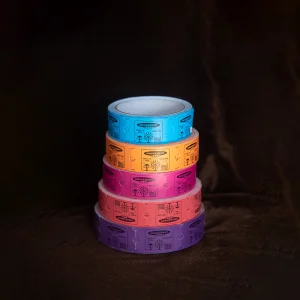
Buy Standard General Admission Tickets & Airline Tickets Manufacturers, Factories
Explore SpecificationsFrequently Asked Sourcing & Engineering Questions (FAQ)
In-depth insights into OEM customization, variable database handling, and quality control.
How does Xiamen Lianhua Printing ensure zero duplication across millions of variable QR codes?
We employ a multi-stage database verification system. Prior to printing, our prepress team processes enterprise CSV/TXT data through encrypted hash check tools to guarantee zero duplicate strings. During high-speed printing, our inline optical cameras read every printed QR code, matching it against the source file in real time. Any misprint or unreadable code is logged, automatically purged by pneumatic cutters, and reprinted in sequence.
What is the minimum physical size for a readable QR code sticker?
The minimum size depends on the data density encoded within the QR matrix and the scanning distance of the end-user device. For basic alphanumeric serial numbers (Micro QR), we can achieve clear scanning at 5mm x 5mm using high-definition 1200 DPI digital flexographic printing. For standard URL-encoded QR codes scanned via consumer smartphones, we recommend a minimum size of 12mm x 12mm with a clear "quiet zone" border of at least 2mm around the perimeter.
Can your QR stickers withstand outdoor UV exposure and harsh industrial chemicals?
Yes. For harsh industrial applications, we engineer stickers using Synthetic PET or Polycarbonate (PC) substrates combined with UV-curable protective over-laminates. These stickers undergo accelerated weathering tests, proving resistance to sunlight fading, petroleum solvents, hydraulic fluid, and alcohol wipes for outdoor service lives exceeding 5 to 7 years.
What format should global buyers use to submit Variable Data Printing (VDP) files?
We accept variable dataset files in standardized format structures including .CSV, .XLSX, or database-generated .TXT files. Graphic templates should be provided in vector format (.AI, .PDF, or .EPS) with outline fonts and clear color separations (CMYK + spot Pantone references). Our engineering team provides prepress digital proofs for customer sign-off prior to mass production runs.
Are your custom adhesive label materials compliant with international environmental directives?
All materials sourced and processed in our facility strictly adhere to our ISO-certified Green Procurement Policy. We guarantee full compliance with EU RoHS 3.0, REACH SVHC chemical restrictions, Halogen-Free directives, and FDA regulations for indirect food contact packaging. Complete SGS testing certificates are provided with mass production shipments.
Empower Your Global Supply Chain with Precision QR Labeling
With over three decades of OEM/ODM manufacturing legacy in Xiamen, China, Xiamen Lianhua Printing Co., Ltd. combines material science expertise, high-speed VDP printing, and zero-defect quality control to deliver engineered label products worldwide.