
Engineered Sealing Products & Technical Substrates
High-performance elastomeric components and specialized industrial label/membrane substrates engineered to withstand extreme temperatures, aggressive media, and dynamic mechanical loads.
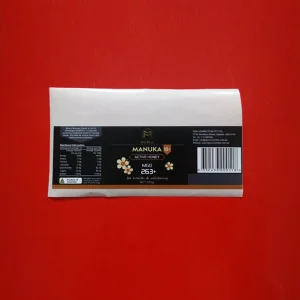
China Flexible PE-Based Adhesive Labels Factory, Companies
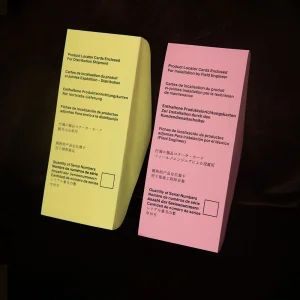
Buy Custom Premium Envelopes Manufacturer, Manufacturers

Custom Adhesive Labels with Heavy-Duty Thick Backing Paper Company
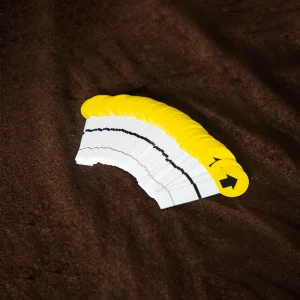
High-Quality Durable and versatile PET Adhesive Labels Manufacturers
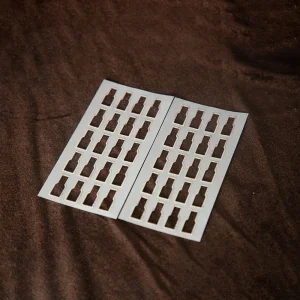
Custom Durable Synthetic Paper Adhesive Labels Manufacturers

China High-Durability Flexible PVC Cards Manufacturers, Companies
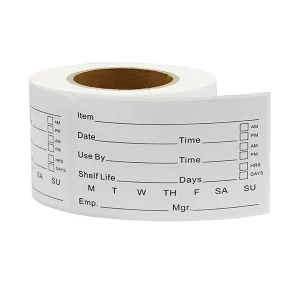
Custom Low Temperature Resistant Freezer Adhesive Labels
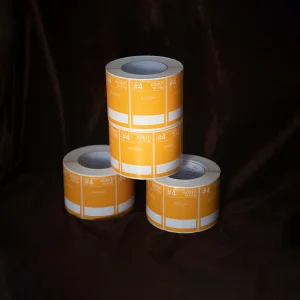
China Affordable and Printer-Friendly Paper-Based Labels
Elastomeric Material Selection Matrix for Extreme Environments
Selecting the correct elastomeric polymer requires balancing mechanical stress, temperature limits, chemical degradation, and long-term compression set resistance. Chinese manufacturing hubs utilize advanced compounding technology to tailor base polymers to precise OEM specifications.
| Elastomer Type | Hardness (Shore A) | Temp Range (°C) | Tensile Strength | Chemical & Media Compatibility | Primary Industrial Applications |
|---|---|---|---|---|---|
| EPDM (Ethylene Propylene) | 40 - 90 | -50 to +150 | 10 - 25 MPa | Excellent Steam, Water, Skydrol, Brake Fluids | HVAC, Automotive Weatherstripping, Potable Water (NSF 61) |
| FKM / Viton® (Fluoroelastomer) | 50 - 90 | -20 to +230 | 12 - 20 MPa | Superior Fuels, Aromatics, Aggressive Acids, Oils | Aerospace Fuel Lines, Automotive Powertrain, Chemical Processing |
| NBR (Nitrile Rubber) | 30 - 95 | -40 to +120 | 7 - 20 MPa | High Petroleum Oils, Hydraulic Fluids, Aliphatics | Hydraulic Seals, Oil Field Equipment, Fuel Gaskets |
| Silicone (VMQ) | 25 - 85 | -60 to +250 | 5 - 11 MPa | Biocompatible Ozone, UV, Extreme Cold/Heat, Oxygen | Medical Devices (FDA 21 CFR), Food Contact, Electrical Insulation |
| FFKM (Perfluoroelastomer) | 65 - 90 | -15 to +316 | 15 - 22 MPa | Ultimate Plasma, Solvents, Hydrofluoric Acid, Amines | Semiconductor Etching, Oil & Gas Downhole, Harsh Chemical Pumps |
| HNBR (Hydrogenated Nitrile) | 50 - 90 | -30 to +160 | 15 - 30 MPa | Heavy-Duty Sour Gas (H2S), Dynamic Abrasion, Crude Oil | Automotive Timing Belts, Offshore Drilling Seals, Industrial Rollers |
Macro Industry Solutions & System Integration
Modern engineering challenges require bespoke sealing architectures tailored to stringent operational environments across high-growth global sectors.
EV & Automotive Powertrain
Specially formulated EPDM and silicone flame-retardant (UL 94 V-0) gaskets engineered for EV battery pack top covers, liquid cooling plates, and thermal management systems, providing IP68/IP69K ingress protection against moisture and dust invasion.
Aerospace & Defense Systems
Low-outgassing fluorosilicone (FVMQ) and Viton® gaskets compliant with MIL-R-25988 and AMS specifications. Designed to maintain elasticity during rapid altitude thermal cycling (-55°C to +200°C) while resisting jet fuel (JP-8) and hydraulic fluids.
Chemical & Petrochemical Processing
Explosive Decompression (AED / RGD) resistant HNBR and FFKM seals certified to NORSOK M-710 standards. Engineered to eliminate rapid gas decompression damage in high-pressure valves, pumps, and offshore Christmas trees.
Medical & Pharmaceutical Devices
Platinum-cured liquid silicone rubber (LSR) components molded in ISO Class 7 cleanrooms. Fully compliant with FDA 21 CFR 177.2600, USP Class VI, and ISO 10993 for bio-compatibility in peristaltic pumps, surgical devices, and fluid manifolds.
Semiconductor Manufacturing
Ultra-high purity perfluoroelastomer (FFKM) seals delivering minimal trace metal contamination and zero particle generation under aggressive oxygen, fluorine, and nitrogen plasma etching in sub-5nm wafer fabrication processes.
Renewable Energy & Hydrogen Infrastructure
Low-permeability specialized elastomer compounds developed for hydrogen fuel cell stack sealing (PEMFC) and solar photovoltaic junction boxes, delivering exceptional hydrolysis resistance and 25-year design lifespans.
China Factory 4.0: Manufacturing Precision & Supply Chain Resilience
China's modern elastomeric manufacturing infrastructure leverages digital twin simulation, automated internal mixing, computer-controlled compression molding, and robotic vision sorting to deliver unprecedented quality and cost efficiency.
FEA Non-Linear Sealing Simulation
Utilizing ANSYS and Abaqus finite element analysis to simulate elastomer deformation, contact stress distribution, and stress relaxation under thermal load, reducing mold modification cycles by up to 65% during prototype development.
Automated Liquid Silicone Injection (LSR)
High-speed fully automated multi-cavity LSR injection molding machinery with closed-loop cold runner systems, guaranteeing microscopic flash control, zero material waste, and rapid cycle times for high-volume orders.
360° Vision AOI & Cryogenic Deflashing
Automated Optical Inspection (AOI) sorting machines equipped with 8-camera vision systems scan every seal for surface micro-cracks, inclusions, and flash down to ±0.005mm, combined with liquid nitrogen cryogenic deflashing.
Technology Roadmap & Next-Gen Elastomer Innovations
The future of industrial sealing lies in active condition monitoring, self-healing polymer networks, bio-derived eco-friendly elastomers, and ultra-high thermal conductivity compounds.
1. Smart Gaskets & IoT Integrated Condition Monitoring
Integrating conductive micro-networks, piezoresistive graphene sensors, or fiber-optic filaments directly into the vulcanized elastomeric structure. These "Smart Seals" continuously measure internal compression stress, thermal cycles, and micro-leakage in critical oil & gas or aerospace pipelines, transmitting real-time predictive maintenance data via Industrial IoT protocols.
2. Reversible Dynamic Covalent Self-Healing Polymers
Development of elastomers featuring Diels-Alder dynamic covalent crosslinks or supramolecular hydrogen-bonding networks. When subjected to micro-cracking or localized mechanical tears under pressure, the polymer automatically reforms its chemical bond matrix upon low thermal stimulation, extending operational service life by over 300% in remote industrial valves.
3. High Thermal Conductivity (3–5 W/m·K) Elastomers
Synthesizing silicone and EPDM matrices filled with surface-functionalized boron nitride (BN) micro-platelets and aluminum oxide (Al2O3) nanoparticles. These seals simultaneously deliver elite liquid sealing performance and efficient heat dissipation away from EV battery cells and power electronics modules.
4. Sustainable Bio-Based & Recyclable Thermoplastic Elastomers (TPE/TPV)
Transitioning toward bio-derived monomer feedstocks (such as bio-succinic acid and sugarcane-derived EPDM) and fully recyclable dynamically vulcanized Thermoplastic Vulcanizates (TPVs). This initiative enables global OEMs to achieve carbon neutrality goals and fulfill stringent EU Corporate Sustainability Due Diligence Directive (CSDDD) rules.
Localization Support & International Compliance Assurance
To facilitate frictionless international trade and supply chain integration, Chinese rubber gasket manufacturers comply with rigorous international testing standards and material certifications.
ASTM D2000 Line Call-Out System
Standardized classification system specifying hardness, tensile strength, heat resistance, compression set, and fluid immersion performance (e.g., ASTM D2000 M3HK714 A1-10 B38 EF31 EO36), ensuring precise material equivalence across global engineering teams.
IATF 16949 & ISO 9001:2015
Comprehensive Quality Management Systems governing automotive elastomeric production. Enforcing APQP (Advanced Product Quality Planning), FMEA (Failure Mode and Effects Analysis), SPC (Statistical Process Control), and full PPAP Level 3 submission packages.
EU REACH & RoHS 3 Compliance
Full chemical transparency ensuring complete absence of Substances of Very High Concern (SVHCs), polycyclic aromatic hydrocarbons (PAHs), heavy metals, phthalates, and banned PFAS chemicals in compliance with EU Directives 2011/65/EU and (EU) 2015/863.
FDA 21 CFR 177.2600 & USP Class VI
Food-grade and pharmaceutical-grade elastomer formulations thoroughly tested for extraction residue limits in n-hexane and distilled water, certifying safety for repeated contact with food, beverages, and biological fluids.
UL 94 Flammability & EN 45545-2
Certified flame retardancy (UL 94 V-0, 5VA) and low smoke density/toxicity compliance for gaskets utilized in electrical enclosures, mass transit railway vehicles, and building HVAC fire dampers.
ISO 3601 & DIN 3771 Dimensional Rigor
Adherence to strict international O-Ring and custom profile tolerance classes (Grade A and Grade B), verified via 3D optical coordinate measuring machines (CMM) and laser micrometer inspection tools.
Global Procurement Lifecycle & Quality Execution Roadmap
A structured 6-stage framework designed for international enterprise procurement directors, engineering leads, and supply chain managers sourcing custom rubber seals from China.
Technical DFM & Material Selection
Comprehensive Design for Manufacturability review analyzing chemical exposure, temperature cycling, assembly torque, counter-bore surface finish (Ra), and non-linear FEA simulation before tooling authorization.
Precision Tooling & Mold Creation
Fabrication of hardened P20/NAK80 steel compression, transfer, or liquid injection molds utilizing high-speed CNC milling and wire-EDM processes, achieving sub-micron cavity surface polished finishes.
Sample Validation & PPAP Submission
Production of prototype samples accompanied by full PPAP Level 3 documentation, including Material Test Reports (MTR), Dimensional Inspection Results, Process Capability Studies (Cpk > 1.67), and Control Plans.
Mass Vulcanization & Process Control
Automated internal mixing, preform extrusion, and PLC-controlled vulcanization presses with real-time temperature-pressure monitoring to guarantee consistent polymer cross-linking density across batches.
Deflashing, Inspection & Washing
Cryogenic liquid nitrogen flash removal followed by ultrasonic solvent cleaning, deionized water rinsing, and 100% automated optical vision sorting to ensure zero zero-defect shipping standards.
Export Packaging & Logistics Execution
Vacuum-sealed anti-static nitrogen-purged packaging preventing UV/ozone oxidation during ocean transit. Full integration with DDP, FOB, and CIF logistics under ISO 22301 supply chain continuity guidelines.
Specialized Industrial Labels, Cards & Insulation Films
Complementary high-durability products for industrial equipment marking, electrical insulation, brand protection, and logistic tracking systems.
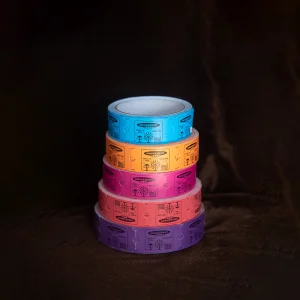
Buy Standard General Admission Tickets and Airline Tickets

China High-Tack Tire Adhesive Labels Manufacturers, Factory

Buy Custom Printed Name Tent Cards for Conferences, Banquets

Custom Paperboard Cards with Custom Printed for Events
High-Quality Secure, Durable and High-Tack Wire Adhesive Labels
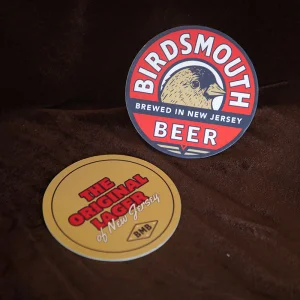
High-Quality Durable Beverage Coasters with Custom Branding
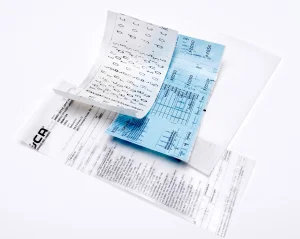
Buy Tear-Proof PET Electrical Insulation Paper (Polyester Film)
High-Quality Adhesive Labels with Anti-Curl and Moisture-Resistant
Frequently Asked Engineering & Sourcing Questions
Detailed technical answers to common queries regarding polymer compounding, compression set evaluation, mold lead times, and global regulatory compliance.