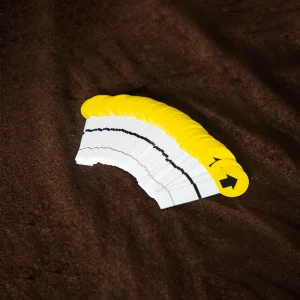
Featured Badge, Ticket & ID Substrate Solutions
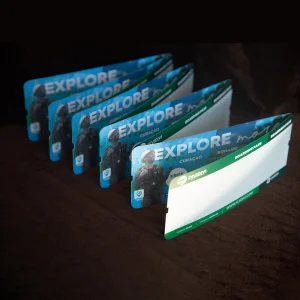
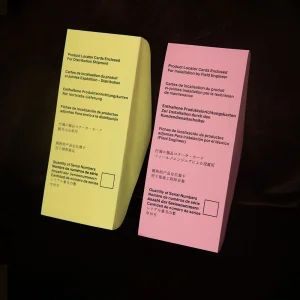

Executive Summary: The Evolution of Global Badge & ID Card Manufacturing
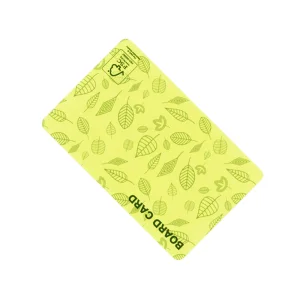
In an increasingly automated and security-conscious commercial environment, custom badge ID cards have evolved from standard PVC thermal-printed plastic cards into sophisticated, multi-layered electronic credentials.
Modern enterprise environments demand identity solutions that combine physical durability, aesthetic brand presentation, and high-frequency cryptographic authentication. Operating as an established printing and conversion manufacturer in Xiamen, China since February 1992, Xiamen Lianhua Printing Co., Ltd. sits at the forefront of this industrial transformation.
This industry report outlines the structural shift across the Custom Badge ID Card Factory & Factories landscape. It provides procurement leads, systems integrators, and enterprise buyers with technical criteria for selecting materials, lamination technologies, RFID chip embedding processes, and anti-counterfeiting security features.
Key Industry Sourcing Metrics
- ISO/IEC 7810 Standard Compliance: ID-1 format requirements (85.60 × 53.98 mm) with controlled thickness tolerances (0.76 mm ± 0.08 mm).
- Material Shift: Transition from standard PVC to composite PVC/PET/PETG and Polycarbonate (PC) for enhanced structural lifespans (>10 years).
- RFID/NFC Integration: High-frequency 13.56MHz (ISO/IEC 14443A/B, ISO 15693) and Ultra-High Frequency (UHF 860–960MHz) dual-interface embedding.
- Green Compliance: Alignment with global RoHS, REACH, and green purchasing directives for zero heavy-metal inks and recyclable substrates.
Engineering Multi-Layer Custom Badge ID Cards
Factory-level badge manufacturing relies on heat-pressure lamination of distinct substrate films. Understanding these materials is vital for selecting credentials suited to severe environmental exposure.
Standard PVC (Polyvinyl Chloride)
The foundational standard for general corporate ID badges, gift cards, and event credentials. Offers vivid offset print reproduction, thermal transfer compatibility, and cost efficiency. Suitable for low-to-medium physical wear applications.
Composite PET/PVC (60/40 & 84/16)
Engineered by embedding a Polyester (PET) core between PVC outer layers. Provides flexural strength, thermal resistance against re-transfer badge printers, and resistance to cracking in extreme temperatures.
PETG (Polyethylene Terephthalate Glycol)
100% eco-friendly, non-chlorinated thermoplastic resin. Fully recyclable and incinerable without emitting toxic halides. Preferred by European municipalities and corporate sustainability programs.
PC (Polycarbonate) Ultra-Security
The gold standard for government identification, defense access control, and national driver's licenses. Layers fuse under high heat into a single solid monolithic structure, rendering mechanical tamper attempts impossible.
Substrate Performance Benchmark Matrix
| Polymer Substrate | Flexural Lifespan | Thermal Distortion Limit | Delamination Risk | Recyclability | Primary Application Profile |
|---|---|---|---|---|---|
| Standard PVC | 1–3 Years | 60°C (140°F) | Low-Medium | Non-Recyclable | Staff Badges, Temporary Visitor Passes |
| Composite PET/PVC | 5–7 Years | 80°C (176°F) | Very Low | Partial | High-Duty Corporate Access, University IDs |
| PETG Eco-Resin | 5–8 Years | 75°C (167°F) | Negligible | 100% Recyclable | Sustainable Corporate Badges, Municipal Cards |
| Polycarbonate (PC) | 10+ Years | 130°C (266°F) | Zero (Fused Monolith) | Recyclable Polymer | National ID, Secure Port Badges, Law Enforcement |
RFID / NFC Inlay Embedding & Physical Anti-Counterfeiting
A true professional custom badge ID card factory integrates electronic access layers directly inside the card core. Rather than applying external sticker tags, automated antenna embedding systems overlay copper wire or etched aluminum directly onto the core sheet prior to thermal lamination.
Advanced Inlay Technology Architecture
- Low Frequency (125 kHz): Legacy proximity integration (e.g., TK4100, EM4200) for standard door locks and time attendance.
- High Frequency (13.56 MHz): High-security ISO/IEC 14443A/B standards (MIFARE Classic®, MIFARE® DESFire®, NTAG®) utilizing AES-128 hardware cryptographic encryption.
- Ultra-High Frequency (860–960 MHz): EPC Gen2 / ISO 18000-6C implementation for hands-free vehicle barrier access and long-range personnel tracking.
- Dual-Frequency Hybrid Badges: Combining HF + UHF or LF + HF chips within a single card body without frequency interference.
Physical Security Printing Features
To combat visual forgery, factory offset presses integrate anti-copy features into the sub-surface printed layers:
Sector-Specific Deployments for Enterprise Badges
Different commercial and industrial settings require unique card surface coatings, slot punch configurations, and operational tolerances.
Enterprise Access & Office HQs
High-definition offset printed corporate logos matched with anti-scratch matte or gloss lamination coatings. Includes integrated slot punching designed for lanyards, badge reels, and clip hardware without severing embedded chip antennas.
Healthcare & Hospital Credentials
Antimicrobial surface treatments applied to PVC/PET composite badge stocks. Formulated to withstand daily wipe-downs using isopropyl alcohol, bleach solutions, and medical-grade disinfectants without color fading or graphic degradation.
High-Security & Critical Infrastructure
Polycarbonate custom ID badges built with laser-engraved variable data, optical variable ink (OVI), and dual-interface DESFire® EV3 microcontrollers for military bases, energy plants, and international logistics hubs.
Technology Roadmap & Smart Factory Innovation
As badge manufacturing transforms through automation, artificial intelligence, and sustainable chemistry, factory workflows are undergoing significant modernization.
1. AI Optical Automated Quality Inspection
Traditional manual visual sampling is being replaced by high-speed inline vision system camera arrays. Automated optical cameras inspect sheet registration, print color variance (Delta-E < 1.5), surface dust, scratch anomalies, and variable barcode readability at rates up to 15,000 cards per hour.
2. Biometric Fingerprint Sensor Integration
Next-generation smart ID badges feature flexible, ultra-thin capacitive fingerprint sensors embedded directly on the card substrate. Power is harvested dynamically via NFC fields, allowing local biometric authentication directly on the badge body without transferring template data over network servers.
3. Ocean Plastics & Circular Material Economy
Leading global identity suppliers are shifting from virgin fossil-based PVC to certified Ocean-Bound Plastics (rPVC) and bio-based PLA (Polylactic Acid) resins derived from renewable starches. These bio-polymers cut carbon emissions by up to 65% per badge manufacturing run.
4. Cryptographic Chiplets & Cloud Digital Twins
Physical badges now serve as physical anchors for cloud-based digital identities. Embedded chips feature unique dynamic cryptographic keys that sync with mobile access credentials, providing multi-factor authentication (MFA) across physical building doors and enterprise IT software networks.
Turnkey OEM / ODM Badge Manufacturing Workflow
From initial design proofing to final chip encoding and automated packaging, our Xiamen manufacturing facility ensures quality control at every phase.
Engineering & Artwork Proofing
Vector art review, bleed layout, color matching against Pantone guides, and layer structure formulation.
Offset & Digital Printing
High-resolution sub-surface lithographic printing on PVC/PET sheets with UV-cured inks.
Inlay & Thermal Lamination
Embedding RFID chips & antennas, applying clear overlay films, and multi-cycle hydraulic heat pressing.
Die-Cutting & QA Inspection
Precision hydraulic punch to standard ID-1 format, 100% RFID reading test, visual QA, and export packing.
Frequently Asked Technical Questions
Common inquiries from security system integrators, corporate buyers, and print distributors.
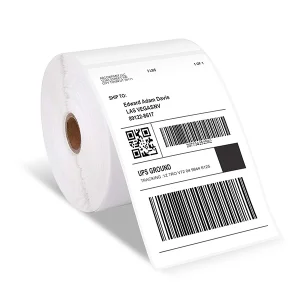
Complementary Industrial Print & Labeling Products