
High-Performance Industrial Products & Sealing Component Supply
Explore our certified manufacturing line of high-durability substrates, custom labels, tags, and industrial printing solutions.





Custom Gasket Seals: The Technical Core of Modern Fluid Containment
In modern industrial engineering, a custom gasket seal is far more than a simple mechanical spacer. It acts as an engineered barrier designed to prevent fluid, gas, and particulate ingress or egress across mating flanges, pump housings, heat exchangers, and electrical enclosures. As industrial systems operate under increasingly severe parameters—ranging from cryogenic liquid nitrogen loops to superheated chemical processing—standard off-the-shelf gaskets often fail to meet demanding operational tolerances.
Partnering with a specialized custom gasket seal manufacturer & company empowers original equipment manufacturers (OEMs), EPC contractors, and procurement directors to tailor material chemistry, durometer hardness, geometric profiling, and pressure-deflection characteristics precisely to their specific application dynamics. Whether mitigating thermal expansion mismatch in electric vehicle battery pack enclosures or enduring aggressive organic solvents in petrochemical refineries, precision-engineered custom seals guarantee long-term integrity, minimizing costly downtime and catastrophic seal failure.
Elastomeric Compounds
Engineered rubber substrates including Silicone, EPDM, NBR (Nitrile), FKM (Viton), and Neoprene. Formulated for specific compression set resistance, rebound resilience, and chemical immunity against oils, ozone, and weathering.
Fluoropolymers & Plastics
Virginal and filled PTFE (Polytetrafluoroethylene), expanded PTFE (ePTFE), PEEK, and UHMW-PE. Essential for applications demanding zero chemical reactivity, near-zero friction co-efficient, and extreme thermal resilience up to +260°C.
Fiber & Graphite Composites
Compressed Non-Asbestos Fiber (CNAF), flexible graphite foil, and mica-reinforced composites engineered for high-pressure steam pipelines, exhaust manifolds, and high-temperature thermal cycling flange connections.
Material Performance Benchmarking Matrix
To assist design engineers in material selection, the following comparison matrix outlines the mechanical and thermal boundaries of primary sealing substrates engineered in our manufacturing facility:
| Material Substrate | Continuous Temp Range | Tensile Strength (MPa) | Compression Set (22h @ 70°C) | Key Resistance Profile | Typical Applications |
|---|---|---|---|---|---|
| EPDM (Peroxide Cured) | -40°C to +150°C | 8.5 - 14.0 | < 20% | Steam, Hot Water, Ozone, UV | HVAC, Automotive Cooling, Potable Water |
| FKM / Viton® | -20°C to +230°C | 10.0 - 16.5 | < 15% | Aromatic Hydrocarbons, Acids, Fuels | Chemical Processing, Aerospace Fuel Lines |
| Expanded PTFE (ePTFE) | -240°C to +260°C | 25.0 - 35.0 | Negligible (No Creep) | Universal Chemical (pH 0-14) | Pharmaceutical Cleanrooms, Glass Flanges |
| Fluorosilicone (FVMQ) | -60°C to +200°C | 7.0 - 11.0 | < 25% | Jet Fuel, Synthetic Oils, Cold Weather | Military Avionics, Cryogenic Gasketing |
| Flexible Graphite Foil | -200°C to +450°C (Atmosphere) | 4.5 - 8.0 | < 10% | High Pressure Steam, Molten Salts | Power Generation, Refineries, Valve Stems |
Why Global Buyers Partner with China's Advanced Gasket Manufacturers
Over the past decade, China’s industrial sealing sector has evolved from high-volume labor-intensive production into a highly automated, research-driven manufacturing powerhouse. Premier custom gasket suppliers based in Xiamen and major industrial hubs leverage vertically integrated supply chains, advanced CNC digital cutting, automated compression molding, and rigorous quality inspection equipment to deliver world-class precision at optimized unit economics.
Cutting-Edge Processing Tooling
Equipped with high-precision CNC blade cutting systems, waterjet cutters capable of handling up to 100mm thick stock, high-speed rotary die-cutters, and laser machining. Tooling-free rapid prototyping allows sample production in as fast as 24 hours.
Comprehensive Quality Governance
Adherence to global quality certifications including ISO 9001:2015, IATF 16949 (Automotive), and ISO 13485 (Medical). Automated Optical Inspection (AOI) units measure gasket dimensions digitally to guarantee zero-defect shipments.
Unrivaled Supply Chain Agility
Direct domestic sourcing of raw polymers, synthetic rubbers, and specialty pressure-sensitive adhesives (PSA from 3M, Nitto, Tesa) reduces raw material lead times by up to 40% compared to Western counterparts.
- Custom Compound Customization: In-house mixing and Banbury compounding allow custom color matching, specialized durometer adjustment (from 20 Shore A to 90 Shore D), and compliance formulations (FDA 21 CFR 177.2600, REACH, RoHS 3, NSF/ANSI 61).
- Scalable Production Lines: Seamless scaling from prototype batches of 50 units to continuous high-speed die-cut runs of 5,000,000 units per month.
- Secondary Operations & Value-Add: Cleanroom packaging (Class 10,000), pressure-sensitive adhesive backing application, kiss-cutting on rolls for automated assembly, and tabbed release liners for effortless field installation.
Macro-Industry Solutions & Localized Application Scenarios
Modern industrial equipment requires tailored sealing architectures. Below are key macro-sector solutions where custom gasket seals solve complex environmental challenges:
New Energy Vehicles & EV Battery Systems
Scenario: EV battery pack top-cover sealing and thermal runaway mitigation.
Solution: Die-cut flame-retardant silicone foam gaskets (UL 94 V-0 rated) with low compression set and integrated pressure-sensitive adhesive. Ensures IP67/IP68 dust and water ingress protection while maintaining structural elasticity during battery cell swelling cycles.
Semiconductor & Electronics Cleanrooms
Scenario: High-vacuum processing chambers and wafer handling units.
Solution: Custom molded Ultra-Clean Fluorocarbon (FKM) and Perfluoroelastomer (FFKM) O-rings and perimeter seals. Ultra-low outgassing, high resistance to plasma etching chemicals, produced inside Class 100 cleanrooms to eliminate trace particle contamination.
Chemical & Process Piping Infrastructure
Scenario: Highly corrosive acid transport pipelines and heat exchangers.
Solution: Dual-wall corrugated metal gaskets with expanded PTFE envelopes or virgin PTFE filled with hollow glass microspheres. Provides total chemical resistance across pH 0-14 while preventing bolt stress relaxation in high-vibration piping loops.
Key Industry Trends Transforming Gasket Seal Manufacturing
IoT-Integrated Smart Gaskets
Embedded micro-piezoelectric sensors within critical flange gaskets enable real-time tracking of bolt load decay, local temperature spikes, and sub-micron fluid leakage. Data is streamed to industrial SCADA systems for predictive maintenance before failure occurs.
Sustainable & Bio-Elastomers
Transition toward bio-derived monomer bases, eco-friendly non-aromatic vulcanization systems, and fully recyclable thermoplastic elastomers (TPE). Driven by EU Green Deal mandates and corporate Scope 3 emission reduction targets.
Additive Manufacturing & 3D Silicone
Liquid silicone rubber (LSR) 3D printing enables ultra-complex, lattice-structured elastomeric seals without expensive hard tooling. Ideal for low-volume aerospace prototypes and customized medical implants.
Cryogenic Hydrogen Sealing
Development of ultra-dense polymer matrices capable of containing sub-zero liquid hydrogen (-253°C) without brittle fracture or gaseous permeability, supporting the global green hydrogen infrastructure expansion.
Global Procurement & Total Cost of Ownership (TCO) Framework
When selecting a custom gasket seal manufacturer & company, international procurement managers must look beyond initial piece-price quotes. Evaluating total cost of ownership (TCO) requires auditing quality control protocols, material yield optimization, and supply chain continuity tactics.
1. Material Traceability & Certificate Integrity
Ensure your supplier provides batch-level raw material test certificates (3.1 certificates according to EN 10204). Verify that compounds comply with REACH SVHC candidate lists, RoHS 3 directives, and FDA/NSF food contact standards where required.
2. Precision Die Design & Nesting Efficiency
High-efficiency CAD nesting algorithms minimize web scrap rate during die-cutting of costly fluoropolymers or silicone sheets. Efficient nesting directly reduces unit material costs by 15% to 30% for high-volume orders.
3. Packaging & Automated Assembly Readiness
For high-speed automated production lines, specify kiss-cut gaskets delivered on rolls with extended tab pull-liners. Custom tape packaging prevents seal distortion during transit and lowers factory floor assembly labor costs.
Specialized Material Substrates, Labels & Technical Components
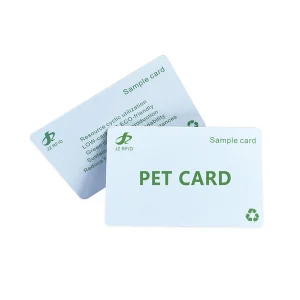
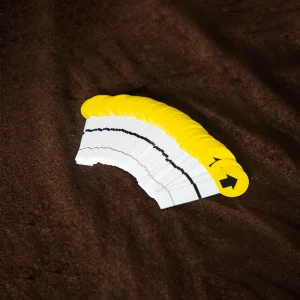
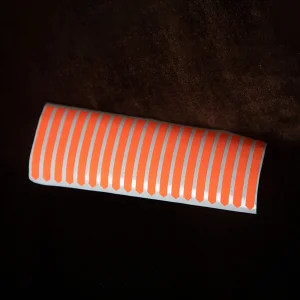
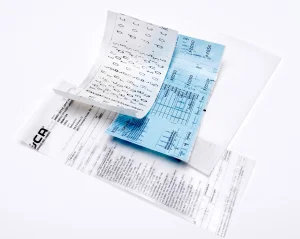
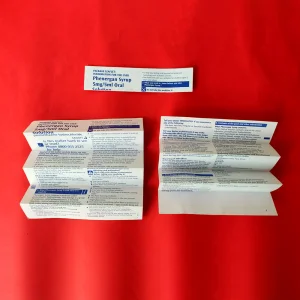
Review the second half of our specialized manufacturing offerings, including eco-friendly cards, high-tack labels, and heavy-duty ABS boards.



Frequently Asked Questions (FAQ)
Expert engineering insights regarding custom gasket seal design, manufacturing tolerances, and procurement logistics.
What is the difference between compression set and creep relaxation in custom gaskets?
Compression Set measures the permanent deformation remaining in an elastomeric material after the compressive force is released (expressed as a percentage of original deflection). A lower percentage indicates superior elastic recovery.
Creep Relaxation (or stress relaxation) refers to the loss of sealing stress over time while the gasket remains compressed under a constant distance between flange faces. Creep is common in thermoplastics like solid PTFE, whereas peroxide-cured elastomers and expanded PTFE (ePTFE) exhibit significantly lower creep, maintaining long-term torque retention on flange bolts.
How do I choose between die-cutting, laser cutting, and CNC waterjet cutting for custom gaskets?
- Die-Cutting (Steel Rule / Rotary): Best for high-volume production (10,000+ pieces) of thin to medium flexible materials (up to 6mm thickness). Requires initial tooling cost but delivers the lowest unit price and fastest cycle time.
- CNC Knife Cutting: Ideal for rapid prototyping and low-to-medium volume runs (1 to 2,000 pieces). Zero tooling expense, rapid turnaround, handles soft rubber and foam up to 25mm thickness cleanly.
- Waterjet Cutting: Preferred for ultra-thick stocks (over 25mm), metals, compressed fiber, dense PTFE, and hard plastics. Delivers high dimensional accuracy without heat-affected zones (HAZ) or edge hardening.
What dimensional tolerances can your factory achieve for custom die-cut rubber gaskets?
Our manufacturing facility strictly adheres to international standard DIN ISO 3302-1 Class E1 / M1 for precision molded and die-cut rubber components. For standard flat gaskets, our typical CNC digital cutting tolerance is ±0.05mm to ±0.1mm depending on material durometer, thickness, and elasticity.
Which pressure-sensitive adhesive (PSA) should be specified for high-temperature gasket sealing?
For continuous operation up to +150°C to +200°C, specified pure acrylic adhesives (such as 3M 9485PC or 3M 200MP family) or high-temp silicone-based adhesives are recommended. Rubber-based adhesives are limited to low-temperature applications (< +70°C) as they tend to oxidize and lose shear strength rapidly under thermal loading.
How does your factory ensure compliance with RoHS, REACH, and FDA regulations?
We source raw polymers exclusively from certified global chemical suppliers (e.g., DuPont, Chemours, Solvay, Shin-Etsu). Every production lot undergoes third-party laboratory testing via SGS or TÜV to verify compliance with REACH SVHC, RoHS 3 (10 substances), and FDA 21 CFR 177.2600. Material Test Reports (MTR) are provided with every shipment batch.
What is the typical lead time for custom gasket prototypes and mass production orders?
Prototyping via tooling-free CNC knife cutting or waterjet takes 24 to 72 hours after CAD drawing approval (.DXF / .DWG / .STEP). Mass production runs using custom steel-rule or rotary dies typically require 7 to 12 working days, depending on volume and secondary assembly requirements.
Ready to Engineer Your Custom Sealing Solution?
Consult with our senior application engineers today for material selection support, CAD design optimization, and instant factory-direct quote proposals.
Request Technical Consultation & Quote