
Industrial Printing & Substrate Product Suite
Precision-engineered label materials, multi-layer card stocks, and specialized dual-color ABS boards direct from our Xiamen manufacturing complex.

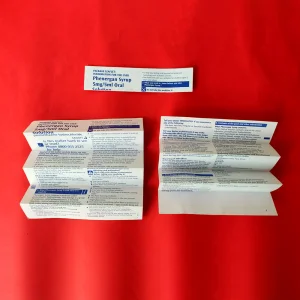
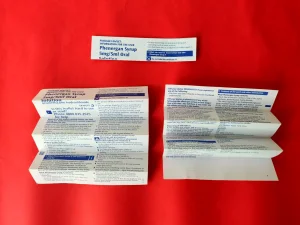
Custom Multi-Panel Folded Instruction Manuals for Product Manufacturers, Factories
View Product Specs
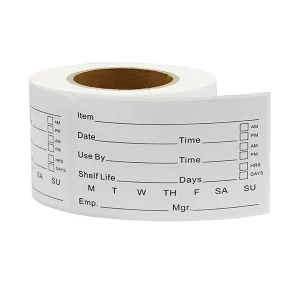
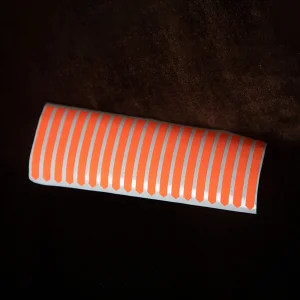
Custom Low Temperature Resistant Freezer Adhesive Labels Manufacturers, Factories
View Product Specs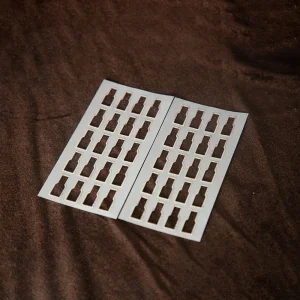
The Global State of Blank ID Card Manufacturing
Understanding material science, security integration, and global supply chain shifts in high-volume card manufacturing.
Evolution of Substrate Technology
The global market for blank ID cards has transitioned from standard monolayer PVC (Polyvinyl Chloride) to sophisticated multi-layer composite structures. Today’s industrial ecosystem demands substrates that endure extreme environmental stress, thermal transfer printing temperatures, and high-frequency tactile wear. Leading blank ID card factories now manufacture using layered PETG (Polyethylene Terephthalate Glycol) and Polycarbonate (PC), which prevent card delamination and extend functional operational lifespans past 10 years.
RFID & Smart Chip Integration
Modern enterprise security infrastructures no longer rely solely on visual identification or low-coercivity (LoCo) magnetic stripes. The global demand for high-quality blank smart cards embedded with contactless 13.56MHz RFID (NTAG, MIFARE, DESFire) and dual-frequency inlays has grown exponentially. Advanced manufacturers must ensure pre-lamination (pre-lam) chip placement precision within ±0.05mm tolerances to prevent thermal damage during final customer dye-sublimation or retransfer printing processes.
Anti-Counterfeiting & Compliance
National identity security standards (ISO/IEC 7810 ID-1) dictate stringent physical characteristics for blank ID cards, including dimensioning (85.60 × 53.98 mm), corner radii, and bending stiffness. Furthermore, global corporate and government buyers demand compliance with eco-toxicological standards such as REACH, RoHS 3, and California Proposition 65, making green polymer synthesis a core differentiator for tier-one card factories.
Why Sourcing Blank ID Cards from China Factory Ecosystems Yields Competitive Superiority
From raw polymer extrusion to automated optical inspection, Chinese industrial clusters offer unmatched scalability and material quality.
Vertical Raw Material Integration
Chinese blank ID card manufacturers, particularly leaders situated in industrial hubs like Xiamen, benefit from fully integrated supply chains. By controlling synthetic film extrusion, magnetic stripe slitting, and adhesive formulation in-house or through hyper-localized partners, factories eliminate multi-tier distributor margins. This grants international B2B buyers premium-grade PVC, ABS, PET, and Polycarbonate card blanks at pricing structures unmatchable by Western converters.
Advanced Automated High-Speed Lamination
With modern multi-cavity automated hydraulic press lines, factory production cycles operate around the clock with extreme accuracy. Automated collation machines laminate protective overlays (clear PVC/PET films with spec-grade dyne surface treatments) onto cores using precise thermal-pressure profiles. This guarantees pristine surface smoothness (zero pit marks or inclusions), essential for preventing printhead damage in thermal transfer ID card printers such as Zebra, Fargo, and Evolis.
Rigorous ISO Quality & Cleanroom Standards
Established manufacturers like Xiamen Lianhua Printing (operating since 1992) implement strict ISO 9001:2015 quality control systems. Cards are produced in Class 100,000 dust-free cleanrooms. Every blank card undergoes Automated Optical Inspection (AOI) to screen out surface microscopic dust, edge burrs, sheet bow, and static charges, ensuring 99.98% yields during enterprise customer printing runs.
Technical Material Specification & Comparison Matrix
Select the exact substrate polymer formulation engineered for your deployment environment and printing hardware.
| Substrate Material | Flexural Durability | Heat Resistance | Printability (Dye-Sub / Retransfer) | Laser Engraving Reaction | Primary Industrial Application |
|---|---|---|---|---|---|
| Standard PVC (100%) | Good (2,500 Flex Cycles) | Up to 60°C (140°F) | Excellent Direct-to-Card (DTC) | Non-Reactive / Low Contrast | Standard Employee Badges, Gift Cards, Loyalty Cards |
| Composite PVC/PET (60/40) | Superior (10,000+ Flex Cycles) | Up to 80°C (176°F) | Flawless Direct & Retransfer | Moderate Visual Contrast | High-Use Enterprise Access, Campus Student IDs |
| Pure PETG Plastic | Exceptional (Plasticizer Free) | Up to 85°C (185°F) | Excellent Surface Adhesion | High Laser Contrast (Carbonized) | Government Drivers Licenses, National Healthcare Badges |
| Polycarbonate (PC) | Maximum / Indestructible | Up to 125°C (257°F) | Specialized Retransfer Only | Deep Black Carbonization (Laser Engraved) | Military IDs, National Passports, Secure Resident Cards |
| ABS (Acrylonitrile Butadiene Styrene) | High Structural Rigidity | Up to 95°C (203°F) | Requires Special Surface Coating | Exposes Inner Core (Dual-Color) | Key Tags, Rough Industrial Labels, Tactile Braille Plates |
Technical Deep-Dive: Dyne Levels & Surface Energy Optimization
A critical cause of print failure in desktop ID card printers (such as flaking dye ribbons or patchy thermal images) is insufficient surface energy. High-quality blank card manufacturers treat overlay films with specialized corona treatment or chemical primers to achieve a dyne level of ≥ 40 dynes/cm. This ensures thermal transfer inks wet out smoothly and bond permanently to the card surface without pinholes or edge lift.
Localized Application Scenarios & Global Procurement Needs
Tailored engineering specifications designed to satisfy diverse international sector compliance standards.
Enterprise Physical Access Control (PACS)
Multinational corporations require uniform blank smart card substrates capable of hosting dual-technology chips (e.g., 125kHz Proximity combined with 13.56MHz RFID). Cards must withstand daily swipe routines through slot punches and proximity readers. Procurement teams prioritize composite PVC/PET cards to resist snap-cracking near the punch slot under cold temperature conditions in northern regions.
University & Education All-in-One Badges
Higher education campuses deploy single-card solutions for dorm access, library checkout, cafeteria payments, and transit. These cards experience intensive handling. B2B buyers mandate scratch-resistant overlays (e.g., Polycarbonate or eco-friendly PET) with embedded magnetic stripes (HiCo 2750 Oe) to prevent data corruption when kept near mobile phones.
Government Identity & Transit Systems
Municipal and federal procurement tenders stipulate non-standard security integration: clear window cutouts, tactile braille elements, UV fluorescent overt threads, and laser-engravable layers. Sourcing directly from advanced OEM factories allows government contractors to customize raw pre-lam sheets prior to final card die-cutting.
Industry Trends & Next-Generation Card Manufacturing Technologies
Pioneering eco-friendly polymers, smart chip miniaturization, and AI-driven quality assurance.
Sustainable & Eco-Friendly Materials
With environmental mandates intensifying across Europe and North America, global buyers are shifting away from virgin PVC. Innovations include Recycled PVC (rPVC), ocean-bound plastic composites, and bio-degradable PLA (Polylactic Acid) card blanks. Leading Chinese factories are leading this shift by certifying green purchasing supply chains that comply with zero-landfill goals.
Embedded Biometric Smart Cards
The integration of ultra-thin fingerprint sensors directly within standard CR80 blank smart cards is re-defining high-security access. Manufacturing these complex hybrid cards requires multi-layer cold-lamination techniques to preserve sensitive silicon microchips and flexible biometric sensor circuits during factory curing.
AI-Driven Quality Control Systems
High-speed camera vision integrated with AI machine learning models inspect card blanks at speeds exceeding 30,000 cards per hour. These vision systems instantaneously detect surface imperfections as tiny as 5 microns, magnetic stripe misalignment, or chip module height deviations, ensuring 100% compliance before packaging.
Global Procurement Checklist: How to Qualify a Blank ID Card Factory
Essential technical parameters to evaluate before finalizing your bulk card manufacturing contract.
1. Dimensional & Edge Integrity
Ensure the supplier guarantees strict adherence to ISO/IEC 7810 ID-1 standard specifications: Length 85.60 mm, Width 53.98 mm, Thickness 0.76 mm (30 mil) ±0.08 mm. Edge die-cutting must be burr-free to prevent mechanical jams inside card printer feeding rollers.
2. Surface Energy & Cleanliness
Verify that cards undergo static elimination treatment during automatic shrink-wrapping. Dust particles create white void spots during dye-sublimation print jobs. Demand factory testing reports verifying surface tension ≥ 40 dynes/cm.
3. RFID Chip Integrity & Resonator Test
For blank smart cards, request 100% factory resonance testing. Ensure the chip read range matches target system frequencies (13.56 MHz for HF / ISO 14443A, 125 kHz for LF) and that the chip module sits completely flush with the card surface.
Specialized Polymer Cards, ABS Signage & Label Solutions
Explore additional industrial print substrates manufactured under our strict ISO quality control protocols.

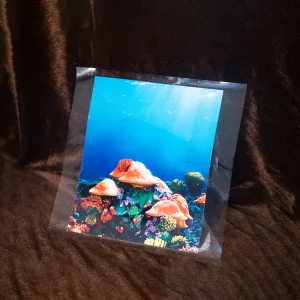
High-Quality Adhesive Labels with High-Translucency Backing Paper Manufacturers, Factories
View Product Specs
Custom Custom Tactile Braille Signage on Premium ABS Board Manufacturers, Factory
View Product Specs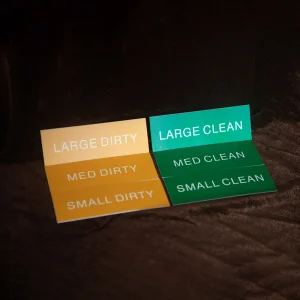

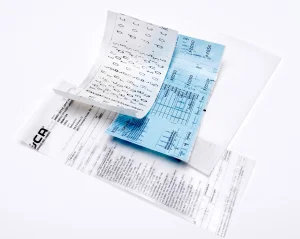
Buy Tear-Proof PET Electrical Insulation Paper (Polyester Film) Manufacturer, Products
View Product Specs
Frequently Asked Questions (FAQ) for Global Buyers & Engineers
Direct insights from our senior technical staff regarding order specifications, printer compatibility, and material performance.
What is the difference between standard PVC card blanks and Composite PVC/PET cards?
Standard PVC cards consist of 100% Polyvinyl Chloride layers. They are highly cost-effective and suitable for standard direct-to-card dye-sublimation printing. However, when exposed to high heat (such as in retransfer card printers) or heavy physical flexing, 100% PVC can warp or break over time. Composite PVC/PET cards (typically 60% PVC and 40% PET polyester core) provide dramatically higher thermal stability, enhanced flex fatigue resistance (over 10,000 bend cycles), and are mandatory for retransfer printing or extreme climate conditions.
Are your blank cards fully compatible with thermal card printers like Zebra, Evolis, Fargo, and Magicard?
Yes. Our blank ID cards are manufactured under ISO/IEC 7810 standards and feature mirror-finish press polish overlays with surface tension engineered above 40 dynes/cm. This ensures uniform thermal conductivity during dye-sublimation or retransfer resin ribbon application, eliminating white voids, printhead scratches, and premature ribbon tearing.
Can I order custom-thickness blank cards or non-standard CR80 dimensions?
Absolutely. While standard CR80 30-mil (0.76mm) thickness represents the majority of global production, our factory extruded sheets can be custom laminated to non-standard thicknesses ranging from 10-mil (0.25mm) up to 60-mil (1.52mm). We also offer custom die-cutting for CR79, CR100 (oversized event badges), luggage tags, and custom key fobs according to your CAD drawings.
How does Xiamen Lianhua Printing ensure anti-static performance during shipping and handling?
During the automated die-cutting and inspection phase, static charges can cause card blanks to stick together or attract airborne dust particles. We utilize inline ionization bars during final collation and package all cards in anti-static dust-free vacuum bags (typically packed in inner boxes of 100 or 500 cards), guaranteeing smooth hopper feeding in your personalization equipment.
What magnetic stripe coercivity options are available for blank cards?
We supply both Low Coercivity (LoCo - 300 Oe) and High Coercivity (HiCo - 2750 Oe or 4000 Oe) magnetic stripes flush-laminated into the card surface. Flush lamination ensures the magnetic ribbon sits completely level with the card overlay, preventing wear on customer encoder heads and maintaining maximum signal amplitude.
Do your synthetic materials meet international environmental standards?
Yes. All raw polymers (PVC, PET, PETG, ABS, PC) and laminating adhesives strictly comply with European REACH regulations (EC 1907/2006) and RoHS 3 directives (EU 2015/863). Test certificates from independent third-party laboratories (such as SGS or Intertek) are available upon request for B2B compliance verification.
What is the typical lead time for OEM bulk orders from your China factory?
Standard catalog items (such as unprinted white CR80 30-mil cards) are maintained in safety stock for rapid dispatch. Custom OEM runs (including custom pre-printed offset backgrounds, embedded RFID inlays, or custom die-cut dimensions) feature typical manufacturing lead times of 7 to 12 business days depending on volume, followed by expedited sea or air freight options worldwide.