
Industrial Printing & Identification Components
Explore our core OEM/ODM product portfolio engineered for extreme environments, heavy industry, commercial retail, and infrastructure deployments.




Global Landscape of Industrial Cable Identification Tags
Analyzing market drivers, operational mandates, and technical requirements across global power grid, telecommunication, aerospace, and data center ecosystems.
In modern industrial infrastructure, electrical engineering, and hyperscale data center operations, cable identification tags serve as the critical neural link between hardware complexity and operational safety. As global energy grids transition toward renewable integration, smart grids, and localized microgrids, and as AI computing clusters push network wiring density to unprecedented levels, the demand for high-durability, traceable, and chemical-resistant wire and cable markers has escalated from a basic operational utility to a mission-critical safety compliance standard.
In industrial facilities, unlabelled or improperly tagged wiring harnesses represent a primary vector for catastrophic operational downtime, costly maintenance missteps, and elevated safety hazards during arc-flash or emergency shut-off scenarios. According to global industrial risk assessments, over 30% of field technician troubleshooting delays in legacy facilities stem directly from illegible, degraded, or missing cable markers. Consequently, international procurement standards now mandate industrial-grade cable identification tags capable of enduring thermal stress, UV exposure, chemical splashing, mechanical abrasion, and flame propagation.
From a macro perspective, the global cable marker market is experiencing a structural pivot. Traditional pressure-sensitive paper tags are rapidly being replaced by high-performance synthetic polymers including cross-linked polyolefin, thermal-stabilized polyester (PET), polycarbonate (PC), and dual-color acrylonitrile butadiene styrene (ABS) engraving substrates. This shift is driven by global regulatory frameworks such as ANSI/TIA-606-C for telecommunications infrastructure, UL 969 for marking and labeling systems, and strict European REACH and RoHS directives governing chemical hazardous substances in electronics manufacturing.
Industry Trends & Regulatory Compliance Matrix
Understanding how global standards drive material selection, print durability, and thermal threshold specifications.
Halogen-Free Flame Retardancy
Modern electrical enclosures mandate Low-Smoke Zero-Halogen (LSZH) cable tags. In fire events, non-LSZH materials emit toxic halogen gases (chlorine, fluorine) that corrode sensitive electronics and threaten human life. Advanced tags incorporate halogen-free flame retardant additives reaching UL94-V0 status.
2D Barcoding & RFID Integration
As asset management transitions to Automated Infrastructure Management (AIM) platforms, cable tags must support high-density DataMatrix 2D codes, QR codes, and UHF RFID inlays. Printing precision must guarantee scannability even on curved wrap-around wire labels down to 2mm wire diameters.
Extreme Temperature Tolerance
Industrial cabling spans environments ranging from cryogenic medical freezers (-80°C) to engine compartments and power transformers (+150°C). Material science innovations utilize cross-linked polyester and specialty acrylic pressure-sensitive adhesives (PSAs) to eliminate edge-lifting or legibility loss.
| Material / Tag Type | Operating Temp. Range | Flame Retardancy | Chemical & Solvent Resistance | Primary Industrial Application |
|---|---|---|---|---|
| Tear-Proof PET Film | -40°C to +150°C | UL94-V2 rated | High resistance to oils, alcohols, light solvents | Electrical insulation paper, motor wiring, control panels |
| Flexible PE-Based Film | -20°C to +90°C | Standard commercial | Waterproof, excellent flexibility around tight radius | Commercial cabling, consumer electronics, conduit marking |
| Outdoor-Grade ABS Board | -30°C to +80°C | Self-extinguishing | Extreme UV stability, harsh outdoor weather resistance | Substation tag boards, solar farm trunk line identification |
| Polycarbonate (PC) Card | -50°C to +135°C | UL94-V0 compliant | Superior impact & scratch resistance, heavy abrasion | High-security identity cards, industrial valve & cable tags |
| High-Tack Synthetic Paper | -30°C to +100°C | Flame retardant options | Resistant to smudge, tear, moisture, grease | Tire manufacturing wire, heavy logistics, equipment labeling |
Adhesive Physics, Substrates & Thermal Transfer Chemistry
Understanding the triad of Pressure-Sensitive Adhesives: Tack, Shear Strength, and Peel Adhesion under operational stress.
A cable identification tag is only as reliable as its chemical bond to the wire jacketing substrate. Cables are typically jacketed in low-surface-energy (LSE) polymers such as Polyvinyl Chloride (PVC), Cross-linked Polyethylene (XLPE), Thermoplastic Vulcanizate (TPV), or Fluorinated Ethylene Propylene (FEP). Bond failure on curved, small-diameter wires is driven by material memory—the natural tendency of stiff face-stock films to unroll and flag off the cable.
Engineering Rule of Thumb: High-performance wrap-around cable tags require flexible face-stocks (e.g., 2-mil vinyl or self-laminating PET) paired with high-coat-weight solvent acrylic adhesives that exhibit exceptionally high initial tack and high shear strength to resist continuous bending force.
The Triad of Pressure-Sensitive Adhesive (PSA) Mechanics
When selecting or manufacturing custom cable identification tags, engineers evaluate three fundamental mechanical metrics:
- Tack (Initial Grab): The immediate bond formed upon instantaneous contact under minimal pressure. High tack is essential for rapid automatic wire labeling on high-speed assembly lines.
- Peel Strength: The force required to remove the adhesive tape from the wire surface at a specific angle (typically 90° or 180°) and speed. Permanent cable markers require high peel adhesion (>25 N/25mm) to prevent unauthorized tampering or accidental dislodgement.
- Shear Strength (Holding Power): The ability of the adhesive to resist internal sliding under constant vertical stress or thermal expansion. Superior shear strength prevents adhesive bleed (oozing) and maintains structural bond integrity at elevated operating temperatures.
Furthermore, image legibility relies heavily on Thermal Transfer Ribbon (TTR) chemistry. Standard wax ribbons fail under chemical wipedowns or friction. For industrial wire tags, resin-based TTR formulation chemically fuses with the polyester or polyolefin facestock during high-temperature printing, resulting in markings that resist solvent immersion (isopropyl alcohol, engine oil, hydraulic fluid) according to MIL-STD-202G Method 215 standards.
Localized Application Scenarios & Deployment Environments
From deep-sea marine platforms to high-density cloud data centers, custom identification systems solve specific operational challenges.
Hyperscale Data Centers
In high-density server racks featuring fiber optic patch cables (LC, MTP/MPO connectors), color-coded self-laminating cable tags allow rapid port mapping without impeding airflow. Clear laminate tails wrap over printed text, guarding against abrasion during maintenance cable pulls.
Solar Farms & Renewables
Photovoltaic arrays expose DC trunk lines to relentless UV radiation, ozone, rain, and extreme thermal cycling (-40°C to +90°C). Engraved ABS dual-color boards and UV-stabilized stainless-steel/polyolefin tags ensure 25-year readability in remote solar installations.
Automotive Harnessing & EV Battery Pack
Electric Vehicle (EV) high-voltage wiring harnesses (bright orange conduit) demand clear identification tags capable of enduring engine bay oils, vibrations, and temperature spikes up to +125°C. Flame-retardant PET labels deliver robust insulation and permanent legibility.
Xiamen Lianhua Printing: Integrated Industrial Solutions
Established in February 1992, Xiamen Lianhua Printing Co., Ltd. brings over three decades of conversion expertise, automated production precision, and ISO-certified quality assurance to global clients.
End-to-End OEM/ODM One-Stop Service
From initial material compounding and structural layout engineering to high-speed die-cutting, rotary slotting, and final quality control inspection, we control every manufacturing step in our Xiamen production complex.
Green Purchasing & Chemical Compliance
We maintain a strict environmental stewardship standard. Raw substrates, liners, inks, and adhesives are strictly screened to guarantee compliance with RoHS 3, REACH SVHC candidate lists, and international green supply chain protocols.
Advanced Automated Converting Equipment
Our facility houses high-precision flexographic printers, laser die-cutters, automatic slitting machines, and CCD visual inspection systems to maintain ultra-tight tolerances (±0.1mm) across high-volume production runs.
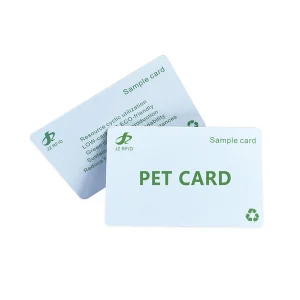
Specialized Labels, Cards & Engraving Media
Complete your procurement package with engineered labels, insulation films, freezer-grade materials, and ABS dual-color signage.


Frequently Asked Questions (FAQ)
Technical guidance for B2B procurement officers, electrical engineers, and OEM project managers.