
Precision-Engineered Labeling & Substrate Solutions
Explore our core medical-grade adhesive labels, durable synthetic materials, custom instruction documentation, and high-performance substrate cards.
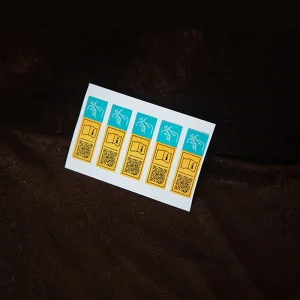
Custom Weatherproof PVC Adhesive Labels
View Product Details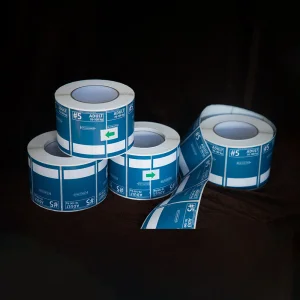
China High-Tack Tire Adhesive Labels
View Product Details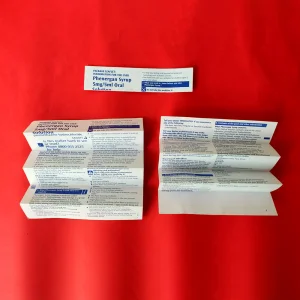
Custom Multi-Panel Folded Instruction Manuals
View Product Details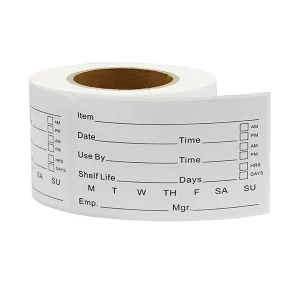
Low Temp Freezer Adhesive Labels
View Product Details
China High-Durability Flexible PVC Cards
View Product Details
Custom Single-Sheet Instruction Manual
View Product Details
High-Translucency Backing Paper Labels
View Product Details
High-Quality Luxury Premium Paperboard Cards
View Product DetailsMacro Industry Solutions & Global Healthcare Landscape
Analyzing the pivotal shifts in medical packaging compliance, supply chain serialization, tamper safety, and advanced material engineering for pharmaceutical manufacturing.
In modern healthcare systems, a pharmaceutical label is far more than an aesthetic carrier of brand identity—it is an indispensable safety mechanism, a legal compliance contract, and a vital node in global supply chain logistics. As the global pharmaceutical packaging labeling market accelerates toward a projected valuation exceeding $32 Billion by 2030, medical label factories face unprecedented demands driven by strict regulatory mandates, global serialization initiatives (such as the US Drug Supply Chain Security Act - DSCSA, and the EU FMD directive), and the rapid expansion of temperature-sensitive biologics and cell therapies.
At our specialized High-Quality Labels Medicine Factory, we combine material science, precision flexographic and digital printing, medical-grade pressure-sensitive adhesive formulations, and 100% automated optical inspection systems. Our enterprise architecture is optimized to solve the critical vulnerabilities inherent in pharmaceutical labeling: migration of toxic adhesive monomers through primary container walls, label flagging on micro-diameter vials, substrate degradation during ultra-low temperature cryogenic storage (-196°C), and vulnerability to illicit counterfeiting.
Tamper-Evident & Anti-Counterfeiting
Integrating void-pattern matrices, frangible security vinyl, VOID release layers, and holographic micro-encapsulation to prevent unauthorized product diversion and falsification.
Cryogenic & Cold-Chain Resilience
Formulated with specialized low glass transition temperature ($T_g$) acrylic polymers that guarantee permanent adhesion to polypropylene vials stored in liquid nitrogen phase (-196°C).
DSCSA & GS1 Serialization Ready
High-resolution 600 DPI thermal transfer printability ensuring Grade-A barcode and 2D DataMatrix verification for universal Track & Trace interoperability.
Pharmaceutical Label Construction Matrix
Understanding the interplay between facestocks, low-migration adhesives, and high-translucency release liners for automated high-speed labellers.
A high-performance pharmaceutical label comprises three engineered layers: the **Facestock**, the **Pressure-Sensitive Adhesive (PSA)**, and the **Release Liner**. Selecting the correct triad is critical to avoiding product recalls caused by label migration, bubbling, chemical degradation, or high-speed dispense failures on automated packaging lines.
| Substrate Layer | Material Options | Technical Characteristics | Primary Medical Applications |
|---|---|---|---|
| Facestock | Top-Coated PET, Polypropylene (PP), Synthetic Paper, Ultra-thin PVC | Dimensional stability, tear resistance, chemical immunity to alcohol/disinfectants, curvature compliance. | Syringes, small-diameter ampoules, IV bags, secondary medicine cartons. |
| Medical Adhesive | Low-Migration Acrylic, Cryogenic Rubber-Based, Solvent-Free UV Polymer | Low-extractable profile (conforms to USP <661.1>), high initial tack, zero edge-lifting (flagging). | Blood bags, diagnostic test cartridges, cold-chain vaccine vials, OTC bottles. |
| Release Liner | Super-Calendered Glassine, High-Translucency PET Film, Moisture-Sealed Kraft | High tensile strength, tight caliper tolerance, transparent sensor readability for automatic die-cut positioning. | High-speed rotary labeling lines (>600 units/min), clinical trial kit assembly. |
| Security Elements | Delaminating Security Vinyl, Micro-Text Print, Tamper-Evident Void Cutouts | Irreversible mechanical destruction upon removal attempt; leaves visible residue or tears substrate. | Narcotics packaging, tamper-evident carton seals, prescription drug boxes. |
Technical Insight on Low-Migration Adhesives: In plastic primary packaging (such as low-density polyethylene LDPE ampoules or blow-fill-seal containers), low-molecular-weight adhesive components can migrate through the container wall into liquid drug formulations. Our specialized medical-grade acrylic adhesives utilize ultra-pure cross-linked polymers, ensuring extractables and leachables (E&L) remain well within FDA 21 CFR 175.105 safe limits.
Regulatory Compliance & Quality Management
Enforcing rigorous international standards to ensure seamless customs clearance, bio-compatibility, and safety for medical markets worldwide.
ISO 13485 & ISO 15378 Practices
Our manufacturing facility strictly implements ISO quality management systems specifically designed for primary packaging materials of medicinal products and medical devices.
RoHS & REACH Compliance
All raw materials—including synthetic paper, PET facestocks, foils, and pressure-sensitive coatings—are fully certified compliant with EU RoHS 3 and REACH SVHC mandates.
FDA 21 CFR Part 11 Audit Trails
Our digital label printing press workflows maintain electronic records and system integrity compliance, ensuring complete lot-to-lot traceability from raw roll to finished reel.
Comprehensive Validation Support & Documentation Packages
For international pharmaceutical companies and contract development and manufacturing organizations (CDMOs), raw supplier changes can trigger costly regulatory refilings. We maintain strict **Change Control Notifications (CCN)**, ensuring material specifications, adhesive formulations, and liner release forces remain unchanged for multi-year drug manufacturing contracts. Every production batch is delivered with a complete Certificate of Analysis (CoA), including testing parameters for initial tack, 180° peel adhesion, liner release force, and dimensional tolerance checks.
Targeted Medical Application Scenarios
Customized label solutions engineered to withstand extreme physical and thermal stress points across diverse healthcare sectors.
1. Small-Diameter Vials & Syringe Flagging Prevention
Wrapping self-adhesive labels around curved surfaces with diameters as small as 7mm (e.g., diagnostic ampoules, pre-filled syringes) subjects the label to intense outward spring-back force. Our ultra-flexible PP and thin PET synthetic facestocks paired with high-shear acrylic adhesives prevent edge lifting (flagging) over multi-year shelf lives.
2. Autoclave Steam & Gamma Sterilization Labels
Medical instruments and surgical procedure trays undergo high-pressure steam autoclaving (121°C to 134°C) or ethylene oxide (EtO) / gamma radiation exposure. Our heat-stabilized polyester labels maintain structural integrity, legend legibility, and adhesive performance without yellowing or peeling.
3. Multi-Panel & Extended Content Booklet Labels
As pharmaceutical brands operate globally, drug packaging must include multi-lingual instructions, warning indications, and dosage guidelines within constrained package dimensions. We design custom multi-panel folded instruction booklet labels that peel open smoothly and reclose securely.
4. Blood Bag & IV Infusion Secondary Labeling
Secondary labeling of flexible PVC blood containers requires adhesives certified to prevent plasticizer migration into plasma fractions while maintaining grip during ambient centrifuging and subsequent deep-freeze storage.
Technology Roadmap & Next-Gen Smart Labeling
Pioneering the convergence of digital intelligence, sustainable biopolymers, and AI-driven quality assurance in pharmaceutical printing.
The pharmaceutical packaging sector is entering an era of digital transformation. As smart healthcare ecosystems grow, the standard medicine label is evolving into an interactive digital interface. Our engineering roadmap outlines the integration of cutting-edge technologies planned through 2030:
RFID & NFC Smart Label Integration
Embedding passive UHF RFID tags and encrypted NFC chips directly between the facestock and liner. Enables real-time inventory counts, automated hospital cabinet tracking, and instant smartphone-based patient authenticity verification.
AI-Powered 100% Inline Optical Vision
Deploying high-resolution camera lines equipped with deep-learning algorithms to inspect every printed label reel at 150m/min. Detects minute print voids, color shifts ($\Delta E < 1.0$), barcode grade drops, and physical die-cut blemishes.
Bio-Based & Biodegradable Synthetics
Transitioning from fossil-fuel derived plastics to wood-pulp bio-PE and compostable PLA synthetic facestocks, reducing pharmaceutical brand carbon footprints while retaining strict medical barrier properties.
Specialty Paperboards, PET Films & Custom Board Materials
Explore our extended series of durable synthetic labels, wire management tags, dual-color signboards, and luxury branding materials.
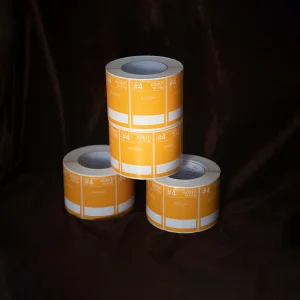
Affordable Printer-Friendly Paper Labels
View Product Details
Durable & Versatile PET Adhesive Labels
View Product Details
High-Tack Wire & Cable Adhesive Labels
View Product Details
Custom Printed Name Tent Cards
View Product Details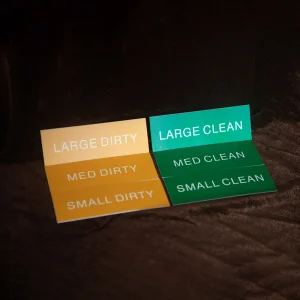
Ordinary ABS Dual-Color Board
View Product Details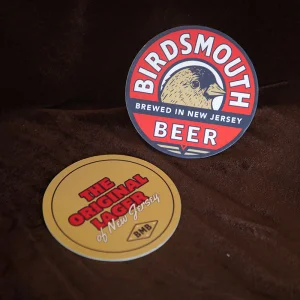
Durable Beverage Coasters with Branding
View Product Details
Custom Synthetic Paper Adhesive Labels
View Product Details
Anti-Curl Sealed Backing Paper Labels
View Product DetailsFrequently Asked Questions by Global Medical Buyers
In-depth technical responses regarding cleanroom standards, adhesive compliance, serialization printability, and OEM sample production.