
High-Performance Laser Labels & Specialty Packaging Solutions
Engineered for absolute thermal stability, micro-barcode legibility, and extreme chemical resistance across automated industrial workflows.
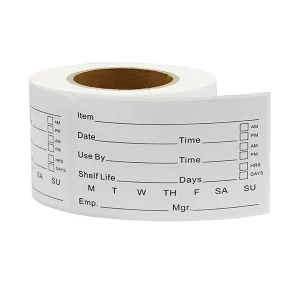
Custom Low Temperature Resistant Freezer Adhesive Labels Manufacturers, Factories
View Specifications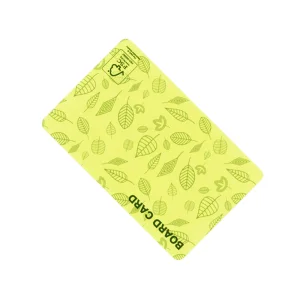
High-Quality Luxury Premium Paperboard Cards for Business Branding Company, Products
View Specifications
China High-Durability Flexible PVC Cards Manufacturers, Companies
View Specifications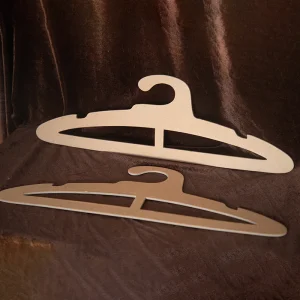
High-Quality Durable Paper Hangers for Clothing Display Companies, Product
View Specifications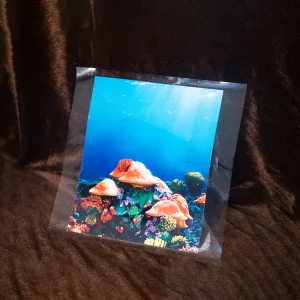
High-Quality Adhesive Labels with High-Translucency Backing Paper Manufacturers, Factories
View Specifications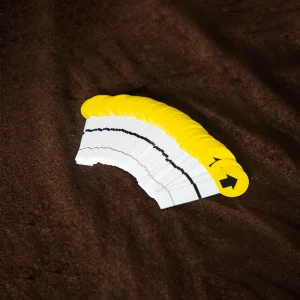
High-Quality Durable and Versatile PET Adhesive Labels Manufacturers, Product
View Specifications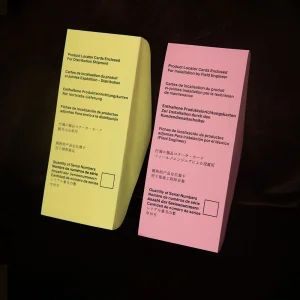
Buy Custom Premium Envelopes Manufacturer, Manufacturers
View Specifications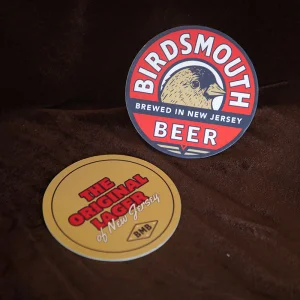
High-Quality Durable Beverage Coasters with Custom Branding Options Factory, Product
View SpecificationsThe Technical Evolution of Industrial Laser Labels in Modern Manufacturing
How next-generation ablative laser marking and specialized thermal laser printable films are revolutionizing traceability in high-stress manufacturing sectors.
In the era of hyper-automated manufacturing, component-level traceability has shifted from a regulatory requirement to an operational imperative. Modern industrial laser labels represent the apex of material science, designed to endure processing environments that would render standard thermal transfer labels illegible within seconds. As global industries accelerate toward Industry 4.0 principles, the demand for precision laser markable materials—capable of retaining high-density Data Matrix codes, 2D barcodes, and alphanumerics across multi-year product life cycles—has witnessed exponential growth.
Traditional thermal ribbons and pressure-sensitive paper labels present significant vulnerabilities: ink degradation under chemical exposure, mechanical abrasion during assembly, and adhesive shear failure under elevated processing temperatures. In contrast, engineered Laser Labels leverage multi-layer synthetic films, polyimides (PI), and modified polyethylene terephthalate (PET) matrices embedded with laser-reactive carbon pigments or microscopic ceramic additives. When targeted by high-precision fiber, CO2, or UV lasers, these materials undergo a controlled chemical transformation or top-coat ablation, forming permanent, high-contrast marks directly inside the facestock structure without compromising environmental seal integrity.
Ablative & Photo-Chemical Carbonization
Laser energy induces a localized color-change phase transition within the micro-encapsulated pigment layer, preventing surface carbon flaking while achieving contrast ratios >98% for zero-scan-error optical reading.
Thermal Stress Endurance (-80°C to +300°C)
Utilizing cross-linked polyimide facestocks paired with silicone-based acrylic adhesives engineered to withstand SMT reflow soldering profiles and cryogenic liquid nitrogen storage environments.
Extreme Chemical & Solvent Immunity
Resistant to aggressive industrial cleaning agents including isopropyl alcohol (IPA), methyl ethyl ketone (MEK), brake fluid, sulfuric acid wash, and continuous UV weathering.
Global Procurement Landscape & Sector-Specific Technical Demands
An empirical evaluation of global industrial sourcing requirements across key manufacturing hubs in North America, Europe, and the Asia-Pacific region.
B2B procurement executives tasked with securing high-reliability labeling materials operate under stringently defined engineering standards. Unlike commodity paper labels, laser printable and engraver-compatible label materials are specified directly into OEM master engineering drawings. A failure in label adhesion or code legibility can cause line shutdowns, regulatory fines, or complete product recalls in safety-critical sectors.
Sector-Specific Application Matrix
The global demand for high-performance laser label solutions is driven by distinct operational environments across primary industrial verticals:
| Industrial Sector | Primary Substrate Specification | Adhesive Rheology & Tack | Core Regulatory Standard |
|---|---|---|---|
| Automotive Electronics & Under-Hood | Cast Vinyl & Matte Polyimide (PI) | High-shear, cross-linked solvent acrylic with initial tack >18 N/25mm | UL 969, GMW14573, ISO/IATF 16949 |
| Semiconductor & PCB Assembly | Ultra-thin ESD Polyimide Film | Anti-static acrylic adhesive minimizing charge generation <100V upon liner peel | RoHS 3 (EU 2015/863), REACH SVHC, IPC-A-610 |
| Chemical Drum Packaging (GHS) | Laser-Printable Synthetic Polyolefin | Aggressive rubber/acrylic hybrid engineered for low surface energy (LSE) HD-PE | BS5609 Section 2 & 3 Marine Immersion |
| Biomedical & Cold Chain Logistics | Low-Density Cryogenic PET | Low-temperature glass-transition temperature (Tg < -50°C) cryogenic adhesive | FDA 21 CFR 175.105, ISO 10993 Bio-compatibility |
| Aerospace & Defense Wiring | Self-Extinguishing Polyimide Wrap | Flame-retardant silicone composite meeting vertical burn tests | FAR 25.853, MIL-STD-130N Identification |
Global procurement workflows require suppliers not only to deliver raw rollstock or pre-cut label formats but also to provide verified laboratory validation data detailing tensile strength, chemical immersion performance, peel adhesion under ASTM D3330 protocols, and accelerated environmental aging simulations (SAE J1960).
China Industry 4.0: Supply Chain Resilience & Manufacturing Superiority
How modern Chinese converting technology, vertical material integration, and high-capacity manufacturing hubs provide global buyers with unbeatable quality-to-cost ratios.
The global industrial landscape has witnessed a dramatic transformation in label manufacturing capabilities. Enterprise B2B buyers are increasingly transitioning from fragmented regional converters to vertically integrated Chinese manufacturing partners equipped with Industry 4.0 smart factory architectures. At the forefront of this industrial shift is Xiamen Lianhua Printing Co., Ltd. (established in February 1992), embodying over three decades of advanced converted film and pressure-sensitive adhesive innovation.
China's modern converting infrastructure provides structural supply chain advantages that mitigate global market volatility, reduce lead times, and lower overall total cost of ownership (TCO) for global buyers:
- Vertical Chemical & Substrate Integration: By sourcing raw polymers, precision release liners, and synthesizing specialty pressure-sensitive adhesives in-house or through tight regional clusters, Chinese manufacturers maintain absolute control over raw material purity, thermal degradation thresholds, and coating uniformity.
- Closed-Loop Automated Quality Assurance: State-of-the-art vision inspection systems integrated directly into multi-station rotary die-cutting and high-speed laser engraving lines perform real-time optical check for surface micro-defects, color consistency, die-cut depth precision, and dimensional tolerance adherence (+/- 0.1mm).
- Agile Custom Formulation & OEM/ODM Engineering: Rapid prototyping capabilities allow custom adhesive chemistry tuning (adjusting shear strength, tack, peel force, and temperature envelope) within days rather than months, matching strict technical specifications for worldwide Fortune 500 equipment builders.
- Unrivaled Scale & Export Infrastructure: Strategically situated in major maritime and logistics hubs like Xiamen, factories operate high-throughput multi-color flexographic, offset, digital, and laser-marking converting systems with direct access to global shipping lanes, ensuring rapid fulfillment across North America, Europe, and Asia.
This operational maturity ensures that global enterprise buyers receive continuous product compliance, zero supply-chain disruption, and strict adherence to international environmental protocols (RoHS, REACH, and green purchasing directives).
Adhesive Engineering Mechanics: Tack, Peel Strength, and Shear Dynamics
Understanding the tribological and chemical equilibrium required to achieve high-bond integrity on challenging industrial substrates.
Initial Tack Mechanics
Initial tack defines the instantaneous wetting capability of the adhesive layer upon zero-pressure contact. High-tack formulations utilize low-molecular-weight tackifying resins to ensure rapid adhesion on rough, oily, or low-temperature substrates such as cast metal housings or tire rubber.
180° & 90° Peel Adhesion
Peel strength quantifies the interfacial bond energy required to remove the label material from a surface at a standardized angle and rate. High-performance laser labels achieve cohesive failure mode rather than adhesive transfer, ensuring tamper-evident or permanent application under severe mechanical strain.
Internal Cohesive Shear Resistance
Shear strength measures the internal resistance of the polymer network against slipping under continuous lateral load or thermal expansion stress. High-shear cross-linked acrylic polymers prevent edge-lifting ("flagging") on small-diameter cables and curved surfaces.
Frequently Asked Questions by Industrial B2B Buyers
Clear, authoritative answers regarding material selection, customization options, regulatory compliance, and factory manufacturing capabilities.
What is the difference between direct laser markable labels and standard laser printer sheets?
Direct laser markable labels are specialized industrial materials designed for marking via high-energy lasers (such as CO2, Fiber, or UV lasers). The mark is created either through a chemical phase change in laser-reactive pigments embedded inside the facestock or by ablating a top color layer to reveal a high-contrast underlying core. Standard laser printer sheets, on the other hand, use office desk jet/laser printers to deposit surface toner using electrophotographic heat rollers. Industrial laser markable labels withstand extreme temperatures (>300°C), aggressive solvents, and long-term outdoor exposure far beyond office printer paper capabilities.
Is Xiamen Lianhua Printing a direct manufacturing factory or a trading company?
Xiamen Lianhua Printing Co., Ltd. is a direct printing and converting manufacturer established in February 1992 in Xiamen, Fujian, China. Operating full-scale in-house automated production lines, we provide comprehensive OEM/ODM services specializing in industrial adhesive labels, high-durability PET/PVC/PC cards, ABS engraving boards, ticket cards, and technical instruction manuals.
Are your laser label materials compliant with international environmental directives (RoHS, REACH, BS5609)?
Yes. We operate under a strict green purchasing policy and ISO-certified quality management framework. Our materials are fully compliant with EU RoHS 3 (Directive 2015/863) and REACH SVHC regulations. For maritime chemical drum labeling, we supply specialty synthetic polyolefin facestocks and adhesives tested and certified to meet BS5609 Section 2 (90-day seawater immersion test) and Section 3 print durability criteria.
How do I choose the correct adhesive for low-energy plastic surfaces (such as Polypropylene or HDPE)?
Low surface energy (LSE) plastics like Polypropylene (PP) and High-Density Polyethylene (HDPE) resist standard acrylic adhesive wetting. To achieve permanent adhesion, you must select an aggressive, high-tack acrylic or modified rubber resin formulation engineered with low surface tension. Our engineering team conducts substrate surface energy testing (dyne level analysis) to recommend the ideal adhesive coat weight and formulation for your specific housing material.
Can your laser labels withstand PCB reflow soldering processes in electronics assembly?
Yes. Our Polyimide (PI) micro-labels are specifically engineered for surface-mount technology (SMT) printed circuit board assembly. They tolerate continuous temperatures up to 260°C to 300°C for peak reflow duration, resisting yellowing, shrinkage, flagging, or print degradation while resisting aggressive post-solder flux wash chemicals.
What files and parameters are required to receive a formal B2B OEM quotation?
To provide an accurate engineering quote, please provide: (1) Label dimensions and die-cut geometry, (2) Substrate material and backing liner preference, (3) Application surface (e.g., smooth metal, textured rubber, LSE plastic, glass), (4) Temperature and environmental exposure ranges, (5) Order volume per run and annual demand, and (6) Artwork vector files (AI, PDF, STEP, or CAD formats) if custom pre-printing is required.
Specialized Industrial Labels, Synthetic Cards & Substrates
Explore our full line of wire wrap labels, thermal polyimides, weatherproof PVC, and heavy-duty high-tack rubber adhesives.
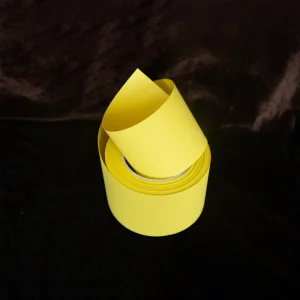
High-Quality Secure, Durable and High-Tack Wire Adhesive Labels Factories, Company
View Specifications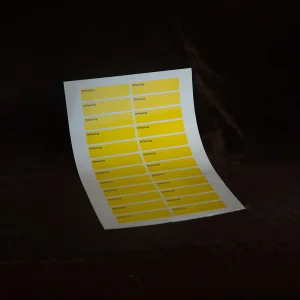
Custom Heat-Resistant Polyimide (PI) Adhesive Labels Manufacturers, Product
View Specifications
Custom Weatherproof, Affordable and Reliable PVC Adhesive Labels Company, Product
View Specifications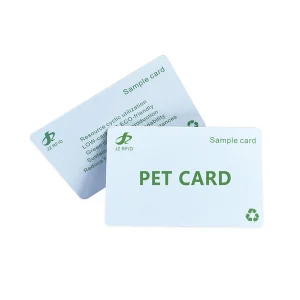
Buy Recyclable Eco-Friendly PET Cards Product, Products
View Specifications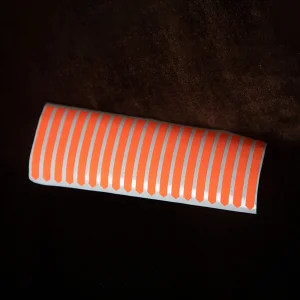
Buy High-Strength Double-Coated Adhesive Labels Manufacturer, Factory
View Specifications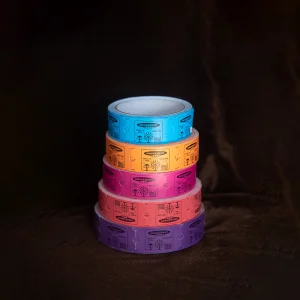
Buy Standard General Admission Tickets and Airline Tickets Manufacturers, Factories
View Specifications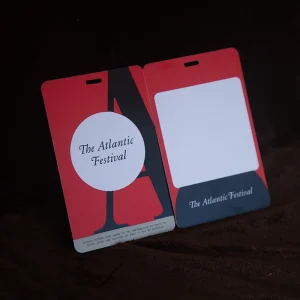
Custom Paperboard Cards with Custom Printed for Events, Gift Cards Factory, Products
View Specifications
China High-Tack Tire Adhesive Labels Manufacturers, Factory
View SpecificationsStreamline Your Global Labeling & Materials Supply Chain
Consult directly with our converting engineers to evaluate material samples, receive custom adhesive formulations, and secure competitive high-volume factory pricing.