
Featured Security Cards & Specialty Substrates
Precision-engineered physical media and identification components direct from our ISO-certified Xiamen manufacturing facility.


Global Licence Card Market & Identity Engineering Whitepaper
Analyzing the shift from legacy PVC cards to anti-counterfeiting Polycarbonate (PC) and PET credentials compliant with ISO/IEC 7810 ID-1 standards.
Global Market Dynamics & Regulatory Pressure
The global secure identification market is undergoing a seismic architectural transition. Governments, transport authorities, and enterprise security divisions are aggressively phasing out single-layer PVC credentials in favor of multi-layered, tamper-proof Polycarbonate (PC) and Composite PET card structures. Driven by stringent anti-fraud mandates (such as ISO/IEC 18013 for driver's licenses and ICAO Doc 9303 for machine-readable travel documents), procurement authorities require manufacturing partners capable of delivering sub-micron precision, zero-delamination risk, and advanced physical-digital convergence.
Modern identity verification requires physical cards to act as cryptographic hardware anchors. Today's licence cards must withstand extreme chemical exposures, thermal fluctuations (-40°C to +120°C), and mechanical stress over an operational lifespan exceeding 10 years without structural degradation.
Information Gain: Delamination Resistance Engineering
The primary point of failure in low-grade licence manufacturing is film layer separation (delamination), enabling counterfeiters to tamper with printed variable data. High-quality licence card manufacturers utilize high-pressure, thermal fused lamination without liquid adhesives. Under controlled thermal-compression cycles (exceeding 180°C and 1.5 MPa pressure), individual polycarbonate layers melt and cross-link at the molecular level, forming a monolithic, solid polymer block.
Attempts to slice or alter a fused Polycarbonate licence card result in the complete destruction of the card body and embedded holographic structures, rendering physical forgery mathematically and mechanically non-viable.
Material Engineering & Substrate Comparison
Selecting the optimal polymer matrix for high-security driver's licences, national IDs, and enterprise credentials.
| Material Property | Polycarbonate (PC) | Composite PET / PETG | Standard PVC | ABS Dual-Color |
|---|---|---|---|---|
| Flexural Durability | Extreme (100,000+ bends) | High (50,000+ bends) | Moderate (10,000 bends) | Rigid / Industrial Use |
| Thermal Resistance | -40°C to +135°C | -30°C to +80°C | -10°C to +60°C | -20°C to +70°C |
| Personalization Technology | Laser Engraving (Sub-surface) | Thermal Transfer / Dye-Sub | Dye-Sublimation / Direct Print | Rotary / CNC / Laser Etch |
| Tamper / Fraud Resistance | Maximum (Monolithic Fusion) | High (Adhesive Bonding) | Low (Vulnerable to Heat) | N/A (Signage Focus) |
| Typical Application | National Identity, Driver Licences | Corporate Access, Transit IDs | Temporary Badges, Gift Cards | Tactile Signage & Tags |
Sub-Surface Laser Engraving
Polycarbonate substrates feature specialized carbon-doped core layers. When targeted by 1064nm fiber lasers, the embedded carbon particles carbonize black deep within the card core. This creates high-contrast text and biometric portraits that are permanently encapsulated beneath clear protective top-coats, making surface erasure impossible.
Optically Variable Devices (OVD)
Integrating customized Holographic Diffractive Optical Elements (DOEs) directly between polymer layers before hot lamination guarantees structural integrity. Features like metallic color shifts, kinematic movement effects, and micro-mirrors allow instant level-1 visual verification by border officials without requiring special machinery.
Embedded Chip & Antenna Integration
Modern smart licence cards embed contactless RFID/NFC chips (ISO/IEC 14443 Type A/B) and ultra-thin copper wire or printed silver antennas. Precision pre-lamination cavity milling protects sensitive silicon dies from physical deformation, ensuring stable RF performance through millions of read cycles.
Localized Application Scenarios & Deployment Frameworks
Tailoring security specs and material configurations for specialized regional, municipal, and institutional environments.
1. Government Motor Vehicle & Driving Licences
National driver's licences demand rigorous outdoor durability and law-enforcement scanability. Polycarbonate licence cards manufactured in our Xiamen facility integrate Guilloche fine-line printing, UV fluorescent ink (visible only under 365nm blacklight), tactile relief surfaces, and micro-text borders measuring under 0.2mm. These features allow field officers to rapidly verify authenticity using mobile handheld optical scanners or physical inspection.
2. Healthcare Identification & Social Security
Healthcare licences and benefit cards require resistant top coatings that endure frequent chemical sanitization (alcohol rubs, chlorine disinfectants) without fading or yellowing. Utilizing specialty PETG and transparent PC protective overlays prevents surface clouding, preserving the legibility of 2D PDF417 or QR barcodes used for patient check-ins and automated prescription dispensing.
3. Smart Municipal Transit & Multi-Modal Access
High-throughput urban transit systems require fast RF communication speeds (under 300ms transaction latency). Embedded chip card architectures manufactured with ultra-smooth PVC/PET composite bodies ensure flat antenna alignment, eliminating signal attenuation and preventing physical card cracking from constant bending in wallets and pockets.
4. High-Security Enterprise & Industrial Sites
For critical infrastructure, research facilities, and defense contractors, licence cards serve as physical credential badges combined with logical access tokens. By integrating dual-interface chips (contact and contactless) alongside tactile Braille engraving on dual-color ABS or PC substrates, facilities achieve full accessibility compliance and rigorous perimeter control.
Technology Roadmap & Future Outlook (2025–2035)
How advanced polymer manufacturing, biometric integration, and sustainability initiatives are redefining identity physical security.
Dynamic Holographic Overlays
Widespread implementation of full-color nano-gratings and 3D optical movement structures integrated beneath 100% recyclable Polycarbonate top sheets.
Physical-Digital eID Convergence
Licence cards acting as cryptographic anchors paired with Mobile Driver's Licences (mDL) via ISO/IEC 18013-5 BLE/NFC cross-verification protocols.
On-Card Biometric Sensors
Ultra-thin flexible fingerprint sensors embedded within composite card layers, powering zero-cloud localized biometric matching in under 100 milliseconds.
Bio-Based Eco-Polycarbonates
Transitioning global raw supply to carbon-neutral, bio-attributed polycarbonates that match petroleum-based polymers in tensile strength and laser sensitivity.
Supply Chain Resilience & The Xiamen Manufacturing Ecosystem
Why sourcing secure cards and specialty substrates from Xiamen Lianhua Printing provides unmatched speed, cost control, and technical reliability.
Vertical Integration
Established in February 1992, Xiamen Lianhua Printing Co., Ltd. operates a vertically integrated production facility. From substrate sheet formulation, offset/UV screen printing, and magnetic stripe laying to high-precision die-cutting and computerized AOI visual inspection, every production step remains strictly in-house.
Port Logistics Efficiency
Located in Xiamen, Fujian Province—one of Asia's premier deep-water shipping hubs—our facility maintains immediate access to international maritime freight routes and air corridors. This location advantage reduces outbound transit times by 3–5 days compared to inland manufacturing centers.
Unmatched Cost Optimization
Leveraging Fujian’s dense industrial polymer ecosystem allows us to source raw polycarbonate, PETG, and specialized adhesives at high volume discounts. We pass these efficiency gains directly to global B2B buyers, delivering institutional-grade security cards at competitive unit economics.
Localized Support, Quality & Regulatory Compliance
Rigorous quality control protocols ensuring compliance with global environmental and security mandates.
Environmental Compliance: RoHS & REACH
Xiamen Lianhua Printing operates under a strict Green Purchasing Policy. All raw polymer films, inks, magnetic stripes, and pressure-sensitive adhesives are fully certified to comply with European Union RoHS (Restriction of Hazardous Substances) and REACH directives. Our materials are verified non-toxic, free of heavy metals (lead, cadmium, mercury), and free of banned phthalates, making them safe for daily contact.
ISO-Certified Physical Testing Laboratory
Every licence card production lot undergoes automated stress testing inside our quality assurance laboratory, including:
- Torsion & Bending Tests: ISO/IEC 10373-1 compliance up to 10,000 cycles.
- Thermal Cycling: 72 hours inside environmental chambers (-30°C to +75°C).
- Peel Strength Verification: Exceeding 6.0 N/cm peel resistance to prevent lamination layer splitting.
- Chemical Immersion: Resistance against artificial sweat, gasoline, and alkaline solutions.
Frequently Asked Questions (Q&A) for B2B Procurement
Technical, operational, and commercial insights to streamline your credential manufacturing orders.
Polycarbonate cards offer complete thermal-fusion lamination without adhesives, enabling high-contrast sub-surface laser engraving that cannot be altered without permanently destroying the card body. Additionally, PC cards feature an operational lifespan exceeding 10 years, compared to 2-3 years for standard PVC.
Yes. While standard ID-1 size is 85.60 mm × 53.98 mm with a thickness of 0.76 mm (30 mil), our automated converting machinery can produce custom thicknesses ranging from 0.30 mm to 1.50 mm, as well as customized die-cut geometries and key-tag formats.
We utilize X-Rite spectrophotometers and closed-loop automated color management systems. We match spot colors to Pantone Matching System (PMS) standards with a Delta E (ΔE) deviation of less than 1.5 across consecutive production batches.
Our facility integrates Level 1 (OVD holograms, tactile micro-relief), Level 2 (UV fluorescent inks, micro-text, infrared readable inks), and Level 3 features (taggants, forensic laser-engraved micro-images, high-security embedded microchips).
Standard MOQs start at 5,000 units for fully customized security cards. Production lead time is typically 2 to 3 weeks following artwork sign-off and prototype verification. Expedited air shipment options are available.
We offer comprehensive export handling, including FOB Xiamen, CIF, and DDP (Delivered Duty Paid) terms. Every shipment includes Certificate of Analysis (CoA), RoHS/REACH declaration sheets, and customs documentation.
Complete Technical Product Catalog
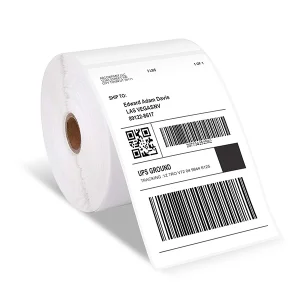
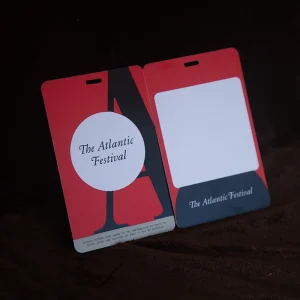
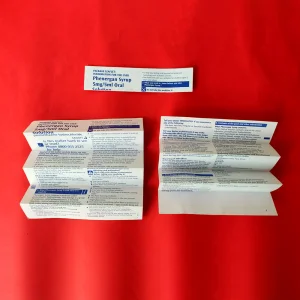
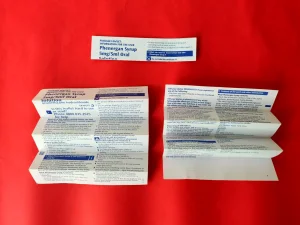
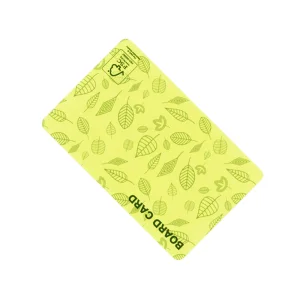
Explore our broader portfolio of custom adhesive labels, instruction manuals, ABS engraving plates, and specialized paperboard cards.
Request Custom Security Samples & Technical Quotation
Partner with Xiamen Lianhua Printing for your high-security licence card, polymer substrate, and custom labeling requirements. Engineering response guaranteed within 24 hours.