
Precision Polymeric Cards & Industrial Media Solutions
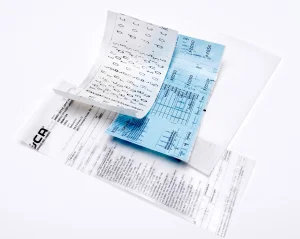
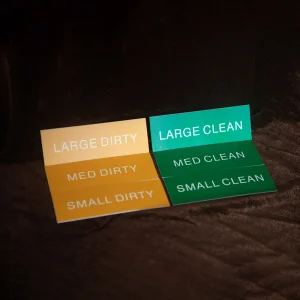
Explore our core engineering catalog, spanning tear-proof PET substrates, high-durability flexible PVC credentials, ABS dual-color engraved sign boards, and custom-printed commercial cardstock.

The Global Commercial & Industrial Status of High-Durability License Cards
An in-depth analysis of high-security polymeric identity credentials, material physics transition from standard PVC to multi-layer Polycarbonate (PC), and global regulatory compliance.
The global identity management market has undergone a fundamental structural paradigm shift. In an era dominated by automated border control (ABC) systems, contactless IoT access infrastructures, and strict anti-fraud mandates (such as ISO/IEC 7810 ID-1 standards), standard single-layer polyvinyl chloride (PVC) cards are no longer adequate for modern institutional demands. High-quality license card manufacturing now demands advanced polymer science, precisely engineered layered structures, and multi-modal physical and digital anti-counterfeiting features.
Modern national driver’s licenses, official identity cards, professional certification credentials, and high-security enterprise badges are subject to harsh environmental stressors. Credentials must withstand constant mechanical flexing, thermal cycling from -30°C to +80°C, exposure to ultraviolet radiation without photo-degradation, and chemical contact (including solvents, skin oils, and cleaning agents). Consequently, global government procurement standards are increasingly replacing basic PVC cards with composite structures like PETG (Polyethylene Terephthalate Glycol) and Fused Polycarbonate (PC).
As an established high-security label and card manufacturer founded in 1992, Xiamen Lianhua Printing Co., Ltd. delivers extensive OEM/ODM manufacturing capability. By integrating high-precision multi-layer lamination, UV offset printing, roll-to-roll convertibility, and digital laser-engraveable core layers, we empower global brand owners, government contractors, and enterprise integrators with cards engineered for extreme service life and zero delamination risk.
Polymeric Substrates Comparison Matrix & Engineering Properties
Selecting the optimal core material is critical for balancing service longevity, optical clarity, anti-counterfeiting laser engravability, and total cost of procurement.
| Polymer Type | Mechanical Durability | Laser Engraving Reaction | Thermal Resistance | Anti-Delamination Level | Primary Commercial Application |
|---|---|---|---|---|---|
| Polycarbonate (PC) | Ultra-High (>10 Year Life) | Carbonization (True Black) | -40°C to +135°C | Fused Monolithic Block | National ID, Driver's Licenses, Tactical Credentials |
| PETG (Polyethylene Terephthalate) | High (5–8 Year Life) | Moderate / Coated Layer | -20°C to +80°C | High Thermal Lamination Bond | Eco-Friendly Enterprise ID, Transit Badges |
| Composite PVC/PET | Medium-High (3–5 Year Life) | Surface Ink Coating | -10°C to +60°C | Standard Adhesive Lamination | Commercial Membership, Smart Hotel Access Cards |
| Standard PVC | Standard (1–3 Year Life) | Not Suitable (Melts/Discolors) | 0°C to +50°C | Basic Heat Lamination | Event Access, Retail Gift Cards, Temporary Credentials |
| Subtractive ABS Dual-Color | High Rigidity (Industrial) | Subtractive Cap Removal | -30°C to +90°C | Co-Extruded Monolayer | Tactile Signage, Machine Rating Plates, Braille Tags |
Monolithic Thermal Fusing
Unlike standard cards glued together with pressure-sensitive adhesives, high-quality PC license cards undergo solid-state thermal fusion under high pressure. The individual PC films melt into a single, solid, non-separable card structure, rendering mechanical separation or photo swapping physically impossible.
Laser Personalization Cores
By embedding photosensitive additives within the inner polycarbonate core, high-precision fiber lasers carbonize particles beneath the transparent protective surface overlay. This process creates high-resolution grayscale portraits and alphanumeric data embedded deep inside the card body.
Eco-Friendly PET & Recyclable Polymers
In accordance with global ESG directives and EU green purchasing mandates, our production matrix includes non-halogenated PETG and bio-based polymeric films that maintain flexural fatigue resistance while minimizing environmental impact during disposal.
Multi-Layered Anti-Counterfeiting & Physical Security Architecture
A comprehensive defense strategy combining Level 1 (Overt), Level 2 (Covert), and Level 3 (Forensic) physical security features directly within the polymer substrate.
Guilloche & Micro-Lettering
High-resolution vector printing patterns utilizing complex geometric curves and micro-text readable only under 10x magnification. These ultra-fine lines prevent digital duplication, scanning, or desktop printing re-creation.
Optically Variable Inks (OVI)
Pigment layers that exhibit a distinct color shift upon tilting (e.g., green to magenta). Applied via precision silk-screen printing onto interior layers before lamination, shielding the visual effect from external wear.
UV Fluorescent & Invisible Inks
Single and dual-frequency ultraviolet responsive inks integrated into card graphics. Invisible under natural light, these graphics illuminate in vibrant colors under 365nm UV verification lamps.
Tactile Embossing & Braille Features
Positive physical elements, including raised braille dots, embossed license numbers, and surface micro-structures, stamped into the overlay film to assist visually impaired citizens and allow fast physical authenticity checks.
Embedded RFID / NFC Micro-Smart Inlays
Seamless incorporation of ISO/IEC 14443 Type A/B contactless microchips and high-frequency antenna circuits shielded inside PET/PC layers, enabling automated cryptographic authentication for smart border control.
Holographic Security Overlaminates
Custom registered optical variable devices (DOVD) fused onto the top face layer. Featuring 3D depth perception, kinetic effects, and tamper-evident destruction mechanisms if mechanical alteration is attempted.
Localized Application Scenarios across Industrial & Government Sectors
Engineered credentials tailored to distinct operational environments, compliance standards, and mechanical stress profiles.
1. Government Identity & National Driver's Licenses
State and municipal authorities mandate 10-year durability, laser personalization, and strict ICAO/ISO compliance. Monolithic Polycarbonate (PC) fused cards prevent identity theft, withstand daily handling, and remain stable under extreme sunlight and elevated temperatures inside vehicle interiors.
2. Enterprise Access Control & Smart Campus Badges
Modern commercial buildings demand hybrid credentials combining RFID access control, visual staff identification, and durable multi-frequency smart chips. PETG and high-durability flexible PVC credentials maintain structural integrity despite repeated swiping and proximity scanning.
3. Industrial Signage, Machinery & Braille Wayfinding
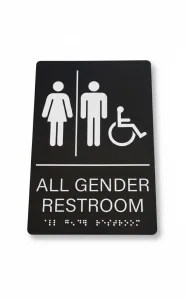
Utilizing high-impact ABS dual-color boards and tactile braille engraving, manufacturing plants, hospitals, and transit hubs deploy clean, laser-engraved directional signage. Subtractive engraving removes the outer color layer, exposing a high-contrast core that resists chemical splash and physical abrasion.
4. Healthcare Patient Identity & Social Benefit Cards
Medical credentials require bi-compatible coatings and chemical resistance against frequent alcohol disinfection. Sealed synthetic polymer cards protect patient micro-data and biometric barcodes against moisture, hospital-grade cleaning agents, and constant handling.
5. Hospitality Access, Events & VIP Membership
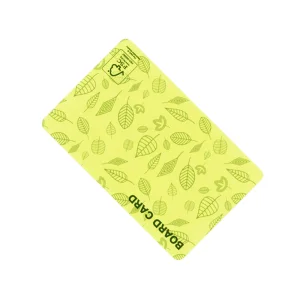
For executive hospitality, high-end hotel RFID keys, and luxury event credentials, aesthetic presentation is paramount. Premium printed paperboard cards, metallic finish foils, and scratch-resistant polycarbonate overlays combine high aesthetic appeal with reliable NFC compatibility.
6. Electrical Insulation & Industrial Equipment Labelling
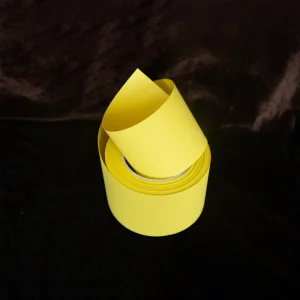
High-tier manufacturing requires specialized technical media, including tear-proof PET electrical insulation paper and polyimide (PI) high-temperature tags. These substrates ensure durable serial tracking and insulation performance across automotive assembly lines and power distribution units.
Technology Roadmap & Future Outlook (2026–2032)
Adapting manufacturing capabilities to emerging digital identity standards, sustainable materials, and automated verification networks.
Full Transition to Monolithic Polycarbonate & Eco-PETG
Phase-out of non-recyclable legacy PVC in government tenders. Complete integration of solvent-free, non-toxic PETG film layers and high-speed laser engraving lines to achieve carbon-neutral manufacturing benchmarks.
Physical-Digital Synergy (Dynamic QR & BLE Smart Cards)
Embedding Bluetooth Low Energy (BLE) micro-beacons and dynamic cryptographic QR codes into standard ID-1 card dimensions, bridging physical credentials with mobile digital identity verification (mDL).
Biometric-on-Card & Zero-Emission Closed Loop Manufacturing
Integrating flexible capacitance fingerprint sensors directly onto polycarbonate core sheets, powered by RF harvesting. Implementation of 100% closed-loop polymer recycling for pre-consumer scrap material.
Industrial Manufacturing Rigor, ISO Compliance & OEM Workflow
From custom material selection to zero-defect batch delivery, our factory implements rigorous quality control at every stage of production.
1. Precision Material Engineering
Substrate thickness calibration down to ±0.005mm. Formulation of custom surface treatments, release liners, and pressure-sensitive or heat-activated adhesives to match specific customer application profiles.
2. High-Speed Multi-Color Printing
Advanced multi-color UV offset and precision screen printing presses operating under HEPA-filtered cleanroom conditions, delivering color registration within ±0.05mm and precise spot-color matching.
3. Rigorous Quality Auditing
Automated optical inspection (AOI) systems inspect 100% of printed sheets for print defects, pinholes, and color variation. Completed cards undergo rigorous testing for flexural endurance, thermal stability, peel strength, and RFID frequency resonance.
Specialized Security Labels, Tickets & Branding Materials
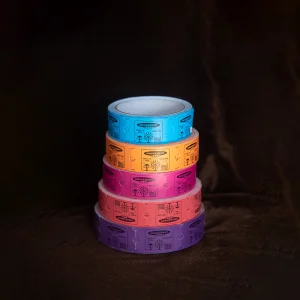
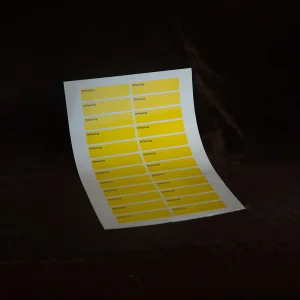
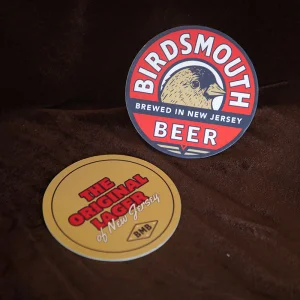
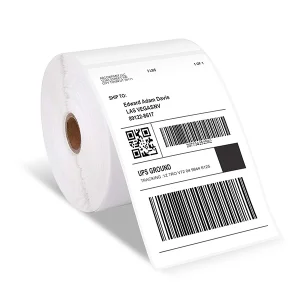
Explore our extended series of security solutions, including airline ticket stock, wire wrap labels, braille ABS plates, polyimide high-temp labels, and luxury paperboard products.

Frequently Asked Questions by Technical Procurement Teams
Comprehensive answers regarding material choices, security features, OEM/ODM customization, and international compliance standards.