
Precision Labeling & High-Security Substrate Solutions
Explore our specialized adhesive, synthetic, and structural card options designed for extreme durability and regulatory compliance.

The Strategic Evolution of Modern License IDs & Physical Identity Credentials
Understanding user search intent, security compliance mandates, and next-generation identity verification standards in the era of digital-physical hybrid authentication.
Evolving Search Intent & Enterprise Procurement Shift
Global search queries for "High-Quality License Id Manufacturer & Factory" have shifted dramatically from basic printing inquiries to highly complex engineering specifications. Modern B2B buyers—ranging from government contractors, corporate enterprise procurement heads, and biometric system integrators—are seeking reliable OEM/ODM partners capable of delivering secure physical identification media. In an era dominated by identity theft and sophisticated counterfeiting, physical credentials must seamlessly integrate tamper-proof structural substrates with micro-electronic components.
Today's procurement directors demand absolute transparency regarding supply chain integrity, material lifespan, environmental compliance (RoHS, REACH), and multi-layered optical security features. Factories must prove not only printing capabilities but technical mastery over material science, ultrasonic embedding, laser personalization, and strict quality assurance protocols.
International Regulatory Standards (ISO/IEC Compliance)
Industrial license ID production is governed by rigorous global standards. A tier-1 factory must engineer credentials that conform to ISO/IEC 7810 (physical characteristics of identification cards), ISO/IEC 7816 (integrated circuit cards with contacts), ISO/IEC 14443 (contactless cards), and ISO/IEC 24789 (card service life test methods).
Compliance with these frameworks ensures that produced credentials withstand severe mechanical stress, thermal fluctuations, chemical exposure, and UV radiation over operational lifespans exceeding 10 years. Xiamen Lianhua Printing Co., Ltd. builds every production process around these benchmark standards to guarantee flawless deployment across international borders.
While mobile driver licenses (mDL) and digital wallet IDs continue to expand, physical license IDs remain the foundational trust anchor worldwide. Physical cards provide immediate zero-power offline verification, visible optical security features for law enforcement, and tamper-evident physical integrity that digital screens cannot match. Modern factories must manufacture physical credentials designed to bridge physical security with digital verification via embedded QR code vectors, NFC cryptographic chips, and laser-engraved variable data.
Multi-Layer Substrate Architecture & Anti-Counterfeiting Engineering
A granular breakdown of chemical composition, optical variability, and security features that distinguish elite license ID manufacturing.
| Substrate Material | Durability / Lifespan | Laser Engraving Suitability | Anti-Tamper Mechanism | Target Applications |
|---|---|---|---|---|
| 100% Polycarbonate (PC) | 10+ Years (Extreme) | Optimal (Carbonization Layer) | Fused Solid Monolithic Structure (Cannot Delaminate) | National IDs, Driver Licenses, Border Control Credentials |
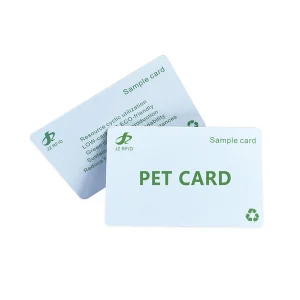
| PET-G / Composite PVC | 5 - 8 Years (High) | Moderate to High | Cross-Linked Adhesive Co-Extrusion | Corporate Access, Transport Licensing, Municipal Identity |
| ABS Dual-Color Engraving Board | 7 - 10 Years (Industrial) | High Precision Mechanical/Laser | Contrast Cap-Layer Deposition | Tactile Wayfinding, Equipment Badges, Industrial Signage |
| Heavy-Duty Synthetic Paper / PET | 3 - 5 Years (Medium) | Thermal Transfer / Offset | Tamper-Evident Fiber Tear | Temporary Driver Permits, Vehicle Inspection Badges |
1. Multi-Layer Lamination
High-security license IDs are constructed through high-pressure thermal lamination of up to 5 to 7 individual sub-layers. By fusing outer clear overlay films, security print layers, core synthetic bodies, and protective barrier films without liquid adhesives, the resulting card becomes a single monolithic structure that permanently destroys internal security inks if physical tampering or peeling is attempted.
2. Optical & Tactile Features
We integrate LEVEL 1, LEVEL 2, and LEVEL 3 security elements: Guilloche fine-line patterns, Optically Variable Ink (OVI) that shifts color under viewing angles, high-resolution Holographic Kinegrams, micro-text invisible to the naked eye, UV-fluorescent dual-color inks, and raised tactile surface embossing for tactile verification by law enforcement officers.
3. Smart RFID & IC Integration
To support digital validation, license IDs can be embedded with ultra-thin HF/UHF RFID contactless transponders (such as NTAG, MIFARE, or custom ISO 14443 Type A/B secure chips). Micro-antennae are ultrasonically embedded into the core synthetic layer prior to lamination, ensuring seamless communication with hand-held verification readers.
Why Sourcing License IDs from China (Xiamen Lianhua Printing) Offers Superior ROI
Combining three decades of industrial heritage, state-of-the-art automation, and unmatched supply chain responsiveness in Xiamen, Fujian.
30+ Years of Manufacturing Expertise (Est. 1992)
Founded in February 1992, Xiamen Lianhua Printing Co., Ltd. has developed over 30 years of specialized technical expertise in precision label converting, synthetic paper printing, ABS engraving, and high-security identification products. Our extensive manufacturing facility in Xiamen, China operates under continuous ISO 9001 quality control and ISO 14001 environmental management frameworks.
Unlike trading intermediaries, our in-house engineering team works directly with raw substrate suppliers, adhesive chemical formulators, and security ink producers to engineer products tailored to exact client requirements.
End-to-End Supply Chain Integration & Cost Engineering
China's industrial ecosystem surrounding Fujian province provides unrivaled efficiency for raw material procurement—ranging from medical-grade polycarbonate films to eco-friendly PET substrates, release paper, and specialty pressure-sensitive adhesives. This proximity allows us to drastically reduce production lead times while maintaining competitive global pricing.
Furthermore, our automated UV offset presses, automatic die-cutting lines, optical inspection cameras, and laser personalization systems minimize human error, ensure pitch-perfect print registration, and guarantee batch-to-batch consistency for million-unit production runs.
Global Industry Solutions & Localized Deployment Scenarios
Tailored credentials engineered for public safety, commercial operations, enterprise access control, and specialized transport systems.
1. Government & Municipal Licensing
From national driver licenses to municipal operator permits and handicap parking credentials, our factories provide non-delaminating polycarbonate and PET cards designed to resist sweat, skin oils, UV fading, and frequent mechanical insertion into card readers.
2. Enterprise Access & Corporate Badging
High-capacity commercial facilities, data centers, and industrial plants utilize our dual-interface smart cards combining high-resolution visual branding with integrated RFID access control chips, customized photo IDs, and anti-tamper security overlays.
3. Transport, Fleet & Heavy Machinery Permits
Commercial vehicle drivers and crane operators work in harsh environments involving grease, gasoline, and extreme weather. Our chemical-resistant PET and ABS credentials ensure permanent legibility and structural stability in rugged industrial sectors.
Step-by-Step OEM/ODM Sourcing & Quality Engineering Protocol
A structured methodology ensuring zero defect delivery, strict confidentiality, and full regulatory compliance for international buyers.
1 Technical Requirement Analysis & Substrate Selection
Procurement begins with a comprehensive technical evaluation of your operational environment. Our engineers assess operating temperatures, expected friction levels, exposure to sun or solvents, and required security levels to select the exact polymer blend (PC, PET, PVC, ABS) and adhesive system needed.
2 Security Feature Proofing & Rapid Prototyping
Before mass production, physical press proofs and structural samples are generated. We verify color accuracy under standard D65 illuminants, test UV ink fluorescence under 365nm light, inspect micro-text clarity with optical microscopes, and conduct RFID read-range benchmarks.
3 Automated Mass Production & In-Line Inspection
Mass production utilizes cleanroom printing lines equipped with high-speed automated optical inspection (AOI) camera modules. Every single sheet or finished card is continuously scanned for pinholes, registration shifts, micro-scratches, or chip failure prior to final die-cutting.
4 Export Compliance, Packaging & Supply Security
Finished license IDs and specialty credentials are packed in tamper-evident, humidity-controlled export packaging with sequential barcode tracking. All documentation includes RoHS material compliance reports, REACH declarations, and ISO quality certificates for rapid customs clearance.
High-Quality License ID Manufacturing: Expert Q&A
Direct technical answers to critical questions faced by global procurement officers, government contractors, and enterprise buyers.
What makes Polycarbonate (PC) superior to PVC for official license IDs?
Polycarbonate (PC) is widely considered the gold standard for secure identification credentials. Unlike standard PVC which consists of glued layers that can be heat-peeled or delaminated by counterfeiters, polycarbonate layers fuse together under intense heat and pressure to form a solid, indivisible monolithic structure. Furthermore, PC layers react directly with precision laser engraving machines to create high-contrast carbonized black text and photos inside the internal layer of the card body, making alteration physically impossible without destroying the credential entirely.
How does Xiamen Lianhua Printing ensure anti-counterfeiting security during manufacturing?
We deploy a multi-layered security engineering model combining Level 1 visible features (guilloche line work, optically variable ink, tactile surface embossing), Level 2 concealed features (micro-text, dual-wave UV fluorescent ink readable under 365nm black light), and Level 3 forensic features (custom taggants integrated into the substrate). Additionally, our factory maintains strict physical access controls, secure waste destruction protocols, and automated optical inspection systems to prevent unauthorized production or theft of security materials.
Can custom RFID or NFC chips be embedded into license IDs and cards?
Yes. We routinely embed high-frequency (13.56 MHz, ISO 14443 Type A/B, ISO 15693) and ultra-high-frequency (UHF 860-960 MHz) IC chips into card cores during the collation process. Ultrasonic wire-embedding ensures that antenna coils maintain flexible structural bonds within the polymer core, guaranteeing long-range read stability and resistance to mechanical bending stress.
What environmental testing standards do your manufactured cards and labels comply with?
Our products undergo rigorous testing according to ISO/IEC 24789 standards. This includes thermal shock testing (-40°C to +85°C), chemical resistance tests against gasoline, isopropyl alcohol, and artificial sweat, flexural stress resistance (over 10,000 bending cycles), and Xenon-arc light fastness testing to ensure colors do not fade under prolonged sunlight exposure.
Are your production materials fully RoHS and REACH compliant?
Absolutely. Xiamen Lianhua Printing operates under a strict Green Purchasing Policy. All raw face stocks, polymer films, release paper liners, UV inks, and pressure-sensitive adhesives are tested independently to ensure complete absence of heavy metals, phthalates, or hazardous substances prohibited under EU RoHS and REACH regulations.
What is the typical production turnaround time for OEM license ID and specialty label orders?
Sampling and physical proof production typically require 5 to 7 business days following art artwork vector approval. For mass production runs (e.g., 100,000 to 1,000,000 units), production is generally completed within 14 to 21 calendar days. Accelerated fast-track schedules are available for urgent government tenders or corporate rollouts.
How do ABS dual-color boards differ from standard plastic ID substrates?
ABS dual-color boards are high-impact engineering plastic sheets composed of a contrasting base layer and a microscopic colored surface cap layer. They are specifically manufactured for mechanical or CNC/laser engraving. When the top surface cap layer is engraved away, the vibrant contrasting core color is permanently exposed. They are ideal for durable tactile braille signage, equipment identification plates, and industrial badging rather than handheld driver licenses.
What file formats and parameters are required when submitting artwork for secure printing?
We accept vector artwork files in AI, EPS, or press-ready PDF format with all fonts converted to outlines. Security features such as micro-text and guilloche vector patterns must be placed on dedicated artwork layers. Our pre-press team provides full technical guidance regarding traps, Bleeds (minimum 2mm), color space (CMYK + Pantone spot channels), and layer separation prior to plate-making.
Industrial Specialties, Sleeves & Protective Substrates
Browse our extended manufacturing solutions including high-temperature insulation films, food container sleeves, and low-temperature freezer labels.

Ready to Engineer Secure License IDs & High-Performance Labels?
Connect directly with our engineering team in Xiamen, China for custom substrate sampling, anti-counterfeiting consultation, and transparent wholesale pricing.