
High-Performance Substrates & Identification Products
Explore our core product lines manufactured under ISO-certified quality management systems for B2B global procurement.
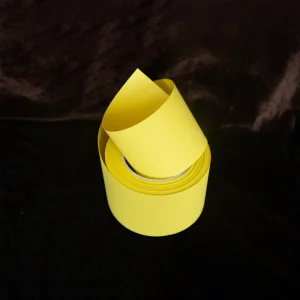
High-Quality Secure, Durable and High-Tack Wire Adhesive Labels
View Product Details
China High-Tack Tire Adhesive Labels Manufacturers, Factory
View Product Details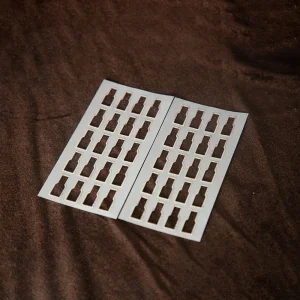
Custom Durable Synthetic Paper Adhesive Labels Manufacturers
View Product Details
Custom Weatherproof PVC Adhesive Labels Company, Product
View Product Details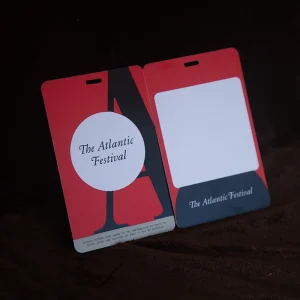
Custom Paperboard Cards for Events & Gift Cards Factory
View Product Details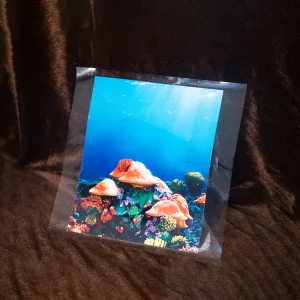
Adhesive Labels with High-Translucency Backing Paper
View Product Details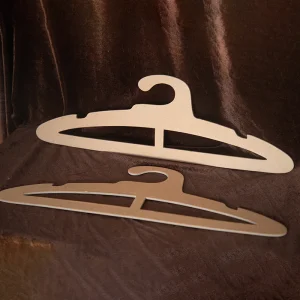
High-Quality Durable Paper Hangers for Clothing Display
View Product Details
Buy Custom-Printed Sleeves for Food Container Factory
View Product DetailsMacro Architecture of Modern Secure Photo ID Card Manufacturing
Understanding the physics, material science, and security protocols behind industrial-grade credential production.
In an era defined by decentralized workforce structures, zero-trust cybersecurity architectures, and heightened physical security requirements, the physical Photo ID Card remains the primary foundation of identity verification. Modern identity solutions demand far more than a simple printed piece of PVC plastic. Today's commercial, governmental, and enterprise environments require sophisticated, multi-layered identity credentials capable of serving concurrently as visual identification, biometric storage vectors, cryptographic physical tokens, and electronic access keys.
At Xiamen Lianhua Printing Co., Ltd. (founded in February 1992), we have spearheaded the evolution of identity credentials and industrial specialty printing for over three decades. From complex substrate selection to thermal-fusion lamination and anti-counterfeiting micro-structures, our Xiamen manufacturing facility delivers turnkey OEM/ODM solutions engineered to withstand extreme physical wear, tamper attempts, and environmental stressors.
Engineering Multi-Layer Security & Substrate Chemistry
How material choice directly impacts card longevity, anti-tampering, and structural integrity under industrial stress.
Polycarbonate (PC) Thermal Fusion
Solid Polycarbonate photo ID cards are constructed by fusing multiple layers of clear, opaque, and laser-engravable PC films under extreme pressure and heat (exceeding 180°C). Unlike traditional laminated cards held together by glue, fused PC sheets merge into a single solid monolithic card body that cannot be delaminated without total physical destruction of the card itself.
Laser Engraving & Sub-Surface Personalization
Polycarbonate substrate layers contain carbon particles optimized for fiber laser engraving. The high-energy laser beam passes through transparent outer protection layers and carbonizes the internal core layer, embedding portrait images, text, and tactile vector graphics inside the card matrix. This makes alterations physically impossible without leaving visible destruction markers.
Optically Variable & UV Security Printing
Our security ink options integrate invisible UV fluorescent pigments (responding to 365nm wavebands), Optical Variable Inks (OVI) that shift colors across viewing angles, and guilloche micro-printing patterns (resolving fine lines down to 25 microns) to defeat high-resolution offset printing scanners and counter verification fraud.
Comparing ID Substrates for Enterprise Procurement
Evaluate physical properties, chemical resistance, security integration, and cost-efficiency across core manufacturing materials.
| Substrate Type | Expected Lifespan | Delamination Risk | Temperature Resistance | Security Rating | Primary Commercial Application |
|---|---|---|---|---|---|
| Solid Polycarbonate (PC) | 10+ Years | Zero (Monolithic Fusion) | -40°C to +135°C | Maximum Security | National IDs, Driver Licenses, High-Security Access |
| Composite PET / PVC | 5 - 7 Years | Very Low (<0.01%) | -20°C to +80°C | High Security | Corporate ID Badges, University Student Cards |
| Standard PVC | 1 - 3 Years | Moderate (Adhesive Bonded) | -10°C to +50°C | Standard Commercial | Visitor Passes, Event Credentials, Gift Cards |
| ABS Dual-Color Board | 8+ Years | Zero (Solid Core) | -30°C to +90°C | Industrial Durability | Tactile Braille Signage, Industrial Machinery Tags |
Commercial Supply Chains & Industry Compliance Standards
Ensuring seamless international logistics, ISO certification, and strict chemical safety standards for global clients.
The global photo ID market is governed by complex international regulatory frameworks. B2B procurement officers and government identity contractors cannot afford compliance failures. Xiamen Lianhua Printing operates within a strictly audited manufacturing matrix:
Regulatory Environmental Compliance
All materials—including PVC resins, Polycarbonate films, pressure-sensitive adhesives, and UV inks—undergo comprehensive third-party testing to ensure complete adherence to EU RoHS (Restriction of Hazardous Substances) and REACH (Registration, Evaluation, Authorisation and Restriction of Chemicals) protocols. We implement a non-hazardous, green purchasing sourcing model that prevents heavy metal or phthalate contamination in consumer-facing identity cards.
ISO Physical & Dimensional Tolerances
Our card production lines adhere strictly to ISO/IEC 7810 (ID-1 specification) defining physical dimensions (85.60 × 53.98 mm, nominal thickness 0.76 mm). Furthermore, our smart cards integrate high-frequency (HF 13.56MHz) and ultra-high frequency (UHF 860-960MHz) contactless RFID chips compliant with ISO/IEC 14443 Type A/B and ISO/IEC 15693 standards for global access control interoperability.
Tailored Application Architecture by Industry Sector
Custom engineering solutions engineered to meet domain-specific physical and operational stresses.
Enterprise & Office Campuses
Multi-technology hybrid cards combining high-resolution photo portraits, magnetic stripes, and dual-frequency RFID/NFC chips for physical door access, PC workstation login, and cashless cafeteria payments.
Healthcare & Clinical Staff
Antimicrobial surface coatings applied to flexible PVC and PET composite credentials, preventing bacterial cross-contamination in sterile hospital units while resisting medical-grade alcohol wipe downs.
Industrial & Heavy Manufacturing
Polycarbonate and ABS dual-color engraved badges designed to endure oil immersion, high-vibration heavy machinery environments, UV sunlight exposure, and abrasive contact in mining or automotive plants.
Education & University Networks
Cost-effective composite paperboard and PVC student cards integrating high-durability lamination, thermal re-writeable rewrite foils, and integrated library barcodes for multi-year campus usage cycles.
Technology Roadmap: Next-Gen Identity Verification (2026–2035)
Anticipating technological convergence in smart credentials and sustainable green manufacturing.
1. Biometric On-Card Match (2026–2028)
Integration of ultra-thin, flexible capacitive fingerprint sensors directly onto Polycarbonate card layers. Biometric data is stored exclusively in the card’s secure element chip, enabling local 1:1 match verification without centralized cloud database lookup.
2. Eco-Friendly Ocean PET & Bio-PVC (2027–2030)
Transitioning standard PVC card production to 100% recycled ocean-bound PET (rPET) and biodegradable PLA/Bio-PVC variants. Fulfilling corporate ESG (Environmental, Social, and Governance) targets without compromising physical card tensile strength.
3. Quantum Anti-Counterfeit Nanostructures (2030+)
Embedding microscopic optical quantum dots and luminescent physical nano-particles within the clear protective lamination overlay. These unique optical signatures can only be authenticated under specialized spectrographic field detectors.
Engraved ABS, Polycarbonate Cards & Technical Labels
Discover additional custom card structures, tactile signage, and industrial paper manual products from our Xiamen facility.
Custom Outdoor Grade ABS Dual-Color Board Factories, Products
View Product Details
High-Quality Scratch Resistant Polycarbonate Card Manufacturers
View Product Details
Buy Custom Premium Envelopes Manufacturer, Manufacturers
View Product Details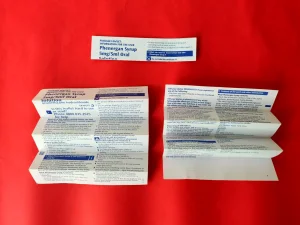
Custom Single-Sheet Instruction Manual Company, Products
View Product Details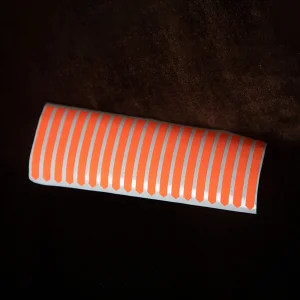
High-Strength Double-Coated Adhesive Labels Manufacturer
View Product Details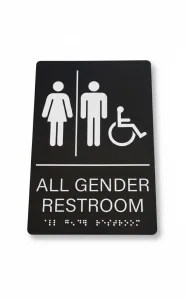
Tactile Braille Signage on Premium ABS Board Factory
View Product Details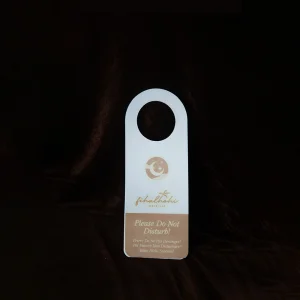
China High-Durability Flexible PVC Cards Manufacturers
View Product Details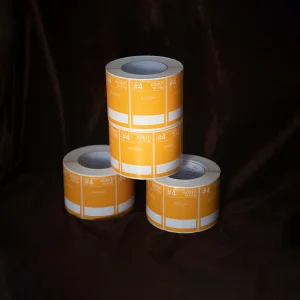
China Affordable Printer-Friendly Paper-Based Labels
View Product DetailsFrequently Asked Questions (FAQ) for OEM Buyers
Expert technical answers addressing security specs, order fulfillment, material selection, and compliance certification.
Is Xiamen Lianhua Printing Co., Ltd. a direct factory manufacturer or a trading company?
We are a direct original equipment manufacturer (OEM/ODM). Founded in February 1992 in Xiamen, Fujian, China, Xiamen Lianhua Printing Co., Ltd. operates state-of-the-art automated manufacturing facilities covering label printing, card lamination, die-cutting, ABS dual-color board engraving, and technical instruction manual production. We control all supply chain operations in-house under an ISO-certified quality control matrix.
What is the structural difference between Polycarbonate (PC) photo ID cards and standard PVC cards?
Standard PVC cards are assembled using adhesive glues to bind visual layers together, leaving them susceptible to edge delamination over time or under heat stress. In contrast, Polycarbonate (PC) cards are produced by thermal fusion, where multiple layers of PC film melt together under heat and extreme pressure to form a single, impenetrable monolithic unit. PC cards also support sub-surface laser engraving, offering a 10+ year lifespan compared to 1–3 years for standard PVC.
Are your photo ID card substrates and adhesive labels fully RoHS and REACH compliant?
Yes. Environmental sustainability and consumer safety are core tenets of our manufacturing philosophy. We operate under a strict Green Purchasing Policy. All raw plastic polymers, synthetic papers, adhesives, and printing inks undergo regular laboratory analysis to ensure compliance with European Union RoHS Directive 2011/65/EU and REACH Regulation (EC) No 1907/2006 regarding Substances of Very High Concern (SVHC).
What anti-counterfeiting and visual security features can be integrated into custom photo ID cards?
We provide comprehensive anti-fraud technologies including: sub-surface laser engraving, invisible ultraviolet (UV) fluorescent ink printing (365nm wavebands), Optical Variable Inks (OVI), custom holographic registered overlays, fine-line guilloche micro-printing patterns (25-micron detail), micro-text, metallic foil stamping, tactile braille embossing, and integrated dual-frequency RFID/NFC smart chips.
What technical artwork details and file formats are required for an accurate OEM factory quotation?
To receive a precise engineering quotation within 24 hours, please provide: exact card/label dimensions (e.g., standard CR80 85.6mm x 53.98mm x 0.76mm), preferred substrate (Polycarbonate, PVC, Composite PET/PVC, ABS), estimated annual order volume, chip specifications (if contactless RFID/NFC is needed), surface finish preferences (matte, frosted, high-gloss), and vector artwork files (AI, PDF, or EPS format with fonts converted to outlines).
How does Xiamen Lianhua Printing ensure color accuracy across multi-million piece card production runs?
Our production workflow utilizes automated spectrophotometer color management systems integrated directly with Heidelberg and digital offset printing presses. We perform automated inline color verification against master Pantone matching system (PMS) standards and digital color targets, ensuring delta-E variance remains strictly below 1.5 throughout continuous mass production runs.