
Specialized Packaging & Precision Labeling Products
Explore our high-performance adhesive substrates, functional cards, and technical converted solutions produced under strict ISO-certified cleanroom quality controls.

Prescription Label Engineering & Manufacturing Ecosystem
A comprehensive analysis of pharmaceutical packaging compliance, material science, track-and-trace serialization, and global supply chain optimization for procurement executives.
In modern global healthcare systems, the **prescription label** is far more than a simple carrier of dosage instructions; it is a critical, legally mandated medical safety device. High-quality prescription labels serve as the ultimate operational interface between pharmaceutical manufacturers, hospital pharmacies, retail dispensing networks, and patients. A single point of failure in label adhesion, legibility, thermal stability, or regulatory compliance can lead to medication errors, catastrophic product recalls, and severe financial liabilities under stringent international health regulations.
As global pharmaceutical procurement teams evaluate **prescription labels factories and companies**, the sourcing benchmark has shifted dramatically from basic printing cost-per-unit toward holistic **Information Gain**, manufacturing reliability, zero-defect quality control, and international regulatory readiness. Leading manufacturing partners must demonstrate end-to-end technical capabilities ranging from cleanroom converting to compliance with FDA 21 CFR Part 201/208, EU FMD (Falsified Medicines Directive), and USP <659>/<671> packaging specifications.
Global Regulatory Compliance & Regional Localization
Navigating complex international medical packaging laws requires precision engineered materials and certified manufacturing processes.
FDA 21 CFR Part 201 & DSCSA
Full compliance with US FDA prescription drug labeling mandates. Supports high-density 2D DataMatrix printing for serial numbers, NDCs, lot codes, and expiration dates required by the Drug Supply Chain Security Act (DSCSA).
- Grade-A Barcode Verification
- High-Contrast Smudge-Proof Coatings
EU FMD & International Norms
Engineered to conform with European Falsified Medicines Directive (EU FMD) standards. Features specialized anti-tampering security layers and unique identifier printing to safeguard European medicine distribution networks.
- Anti-Tamper VOID Indicators
- Destructible Substrates
USP <659> & <671> Barrier Testing
Adhesive and facestock combinations undergo rigorous moisture vapor transmission rate (MVTR) and light transmission testing to protect light-sensitive and moisture-susceptible pharmaceutical formulations.
- UV-Opaque Amber Shielding
- Low-Leachable Acrylic Adhesives
China OEM Manufacturing & Ecosystem Strengths
Leveraging Xiamen's premier port logistics and advanced printing clusters to deliver unmatched cost efficiency, scale, and rapid prototype-to-production turnarounds.
Established in February 1992, Xiamen Lianhua Printing Co., Ltd. stands as a landmark OEM/ODM manufacturer in Fujian Province, China. Over three decades of specialized industrial conversion has enabled our facilities to build a fully integrated printing ecosystem. Unlike regional print shops or third-party trading intermediaries, our factory controls every stage of production—from raw material coating and silicone release liner manufacturing to multi-color rotary flexographic printing, precision rotary die-cutting, and 100% automated optical camera inspection.
In-House Material Compounding
Direct raw material sourcing and proprietary adhesive coating lines eliminate middleman markups, yielding a 20%-35% cost reduction for bulk enterprise orders.
High-Speed Multi-Process Lines
Equipped with high-speed UV flexographic presses, offset printing presses, digital variable data inkjet systems, and automated slitting equipment capable of producing millions of labels daily.
Strict Eco & Green Standards
Fully certified under green purchasing policies. All face stocks, liners, laminates, and inks comply strictly with global RoHS and REACH chemical safety standards.
Global Enterprise Sourcing & Substrate Selection Matrix
Matching prescription label materials, adhesive formulations, and operational conditions for medical institutions and high-volume automated packaging lines.
| Substrate Material | Adhesive Performance | Temperature Range | Primary Application | Key Compliance Features |
|---|---|---|---|---|
| Direct Thermal Paper (Top-Coated) | Permanent Acrylic / High-Tack | -20°C to +70°C | Retail Pharmacy Vials & Prescription Bottles | BPA/BPS Free, Alcohol & Water Resistant |
| Synthetic Polypropylene (BOPP) | Low-VOC Medical Acrylic | -40°C to +120°C | Liquid Medicine Bottles & IV Infusion Bags | Tear-Proof, Chemical Resistant, Clean Removal |
| PET Polyester Film | High Shear Pressure-Sensitive | -80°C to +150°C | Autoclave Vials, Ampoules & Cryogenic Storage | Dimensional Stability, Solvent & Steam Proof |
| Destructible Ultra-Thin Vinyl | Tamper-Evident Permanent | -30°C to +90°C | Controlled Substance Security Seals & Anti-Theft | Frangible Material, Prevents Intact Removal |
| Multi-Layer Booklet Paper/Film | Removable / Resealable Acrylic | -10°C to +60°C | Multilingual Instructions & Clinical Trial Drugs | Expanded Content Space (Up to 8 Pages) |
Critical Engineering Principles for Healthcare Labeling
When engineering prescription labels for high-speed automated dispensing machinery or clinical environments, label buyers must account for three fundamental physical characteristics of pressure-sensitive adhesives: Initial Tack, Peel Adhesion, and Shear Resistance.
1. Initial Tack: The instant bond formed when the prescription label contacts the container surface under light application pressure. Crucial for high-throughput automated prescription dispensing systems (e.g., Parata, ScriptPro) applying labels at high speeds onto small-diameter curved vials.
2. Peel Adhesion: The force required to remove the label once fully bonded. For non-tamper prescription labels, high permanent peel strength ensures the label cannot pop off during handling or exposure to moisture and skin oils. Conversely, removable prescription flags require controlled peel adhesion without leaving gummy adhesive residue on primary drug packaging.
3. Shear Resistance (Holding Power): The adhesive's internal cohesive strength against continuous sliding forces. Crucial for curved syringe labels, small ampoules, and tight-radius prescription bottles where facestock memory creates constant winging forces that attempt to lift the label edges over time.
Industry Trends & Next-Generation Smart Labeling
How RFID/NFC integration, digital watermarking, and sustainable bio-based films are reshaping pharmaceutical packaging.
RFID & NFC Smart Inlays
Embedding RAIN RFID and HF/NFC dry inlays directly within prescription label constructions enables real-time hospital inventory tracking, automated unit-dose verification, and patient medication adherence via smartphone tap.
Anti-Counterfeiting & Holograms
Integrating invisible UV fluorophores, micro-text printing (under 0.5pt), optical variable inks (OVI), and tamper-evident void patterns protects high-value biological therapeutics from global illicit counterfeiting rings.
Eco-Friendly Sustainable Materials
Transitioning to post-consumer recycled (PCR) PET facestocks, FSC-certified paper, and wash-away acrylic adhesives facilitates 100% recycling of HDPE and PET prescription plastic bottles in municipal waste streams.
Localized Application Scenarios & Operations
Tailoring technical prescription labeling solutions across distinct healthcare environments.
Hospital & Health System Pharmacies
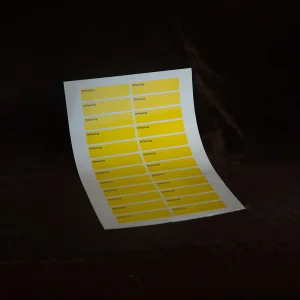
In central hospital dispensaries, color-coded warning flags (e.g., High-Alert Medication warnings, Tall Man lettering) and ultra-high clarity barcodes are essential. Labels must resist moisture condensation from refrigerated storage and fit small IV bag ports without peeling.
Retail Dispensing Chains & Mail Order
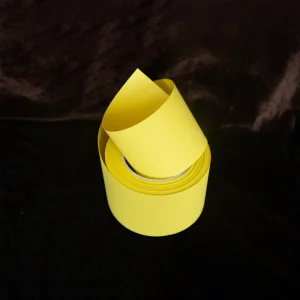
High-speed mail-order prescription automated filling lines require continuous roll feeds with low-static release liners. Direct thermal printable topcoats must resist friction abrasion and heating during automated high-speed shipping sorters.
Clinical Trials & Investigational Drugs
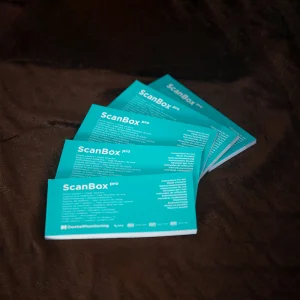
Double-blind clinical study labels demand extended-content booklet constructions (Expanded Content Labels - ECLs) that contain multilingual protocols, dosage schedules, and unblinding tear-off tabs while concealing active drug identity.
Frequently Asked Questions (FAQ) for Procurement Officers
In-depth answers to critical technical, compliance, and OEM purchasing queries regarding prescription label manufacturing.
Advanced Industrial Labels & Custom Print Solutions
Explore our specialized adhesive, manual, board, and card product line designed for pharmaceutical, electronic, and industrial buyers.



Partner with China's Premier Label Manufacturing Factory
Request custom material samples, engineering assistance, or factory-direct price quotations for your global prescription packaging requirements.
Request Technical Quote & Samples