Featured Commercial & Industrial Signage Solutions
Direct factory output engineered for demanding structural, commercial, and tactile labeling applications.
-
-

High-Quality Scratch Resistant Polycarbonate Card Manufacturers, Products
-
Custom Adhesive Labels with Heavy-Duty Thick Backing Paper Company, Companies
-

High-Quality Durable Paper Hangers for Clothing Display Companies, Product
-
-
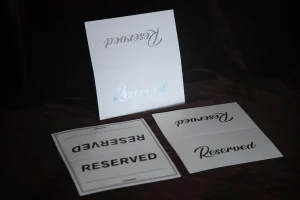
Buy Custom Printed Name Tent Cards for Conferences, Banquets & Hospitality Manufacturers, Products
-
Custom Outdoor Grade ABS Dual-Color Board Factories, Products
-
China High-Durability Flexible PVC Cards Manufacturers, Companies
1. Executive Summary & Global Macro Industrial Landscape
The international market for rigid and expanded Polyvinyl Chloride (PVC) signage has evolved from rudimentary screen-printed graphics into a highly sophisticated, material-engineered sector. Modern High-Quality PVC Sign Factories & Companies operate at the intersection of polymer chemistry, automated 5-axis CNC processing, advanced direct-to-substrate UV digital printing, and stringent environmental compliance. Driven by rapid expansion across global retail, smart-city architectural wayfinding, industrial safety compliance, and global transportation networks, high-density PVC substrate demand is expanding at an estimated CAGR of 6.4% through 2030.
For global enterprise buyers, B2B procurement managers, and architectural specifiers, selecting a tier-1 manufacturing partner requires looking far beyond basic surface printing. True operational value lies in substrate consistency, closed-cell micro-foam density management, UV stabilization formulations, fire-retardant structural ratings, and total compliance with international trade frameworks such as EU REACH, RoHS 3.0, and UL94 flammability standards.
2. Material Science: Rigid vs. Expanded PVC Polymer Formulations
Understanding the mechanical behavior of Polyvinyl Chloride begins with its underlying polymer structure. Commercial signage manufacturing relies on two dominant physical variants: Free Foam PVC and Celuka/Co-Extruded Rigid PVC. Each structural typology requires precise heat-stabilization, plasticizer modulation, and impact-modifier balance to prevent warping, yellowing, or brittle failure when exposed to atmospheric stresses.
Free Foam PVC Sheet
Produced via free expansion upon exit from the die, resulting in a consistent, lightweight closed-cell structure with a matte surface finish on both sides. Density typically ranges from 0.45 to 0.55 g/cm³. Ideal for short-to-medium-term indoor POP displays and lightweight suspended graphics.
Celuka Extrusion PVC
Manufactured using a cooled mandrel process that forms a smooth, high-density solid outer skin over a micro-cellular core. Yields extreme surface hardness, superior scratch resistance, and an operational density up to 0.70 g/cm³. Preferred for architectural wall cladding and structural signs.
Co-Extruded Rigid PVC
Features solid rigid virgin PVC outer layers sandwiching a recycled or expanded core. Offers exceptional flexural strength, ultra-low thermal expansion coefficients, and optimal structural rigidity for large-format outdoor billboards and industrial safety boards.
Engineering Benchmark Comparison Table
| Physical / Mechanical Property | Testing Protocol Standard | Free Foam PVC | Celuka Process PVC | Solid Rigid PVC Sheet |
|---|---|---|---|---|
| Density Range (g/cm³) | ASTM D792 | 0.42 – 0.55 | 0.55 – 0.70 | 1.35 – 1.45 |
| Tensile Strength (MPa) | ASTM D638 | 12 – 18 | 20 – 29 | 45 – 55 |
| Flexural Modulus (GPa) | ASTM D790 | 0.8 – 1.2 | 1.5 – 2.1 | 2.8 – 3.4 |
| Impact Resistance (Izod J/m) | ASTM D256 | 15 – 25 | 25 – 40 | 80 – 120 |
| Heat Deflection Temp (°C @ 1.8 MPa) | ASTM D648 | 62°C – 65°C | 68°C – 73°C | 72°C – 78°C |
| Flammability Rating Class | UL 94 / DIN 4102 | V-0 / B2 | V-0 / B1 | V-0 / B1 |
3. Manufacturing Workflows & Quality Assurance Protocols
Leading-edge OEM/ODM factory operations rely on fully automated, lean production pipelines. Below is an engineering breakdown of how top-tier manufacturers transform raw PVC resin into certified, UV-stabilized commercial signage products:
Step 1: Automated Extrusion & Additive Dosing
Virgin suspension-grade PVC resin (K-value 65–67) is blended with organotin stabilizers, acrylic impact modifiers, titanium dioxide ($TiO_2$) for opacity and UV resistance, and lubricants. Automated twin-screw extruders maintain die thermal profiles within $\pm 1.0^\circ\text{C}$ accuracy.
Step 2: Surface Treatment & Corona Discharge
To guarantee industrial ink adhesion, bare PVC substrates pass through inline corona treatment units. Surface tension is elevated to $\ge 42 \text{ dynes/cm}$, preventing premature ink flaking, cross-hatch failure, or environmental delamination.
Step 3: Direct UV Flatbed Printing
Utilizing variable-drop grayscale piezoelectric printheads (e.g., Ricoh GEN6 or Konica Minolta 1024i), UV-curable inks are deposited and instantly polymerized using LED-UV curing arrays. Achieving resolution capabilities up to 1440 DPI with wide-gamut CMYK + White + Varnish.
Step 4: CNC Routing & Laser Processing
High-speed CNC routers fitted with single-flute solid carbide bits cut precise vector paths, V-grooves for thermoforming, or bevel edges. Optical registration camera systems correct for material expansion on oversized sheets automatically.
Step 5: Tactile & Braille Integration
For accessible wayfinding signs, raised text (minimum 0.8mm raster elevation) and Grade 2 Braille beads are mechanically set or UV-printed using specialized high-build acrylic varnishes adhering strictly to ADA standards.
Step 6: QUV & Spectrophotometric Testing
Finished production batches undergo cross-hatch tape adhesion tests (ASTM D3359), spectrophotometric color verification ($\Delta E < 1.0$ standard), and accelerated weathering chamber sampling (ASTM G154) to ensure long-term color fastness.
4. Macro Industry Solutions & Multi-Sector Application Matrix
PVC signs provide adaptable structural solutions tailored to diverse enterprise sectors. Below is a comprehensive overview of specialized applications deployed globally:
Architectural Wayfinding
Used extensively in modern commercial complexes, medical centers, and educational campuses. Flame-retardant Celuka boards serve as room identifiers, directional maps, and ADA-compliant tactile/Braille panels featuring non-glare surface coatings.
Industrial Safety & Plant Compliance
Extreme chemical resistance allows rigid PVC signboards to withstand exposure to industrial acids, solvents, and oil splash. Utilized for OSHA hazard warning signs, Lockout/Tagout instruction panels, and emergency exit routes.
Retail Visual Merchandising & POP
High-density free foam PVC sheets offer optimal stiffness-to-weight ratio for flat-pack retail displays, suspended header graphics, and modular promotional stands. Superior die-cutting performance permits complex structural designs.
5. Strategic B2B Sourcing: OEM Factory Evaluation Standard
Procuring high-volume PVC signage requires evaluating factory partners across technical capabilities, operational capacity, and strict quality assurance metrics. Enterprise procurement officers should leverage the following standardized evaluation matrix during vendor audits:
| Evaluation Pillar | Key Audit Benchmark Requirement | Risk Assessment of Non-Compliance |
|---|---|---|
| Extrusion Capabilities | In-house extrusion lines using virgin resin with calibrated $TiO_2$ stabilizer ratios. | Sub-standard sheets warp under direct sunlight, yellow within 6–12 months, and crack easily. |
| Ink Polymerization Tech | Industrial LED-UV curing systems paired with corona discharge surface treatment. | Poor ink adhesion leads to peeling, scratching, and failure during outdoor installation. |
| Dimensional Tolerances | High-precision CNC routing tolerances within $\pm 0.1\text{mm}$ per meter length. | Misaligned mounting holes, panel gaps in modular installations, and assembly delays. |
| Environmental Certifications | Full REACH, RoHS 3.0, and ISO 14001 compliance documentation. | Shipment rejection at customs, regulatory fines for hazardous heavy-metal additives (e.g., Lead/Cadmium). |
6. Technological Roadmap & Eco-Sustainability (2026–2030 Horizon)
The future of industrial PVC signage manufacturing is defined by two converging forces: radical eco-sustainability and smart digital integration. Forward-thinking suppliers are actively re-engineering product lifecycles to minimize carbon footprints while embedding advanced electronic functionality directly into cellular structures.
Bio-Based & Recycled Polyvinyl Chloride
Leading factories are introducing closed-loop recycling processes that reintegrate post-industrial scrap into core sheet layers. Furthermore, bio-attributed PVC resins—utilizing pine wood residue tall oil instead of fossil ethylene—reduce lifecycle $CO_2$ emissions by up to 35%.
Smart Signage & Embedded NFC/IoT
Next-generation architectural signs feature integrated Near Field Communication (NFC) micro-chips and Bluetooth Low Energy (BLE) beacons embedded inside routed PVC cavities. This facilitates dynamic wayfinding apps for visually impaired users without compromising sign aesthetics.
Nanotechnology Protective Coatings
Advanced topcoats incorporating hydrophobic nano-silica create self-cleaning surfaces resistant to urban pollution, graffiti inks, and extreme UV degradation—extending outdoor service life to over 12 years with minimal maintenance.
7. Frequently Asked Questions (Technical & Sourcing Guidance)
Expert answers to common engineering, procurement, and structural questions raised by international corporate buyers.
What is the difference between expanded foam PVC board and solid rigid PVC sheet?
Expanded foam PVC board (such as Free Foam or Celuka PVC) features a micro-cellular inner core structure that reduces overall weight by 50% to 70% compared to solid sheet while maintaining good flexural stiffness. Solid rigid PVC sheet has a homogeneous, high-density structure (approx. 1.4 g/cm³) providing maximum impact resistance, higher tensile strength, and superior chemical resistance, making it suitable for structural engineering, heavy industrial safety tags, and high-wear environments.
How do PVC sign factories ensure long-term outdoor UV resistance?
UV durability is achieved through three key technical steps: First, adding optimal concentrations of Titanium Dioxide ($TiO_2$) and Hindered Amine Light Stabilizers (HALS) into the raw resin formulation during extrusion. Second, utilizing exterior-grade, flexible UV-curable inks with high lightfastness pigment ratings (7–8 on the Blue Wool Scale). Third, applying an optional clear automotive-grade polyurethane or fluoropolymer protective over-laminate film for extreme weather environments.
Are custom PVC signage products compliant with commercial building fire codes?
Yes. Premium PVC sign sheets are inherently flame-retardant and self-extinguishing due to their high chlorine content. Leading manufacturers produce boards that achieve UL94 V-0, DIN 4102-B1, and Class 1 BS 476 Part 7 flammability ratings, making them fully compliant for installation inside public airport terminals, commercial shopping centers, healthcare facilities, and mass transit stations.
What parameters are required when requesting an OEM/ODM factory quotation?
For an accurate technical quote, buyers should specify: (1) Exact panel dimensions and thickness (e.g., 3mm, 5mm, 10mm), (2) Substrate density grade (e.g., 0.50 vs 0.70 g/cm³), (3) Printing method (direct UV vs vinyl mounting) and color requirements (CMYK + White), (4) Finishing details (CNC shape routing, bevel edges, pre-drilled mounting holes, folded edges), (5) Flame retardancy or environmental certification standards required, and (6) Total order volume per SKU.
How are oversized outdoor PVC signs protected against thermal expansion?
PVC boards have a coefficient of linear thermal expansion of approximately $0.07 \text{ mm/m}^\circ\text{C}$. In outdoor environments with large seasonal temperature shifts, factories design mounting systems featuring oversized mounting slots rather than tight circular screw holes, alongside flexible silicone rubber washers. This permits natural linear expansion and contraction without causing surface buckling or fastener tear-through.
Explore Complete Industrial Printing Catalog
High-performance specialty materials, braille signs, and engineered adhesive labels from our automated manufacturing lines.
-
-
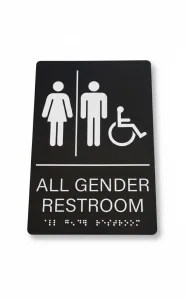
Custom Custom Tactile Braille Signage on Premium ABS Board Manufacturers, Factory
-
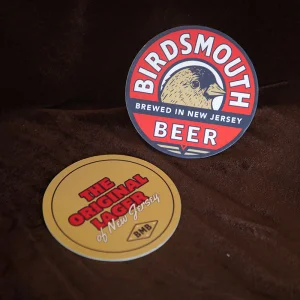
High-Quality Durable Beverage Coasters with Custom Branding Options Factory, Product
-
Custom Durable Synthetic Paper Adhesive Labels Manufacturers, Companies
-
Buy Tear-Proof PET Electrical Insulation Paper (Polyester Film) Manufacturer, Products
-
-
High-Quality Adhesive Labels with High-Translucency Backing Paper Manufacturers, Factories
-