Precision Engineering & Label Packaging Components
Explore our advanced catalog of specialized industrial labels, synthetic films, high-tack backing substrates, and custom durable components built to rigorous global standards.




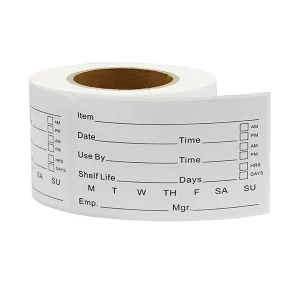
1. Global Commercial & Industrial Status of Rubber Seals
An exhaustive macro analysis of market dynamics, polymer supply chains, and technical demands across international OEM sectors.
Market Valuation & Dynamics
The global industrial rubber seals market is valued at over $34.5 Billion and is projected to expand at a CAGR of 5.8% through 2032. Growth is fueled by rapid automation, stringent fluid containment regulations, and the expansion of electric vehicle (EV) architectures.
Dominant Polymer Compounds
Modern applications demand specialized elastomer formulations. Nitrile (NBR) leads volume consumption for general hydraulic media, while Fluorocarbon (FKM) and Perfluoroelastomer (FFKM) dominate high-temperature chemical process environments.
Regulatory Compliance Landscape
Global supply chains enforce rigid compliance mandates including RoHS 3, REACH SVHC, FDA 21 CFR 177.2600, 3-A Sanitary Standards, and USP Class VI approval for pharmaceutical-grade elastomeric components.
2. Elastomer Material Selection Matrix & Technical Physics
Selecting the optimal elastomeric polymer requires balancing compression set resistance, chemical swelling metrics, glass transition temperature ($T_g$), and tensile strength.
| Elastomer Compound | ASTM D2000 Code | Working Temp Range | Primary Chemical Resistance | Compression Set Resistance | Target Applications |
|---|---|---|---|---|---|
| Nitrile (NBR) | BF, BG, BK, CH | -40°C to +120°C | Petroleum oils, water, hydraulic fluids | Excellent (15-25%) | Automotive fuel lines, general hydraulics |
| EPDM Rubber | BA, CA | -50°C to +150°C | Skydrol, steam, brake fluids, UV/Ozone | Good (20-30%) | HVAC, brake systems, outdoor weather sealing |
| Fluorocarbon (FKM/Viton) | HK | -20°C to +230°C | Aggressive hydrocarbons, acids, fuels | Very High (10-20%) | Aerospace engines, chemical processing |
| Silicone (VMQ) | FC, FE, GE | -60°C to +250°C | Oxygen, ozone, thermal radiation, food media | Fair to Good | Medical equipment, food grade contact, electronics |
| Perfluoroelastomer (FFKM) | JK | -15°C to +325°C | Universal chemical immunity, plasma, solvents | Ultra Low (<15% at 200°C) | Semiconductor wafer fab, deepwater oil extraction |
Understanding Compression Set Physics
Compression set measures the permanent deformation remaining in a seal after the compressive force is released. A 0% compression set implies perfect elastic recovery, whereas 100% indicates total plastic deformation (seal failure). Our custom vulcanization cures utilize specialized peroxide cross-linking agents to achieve ultra-low compression set under high continuous mechanical loads.
FEA Seal Geometry Optimization
Utilizing Non-Linear Finite Element Analysis (FEA), our engineering team models stress distribution, contact pressure profiles, and fluid-structure interaction prior to tooling fabrication. This eliminates premature seal extrusion, localized stress concentration, and excessive friction wear in dynamic reciprocating piston systems.
3. Transformative Trends in Rubber Sealing Technology
Discover how smart material science, additive manufacturing, and green chemistry are reshaping modern industrial elastomeric production.
1. Smart & Sensor-Integrated Seals
Integration of micro-thin RFID transponders and conductive polymer matrices directly into the rubber substrate allows real-time structural health monitoring, strain detection, and predictive maintenance alerts before catastrophic blowouts occur in critical oil & gas or aviation valves.
2. Low-Friction Fluoropolymer Coatings
Plasma-treated PTFE nano-coatings and liquid-infused slippery surfaces reduce coefficient of friction (CoF) by up to 70%. This prevents stick-slip phenomena in automated assembly robotics and drastically reduces breakaway torque requirements.
3. Sustainable & Bio-Based Elastomers
In compliance with global net-zero targets, manufacturers are transitioning toward plant-derived monomer feedstocks, recycled carbon black fillers, and eco-friendly vulcanization accelerators without sacrificing tensile integrity or thermal resilience.
4. Enterprise & Industrial Application Solutions
Tailor-engineered elastomeric sealing systems designed for demanding operational conditions across major global industrial sectors.
Automotive & Electric Vehicles (EV)
Challenge: Thermal runaway prevention, dielectric isolation, and coolant fluid immunity in high-voltage lithium battery packs.
Solution: Custom-molded flame-retardant EPDM gaskets and silicone cooling manifold O-rings certified under UL 94 V-0 standards.
Semiconductor Wafer Processing
Challenge: Plasma degradation, trace metal contamination, and outgassing in high-vacuum chamber seals.
Solution: Ultra-clean FFKM elastomers compounded in ISO Class 5 cleanrooms featuring zero organic fillers and thermal stability up to 320°C.
Oil & Gas / Subsea Exploration
Challenge: Rapid Gas Decompression (RGD), sour gas ($H_2S$) exposure, and extreme high-pressure high-temperature (HPHT) environments.
Solution: NORSOK M-710 approved HNBR and FKM seals designed to prevent explosive decompression ruptures in downhole drilling rigs.
5. Localized Application Scenarios & Export Readiness
How our engineered sealing products integrate seamlessly into regional manufacturing ecosystems worldwide.
North American OEM Integration
Supplying automotive tier-1 suppliers and industrial hydraulics hubs across the US Midwest and Mexico. Full alignment with SAE J200, ASTM D2000 specification system, and PPAP Level 3 documentation readiness.
European Union Environmental Compliance
Tailored supply lines for Germany, Italy, and Northern Europe heavy machinery sectors. Guarantees 100% compliance with REACH EC 1907/2006, RoHS 3 directives, and DIN 3760 rotary seal standards.
Asia-Pacific High-Tech Infrastructure
Delivering high-volume precision micro-O-rings and custom extruded profiles to consumer electronics factories, renewable solar hubs, and marine engineering yards in Southeast Asia and East Asia.
6. Technical Roadmap & Future Outlook (2025–2035)
A decade-long strategic view of compound chemistry evolution, zero-emission manufacturing, and AI-driven quality inspection.
Phase 1 (2025–2027): AI-Assisted Compound Design & Vision Quality Control
Implementation of machine learning algorithms to predict elastomer behavior under complex multi-axial mechanical stress. Deployment of 100% automated high-resolution optical inspection lines achieving zero-defect (PPM < 5) surface quality for critical aerospace seals.
Phase 2 (2028–2030): Next-Gen Extreme Temperature Fluoropolymers
Commercialization of novel fluoro-elastomeric compounds maintaining elasticity down to -60°C while resisting continuous operational exposure up to +350°C, catering to next-generation supersonic aviation and deep-space propulsion modules.
Phase 3 (2031–2035): Circular Economy & Self-Healing Polymers
Development of dynamically cross-linked elastomeric networks capable of intrinsic self-repairing micro-fractures during operation, combined with fully closed-loop chemical recycling pathways for end-of-life industrial gaskets.
About Xiamen Lianhua Printing Co., Ltd. (Est. 1992)
Over Three Decades of Manufacturing Excellence, Engineered Materials, and Global OEM/ODM Partnership.
Integrated Manufacturing & Material Mastery
Established in February 1992 in Xiamen, Fujian, China, Xiamen Lianhua Printing Co., Ltd. has evolved into an authoritative leader in specialized industrial label conversion, durable material packaging, ABS dual-color plates, instruction manuals, and elastomeric product tags.
Our engineering team collaborates with international B2B procurement heads, providing one-stop custom solutions—from initial substrate selection and adhesive chemistry design to high-speed die-cutting, vulcanized component bonding, and certified export packaging.
Contact Information & Technical Inquiries
- Factory Address: No. 932 Tower CuO Road, Siming District, Xiamen, Fujian, China
- Direct Phone: +86-592-8260811 / +86-592-8260812
- Official Email: [email protected]
- WhatsApp Support: +852 6205 3226
- System Certifications: ISO Certified Management System, RoHS & REACH Compliant
7. Frequently Asked Questions (FAQ)
Comprehensive technical answers addressing compound selection, order specifications, and global delivery standards.
What parameters are critical when choosing a custom rubber seal or gasket polymer?
You must evaluate five fundamental operational conditions: working temperature range, chemical or fluid exposure (oils, acids, solvents), pressure dynamics (static vs. dynamic reciprocating), hardness requirement (Shore A durometer), and compliance mandates (FDA, RoHS, REACH, UL). Our engineering team performs material compatibility assessments to select the optimal elastomer (NBR, EPDM, FKM, Silicone, or FFKM).
Is Xiamen Lianhua Printing Co., Ltd. a direct factory or a trading company?
We are a direct manufacturer established in February 1992 in Xiamen, China. We operate state-of-the-art production workshops equipped for high-precision printing, converting, die-cutting, label processing, ABS dual-color board production, and specialized packaging inserts with complete in-house OEM/ODM capability.
How do you ensure seal durability on rough or low-surface-energy (LSE) materials like rubber tires?
For rough or elastomeric substrates, standard pressure-sensitive adhesives fail due to plasticizer migration and low surface energy. We utilize specialized high-tack, thick-coat rubber-based or acrylic-modified adhesives engineered specifically to bond aggressively with textured rubber, tires, and flexible polymer surfaces without flagging or edge lifting.
Are your products compliant with international RoHS and REACH environmental regulations?
Yes. We strictly enforce a green purchasing policy across all raw material procurement. All face stocks, synthetic films, adhesive compounds, release liners, and printed products comply fully with European RoHS 3 and REACH SVHC standards, backed by third-party testing and ISO quality management certification.
What technical documentation is required for an accurate OEM quotation?
To provide a rapid and accurate technical proposal, please supply: 2D/3D CAD drawings (or dimensional specs), material preferences (or environmental conditions), order quantity, surface type to which the product will be applied, exposure parameters (UV, heat, chemicals), and custom finishing requirements.
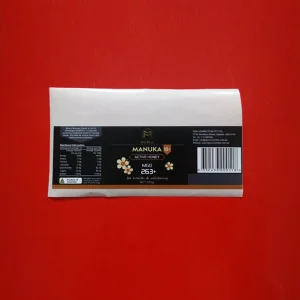
Industrial Labels, Heavy-Duty Materials & Synthetic Substrates
Browse our extended product portfolio engineered for low temperatures, high electrical insulation, wire harness wrap-around, and high-strength adhesive bonding.