
Featured ABS & Engineering Products for India
Explore our core industrial product selection specifically certified for Indian OEM manufacturing, electrical enclosures, public infrastructure, and technical documentation needs.

Executive Summary: The Strategic Role of ABS Polymers in India’s Industrial Surge
India’s manufacturing landscape is currently undergoing a structural evolution, fueled by the government’s "Make in India" initiative, national infrastructure masterplans like PM Gati Shakti, and expanded Production Linked Incentive (PLI) schemes targeting Electronics System Design & Manufacturing (ESDM), Automotive OEMs, and Green Energy sectors. As industrial clusters in Gujarat (Sanand, Hazira), Tamil Nadu (Sriperumbudur, Hosur), Maharashtra (Chakan, Pune), and the National Capital Region (NCR) scale up automated assembly lines, the demand for engineered thermoplastic polymers—specifically Acrylonitrile Butadiene Styrene (ABS)—has reached unprecedented levels.
ABS polymer sheets and dual-color engravable laminates occupy a critical niche in modern industrial design. Combining the thermal resistance and structural rigidity of Acrylonitrile, the extreme impact resistance of Polybutadiene rubber, and the sleek surface finish and processability of Styrene, ABS serves as the material of choice for machine control panels, high-voltage switchgear legend plates, automotive interior bezels, and tactile public infrastructure signage.
Industrial Equipment Manufacturing
Indian machine tool and automation builders require high-dielectric ABS control panel tags and laser-engraved legend plates that resist industrial solvents, oils, and continuous vibration.
Automotive & Transport Sector
From EV battery enclosure warnings to commercial vehicle dash panels, custom ABS dual-color components provide lightweight, heat-resistant, and high-contrast labeling solutions.
Accessibility & Smart Infrastructure
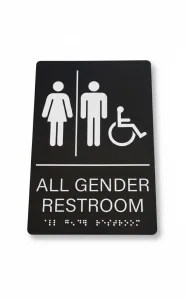
Compliant with India's Rights of Persons with Disabilities (RPwD) Act 2016, UV-stabilized ABS tactile braille sign boards are essential for metro rail stations, airports, and public utilities.
Material Science & Technical Specifications of ABS Sheets
Understanding the molecular dynamics of ABS is critical for Indian procurement teams selecting components exposed to diverse environmental conditions—ranging from the high humidity of coastal Mumbai and Chennai to the extreme ambient heat (+48°C) of Rajasthan's solar parks.
ABS is a terpolymer synthesized by polymerizing styrene and acrylonitrile in the presence of polybutadiene. By adjusting the proportions of each monomer—typically 15%–35% Acrylonitrile, 5%–30% Butadiene, and 40%–60% Styrene—engineers fine-tune the substrate for specific fabrication methods such as CNC rotary milling, CO2 laser ablation, or vacuum thermoforming.
| Physical / Mechanical Property | Test Standard (ASTM/ISO) | Standard ABS Grade Value | Outdoor UV-Stabilized Grade |
|---|---|---|---|
| Specific Gravity (Density) | ASTM D792 / ISO 1183 | 1.04 – 1.07 g/cm³ | 1.05 – 1.08 g/cm³ |
| Tensile Strength at Yield | ASTM D638 / ISO 527 | 40 – 50 MPa | 42 – 52 MPa |
| Izod Notched Impact Strength (23°C) | ASTM D256 / ISO 180 | 200 – 320 J/m | 180 – 280 J/m |
| Heat Deflection Temp (HDT @ 0.45 MPa) | ASTM D648 / ISO 75 | 92°C – 98°C | 95°C – 102°C |
| Thermal Expansion Coefficient | ASTM E831 | 8.5 x 10⁻⁵ / °C | 7.8 x 10⁻⁵ / °C |
| Flammability Rating | UL 94 Standard | UL94 HB (V-0 Available) | UL94 V-0 Grade Optional |
| Laser Engraving Cap Layer Thickness | Micro-gauge Microtome | 0.08 mm – 0.12 mm | 0.10 mm – 0.15 mm (UV Cap) |
Global Supply Chain Dynamics & Indian Localization Capabilities
Sourcing dual-color ABS sheets and converting components for Indian industrial projects requires seamless quality control, rapid turnaround times, and adherence to international environmental directives. Xiamen Lianhua Printing Co., Ltd. provides robust global manufacturing integration to support tier-1 OEMs across India.
By combining computerized co-extrusion technology with automated roll-to-sheet lamination, our factory ensures exact cap-layer thickness down to ±0.01mm. This microscopic precision allows Indian sign makers and engravers to achieve crisp laser vaporizations without heat warping, burring, or carbon residue deposits during high-speed production.
Substrate Comparison: ABS vs. Polycarbonate vs. PET vs. Aluminum
Selecting the optimal material for industrial tagging, warning identification, and panel facing involves balancing cost, mechanical strength, chemical resistance, and ease of secondary processing. Below is an engineering comparison matrix for Indian procurement managers:
| Evaluation Metric | ABS Dual-Color Laminate | Polycarbonate (PC) Film | Polyester (PET) Film | Anodized Aluminum |
|---|---|---|---|---|
| Direct Laser Engravability | Exceptional (High Contrast) | Moderate (Carbon Marking) | Poor (Melts Edge) | Requires Laser Coating |
| Mechanical Impact Resistance | High (Polybutadiene Core) | Extreme (Bulletproof Grade) | Medium High | High (Dents Under Load) |
| Dielectric Strength (Insulation) | Very High (> 35 kV/mm) | High (> 30 kV/mm) | High (> 25 kV/mm) | Zero (Conductive) |
| Cost Efficiency for Short Runs | Optimal (No Tooling Required) | Moderate (Requires Dies) | High (Die Cut Needed) | Low (High Machining Cost) |
| Weight Reduction Factor | Lightweight (1.05 g/cm³) | Lightweight (1.20 g/cm³) | Lightweight (1.38 g/cm³) | Heavy (2.70 g/cm³) |
Technology Roadmap & Sustainability in ABS Polymer Manufacturing
As India moves towards stringent carbon reduction mandates and eco-conscious procurement frameworks, polymer engineering is undergoing rapid technological advancements. Our research and development center focuses on four key pillars of future-ready ABS sheet manufacturing:
1. Advanced Co-Extrusion & Nano-Cap Layering
By implementing triple-layer co-extrusion technology, we reduce top-cap thickness down to nano-scale uniformity. This enables ultra-precise laser vector engraving with lower laser wattages, conserving energy while accelerating throughput for high-volume manufacturing hubs across India.
2. Zero-VOC Acrylic Cap Lamination
Traditional dual-color sheets often used solvent-based surface coatings. Our next-generation ABS boards feature solvent-free hot-melt acrylic caps containing concentrated Hindered Amine Light Stabilizers (HALS). This prevents micro-cracking and yellowing under high-ultraviolet sunlight in equatorial regions.
3. Circular Economy & Recycled ABS Blends
In compliance with global ESG standards, we offer recycled-content core grades (PCR-ABS) that reuse post-industrial engineering plastics without compromising Izod impact strength or structural integrity, assisting Indian exporters in satisfying European sustainability directives.
4. Anti-Microbial & Self-Cleaning Surface Finishes
For medical devices, healthcare facility wayfinding, and cleanroom control panels, our specialized ABS formulations integrate silver-ion antimicrobial agents into the cap layer, suppressing bacterial proliferation by 99.9% over extended operational cycles.
Complementary OEM Industrial Labeling & Identification Suite
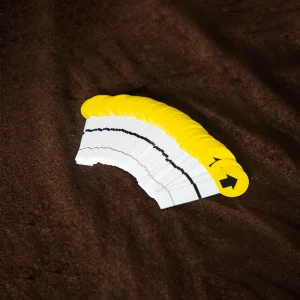
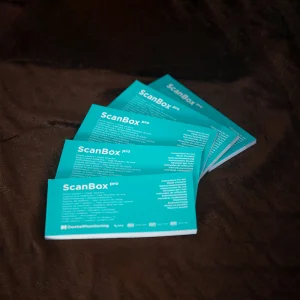
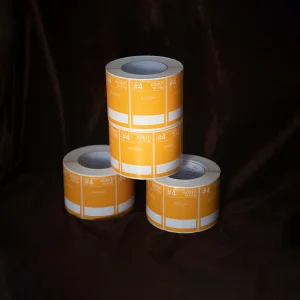
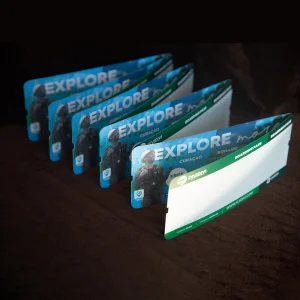
Explore our complete industrial portfolio designed to complement ABS panel hardware with heavy-duty adhesive labels, technical instruction booklets, and protective cards for Indian manufacturing plants.


Frequently Asked Questions for Indian B2B Buyers & OEMs
What makes outdoor grade ABS dual-color boards suitable for Indian weather conditions?
Our outdoor grade ABS boards utilize an acrylic (PMMA) cap layer embedded with UV stabilizers and Hindered Amine Light Stabilizers (HALS). This prevents color fading, surface chalking, and brittleness caused by high ultraviolet exposure and heat cycles typical of Indian summers (+45°C to +48°C). Standard interior-grade ABS lacks this UV cap and will degrade if installed outdoors.
What is the recommended laser engraver setting for ABS dual-color sheets?
For standard CO2 laser machines (40W to 80W), we recommend a speed setting of 300-500 mm/s and power set between 12% and 20%. Because our top cap layer is controlled to a precise 0.08mm-0.12mm thickness, low power is sufficient to ablate the cap cleanly, exposing the contrasting core without melting or charring the substrate beneath.
Are your ABS sheets compliant with Indian accessibility norms for Braille signage?
Yes. Our tactile braille signage boards are manufactured in strict compliance with the Rights of Persons with Disabilities (RPwD) Act 2016 and international ADA standards. The tactile characters are raised by a minimum of 0.8mm, and Marburg Medium braille dots are accurately milled or UV-formed to provide seamless accessibility in metro stations, hospitals, and government facilities across India.
How does Xiamen Lianhua Printing support Indian manufacturers with customs & BIS compliance?
We supply full material safety data sheets (MSDS), RoHS test reports from SGS/TÜV, REACH compliance certificates, and commercial invoices with detailed Harmonized System (HS) codes (such as HS 3920.30 for ABS sheets). This ensures smooth customs clearance through major Indian ports like Nhava Sheva (JNPT), Chennai, and Mundra.
Can I request custom sheet sizes and specialized self-adhesive backing?
Absolutely. While standard sheet dimensions are 600mm x 1200mm and 600mm x 900mm, we offer precision pre-cutting into custom panel dimensions. Furthermore, we can pre-apply high-tack 3M solvent acrylic adhesive liners (such as 3M 467MP or 468MP) to the reverse side, allowing immediate peel-and-stick application on powder-coated electrical cabinets.
Partner with a Global ABS & Industrial Labeling Leader
Whether you require bulk shipments of UV-stabilized ABS dual-color sheets to Mumbai, custom tactile signage for railway expansion in Delhi, or technical rating labels for electrical export products, our engineering team is ready to assist.