
Engineered Label Converting for Boston's Core Industries
Precision-manufactured adhesive substrates specifically calibrated for cold-chain biologics, high-temperature thermal printing, automated wire harness assemblies, and high-tack industrial applications across Massachusetts.
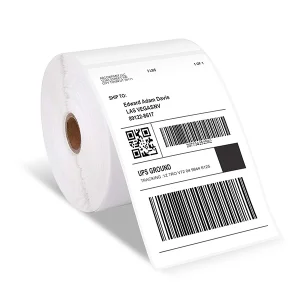
Boston Tech Grade Heat-Resistant Thermal Paper Adhesive Labels
Engineered for high-speed direct thermal print lines across Greater Boston logistics hubs. Resists top-coat smudging and withstands elevated temperatures.
View Spec Sheet & Quote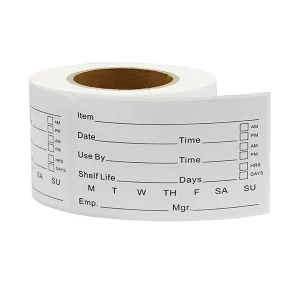
Boston BioMed Low Temperature Resistant Cryogenic Freezer Labels
Designed for Cambridge and Waltham biotech labs. Maintains structural adhesion down to -196°C in liquid nitrogen freeze-thaw cycles without flagging.
View Spec Sheet & Quote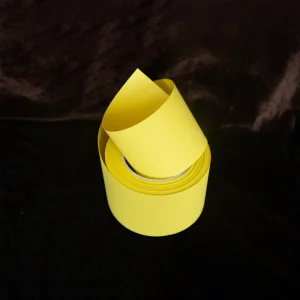
Greater Boston Secure Durable & High-Tack Wire Adhesive Labels
Ultra-pliable vinyl and PET wrap-around labels designed for low-diameter cables, robotics assemblies, and medical device wiring across Massachusetts tech corridors.
View Spec Sheet & Quote
Industrial Grade High-Tack Textured Surface Adhesive Labels
Aggressive solvent acrylic rubber adhesives designed to bond permanently to rough, oily, low-surface-energy (LSE) materials and vulcanized rubber surfaces.
View Spec Sheet & QuoteThe Boston Market: Advanced Manufacturing & Life Sciences Label Demand
As New England's economic engine, Greater Boston presents specialized performance criteria for pressure-sensitive label converting—driven by Kendall Square biotechs, Route 128 robotics hubs, and regional cold-chain networks.
Cambridge & Waltham Biotech Corridor
Home to over 1,000 biotechnology entities, clinical research organizations (CROs), and pharmaceutical giants. Labeling requirements focus heavily on cryo-vials, micro-well plates, chemical exposure resistance (xylene, DMSO, isopropyl alcohol), and compliance with FDA Title 21 CFR Part 11 electronic tracking standards.
Route 128 / I-495 Tech & Robotics Cluster
Concentrated in Woburn, Bedford, and Framingham, this cluster requires heavy-duty industrial marking. Specifications demand UL 969 compliance, flame retardancy (UL 94 V-0 ratings), electrostatic discharge (ESD) anti-static shields, and high-shear permanent adhesives for powder-coated substrates.
Regional Cold Chain & Food Distribution
From Logan International Airport cargo terminals to Worcester logistics hubs, temperature-sensitive cold chain labels must maintain tack during severe humidity fluctuations and sub-zero storage without face-stock degradation or barcode distortion.
Purchasing directors and packaging engineers across the Greater Boston area face unique operational mandates. Selecting an adhesive label manufacturer requires more than standard flexographic printing; it demands high-precision material chemistry capable of matching specific surface energy profiles. Whether applying pressure-sensitive labels to low-density polyethylene (LDPE) sample tubes, flame-retarded ABS dual-color switchboards, or vulcanized rubber transport components, our engineering team ensures zero failure rates across high-speed automatic application lines.
Technical Matrix: Adhesive Polymer & Face-Stock Dynamics
Selecting the correct pressure-sensitive label formulation depends on matching substrate surface energy (dynes/cm), operational thermal envelopes, and environmental solvent exposure.
| Face-Stock Category | Adhesive Chemistry | Substrate Surface Energy | Temp. Tolerance Range | Primary Industrial Application |
|---|---|---|---|---|
| Direct Thermal Top-Coated Paper | Emulsion Acrylic (Permanent) | High Surface Energy (HSE) > 42 dynes/cm | -20°C to +80°C | Boston Regional Logistics, Retail, Barcode Tracking |
| Biaxially Oriented Polypropylene (BOPP) | Modified Rubber Hot-Melt | Low Surface Energy (LSE) < 36 dynes/cm | -40°C to +100°C | Chemical Containers, Squeeze Bottles, Cold-Chain Food |
| Polyester (PET) Synthetic Film | Cross-linked Solvent Acrylic | High & Medium Surface Energy | -80°C to +150°C | Biomedical Vials, Circuit Boards, Electrical Insulation |
| Ultra-Pliable Cast Vinyl (PVC) | High-Tack Solvent Rubber | Irregular / Curved Substrates | -30°C to +90°C | Wire Harnesses, Small Radius Cable Wraps, Automotive |
| Engineered ABS Dual-Color Board | High-Shear Structural Adhesive | Rigid Structural Metals & Plastics | -40°C to +120°C | Equipment Rating Plates, Tactile Braille Signage, Control Panels |
Rheological Behavior & Tack Performance
Pressure-sensitive adhesives (PSAs) function via viscoelastic properties. Initial tack (ASTM D2979) measures immediate wetting capability under lightweight pressure, whereas shear resistance (ASTM D3654) governs long-term holding power against mechanical strain. For Boston area manufacturers applying labels to low-energy polyolefins or textured castings, high tack ensures instant bond establishment without corner flagging.
Thermal Envelope & Glass Transition Temperature ($T_g$)
At cryogenic temperatures, standard acrylic adhesives undergo glass transition ($T_g$), becoming brittle and losing holding capability. Our specialized cryogenic formulations incorporate low-$T_g$ polymer chains and plasticizers that remain flexible at -196°C, guaranteeing total label integrity for Massachusetts biological repositories and stem-cell biobanks.
Global Sourcing & Local Support Strategy for New England Enterprises
Balancing manufacturing efficiency with local responsiveness: How Boston purchasing managers optimize total cost of ownership (TCO) through strategic OEM converting and robust inventory buffering.
Direct-from-Factory OEM Cost Structuring
Eliminate unnecessary regional distribution markups. By sourcing custom-printed rolls and sheet materials directly from our 30,000+ sqm manufacturing facility, Boston buyers achieve 25% to 42% cost savings on high-volume production orders.
JIT Inventory Buffering & Air-Freight Logistics
To support Lean/Just-In-Time manufacturing lines in Woburn, Framingham, and Cambridge, we maintain standardized raw release liners and facestocks, offering rapid express air dispatch into Boston Logan Airport (BOS) within 5–7 business days for urgent runs.
Full Regulatory & Environmental Compliance
Every converted label batch strictly conforms to international environmental directives—including EU RoHS 3 (Directive 2015/863), REACH SVHC candidate lists, and FDA 21 CFR 175.105 regulations governing indirect food contact adhesives.
Information Gain: Preventing Label Flagging on Low-Diameter Medical Tubing
A common failure mode in Boston biotech testing facilities is "flagging"—the tendency of a label to unwrap from small-diameter plastic tubing or cryogenic vials. Flagging occurs when the restoring force (bending stiffness) of a heavy face-stock overcomes the shear and peel strength of the pressure-sensitive adhesive. Our engineering team solves this by combining flexible 1.5 mil top-coated synthetic films with high-tack, anti-migratory acrylic formulations, ensuring 360-degree wrap stability across micro-tubing down to 2mm in diameter.
Complete Engineered Products & Substrates Portfolio
Explore our full line of specialized cards, double-coated industrial tapes, ticketing stocks, and laser-engravable ABS dual-color boards trusted by global procurement teams.
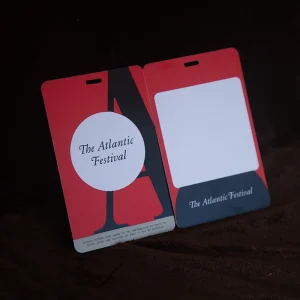
Boston Event & Retail Custom Printed Paperboard Cards
High-density bleached sulfate (SBS) paperboard customized with foil stamping, spot UV, and variable data printing for corporate events and retail branding.
View Product Details
Industrial High-Tack Cable & Wire Harness Marking Labels
Self-laminating vinyl wire wraps with clear tail protection. Resists abrasion, motor oils, and moisture in harsh industrial and telecom environments.
View Product Details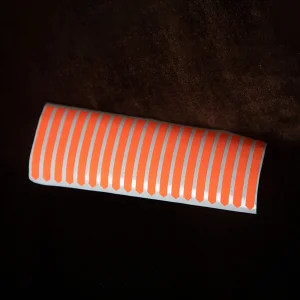
High-Strength Double-Coated Industrial Adhesive Labels
Heavy-duty double-sided carrier films coated with high-shear acrylic. Designed for permanent mounting of nameplates, trims, and membrane switches.
View Product Details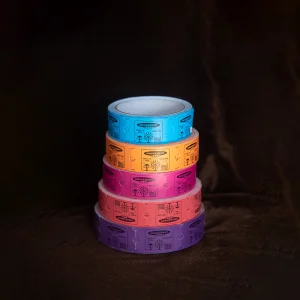
Standard General Admission & Transportation Tickets
Precision perforated thermal ticket stock with security anti-counterfeiting features, holographic striping, and sequential barcode numbering.
View Product Details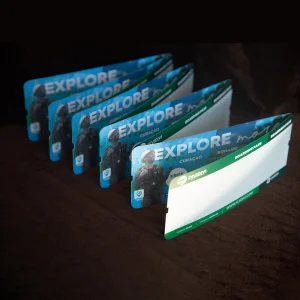
Instant-Print Direct Thermal Paper Tickets & Vouchers
Top-coated thermal board with ultra-clear sensitivity for mobile printers, kiosk systems, and high-speed venue entrance ticketing terminals.
View Product Details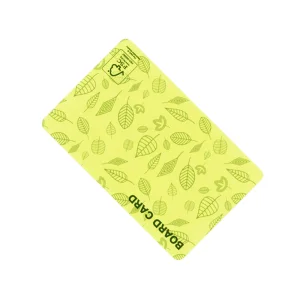
Luxury Premium Heavyweight Branding Paperboard Cards
Multi-layer rigid board constructions featuring soft-touch lamination, edge painting, and embossed metallic foil accents for luxury retail presentation.
View Product Details
Indoor Architectural Grade ABS Dual-Color Engraving Board
Micro-surfaced ABS sheets optimized for CNC rotary milling and CO2 laser engraving. Delivers high contrast for indoor directional signs and badges.
View Product Details
Outdoor Weatherproof UV-Stabilized ABS Dual-Color Board
UV-inhibited acrylic cap layer bonded to a durable ABS core. Built to endure harsh freeze-thaw cycles, sunlight, and extreme winter weather in Boston.
View Product DetailsStrict Inspection Standards & Certified Testing Protocols
Every production batch undergoes automated optical inspection (AOI) and rigorous laboratory testing to verify peel adhesion, shear resistance, and color consistency (Delta E < 1.0).
180° Peel Adhesion Testing
Executed in accordance with PSTC-101 and ASTM D3330 protocols. We measure the force required to remove pressure-sensitive label samples from standard stainless steel panels at a constant 300mm/min rate to guarantee bond integrity.
Accelerated Weathering (QUV)
Simulating years of UV radiation and moisture exposure via ASTM G154 accelerated weathering chambers. Essential for outdoor ABS dual-color signage and industrial equipment labels deployed in severe climate zones.
Chemical Rub & Solvent Resistance
Evaluated using Crockmeter mechanical rub testers charged with Isopropyl Alcohol (IPA), Methyl Ethyl Ketone (MEK), and gasoline. Ensures thermal transfer barcoding stays crisp and scannable throughout product life.
Frequently Asked Questions by Boston Procurement Teams
Detailed technical insights regarding material specifications, order customization, supply chain lead times, and regulatory compliance for New England industrial buyers.
How do your low-temperature freezer labels perform in -196°C liquid nitrogen environments?
Our cryogenic low-temperature resistant freezer labels utilize specialized solvent acrylic adhesives engineered with a extremely low glass transition temperature ($T_g$). When applied to clean, room-temperature vials or polypropylene micro-tubes prior to freezing, the adhesive forms a permanent mechanical bond that resists embrittlement, cracking, or delamination even during long-term immersion in liquid nitrogen phase (-196°C) or ultra-low temperature (ULT) -80°C freezers across biomedical facilities in Cambridge and Boston.
Can your high-tack wire labels withstand tight wrap radius applications without flagging?
Yes. Flagging typically occurs when face-stock memory overcomes adhesive shear strength. Our wire adhesive labels utilize highly conformable 2.0 mil vinyl or ultra-flexible PET facestocks paired with aggressive high-coat-weight solvent acrylic adhesives. This construction neutralizes spring-back tension on low-diameter wires (down to 2mm), making them ideal for complex cable harness assemblies, medical device wiring, and industrial robotics in the Route 128 technology sector.
What is the standard lead time for custom die-cut adhesive label orders delivered to Boston, MA?
Standard custom converting and printing lead times are typically 7 to 10 business days following digital proof approval. Air-freight transit from our Xiamen manufacturing plant to Boston Logan Airport (BOS) takes approximately 4 to 6 days via DHL/FedEx Express or air cargo. For ongoing contracted demand, we offer scheduled blanket release orders to maintain local buffer stocks.
What certifications and environmental compliance standards do your label materials meet?
Our manufacturing operations are ISO 9001:2015 certified. All raw facestocks, release liners, and pressure-sensitive adhesives comply with European Union RoHS Directive 2011/65/EU and (EU) 2015/863, REACH Regulation (EC) No 1907/2006 (SVHC list), and UL 969 marking and labeling standards where specified. Material Safety Data Sheets (MSDS) and Certificates of Conformance (CoC) are supplied with every shipment.
What surface preparation is recommended before applying high-tack industrial labels?
For optimal adhesive bond development, the target surface should be clean, dry, and free from silicone mold release agents, oils, or dust. We recommend wiping the substrate with a 50/50 Isopropyl Alcohol (IPA) and water mixture prior to application. Pressure-sensitive adhesives require firm application pressure (minimum 15-20 PSI) to ensure 100% surface contact and max out ultimate bond strength within 24 to 72 hours.
How does outdoor grade ABS dual-color board differ from standard indoor engraving stock?
Outdoor grade ABS dual-color board incorporates a specialized UV-stabilized acrylic top cap layer designed to absorb ultraviolet radiation without chalking, fading, or yellowing under harsh weather conditions. The underlying ABS core provides structural impact resistance. Indoor grade ABS utilizes standard cap resins that may degrade under continuous outdoor sunlight exposure. Our outdoor sheets are fully tested via accelerated QUV chamber protocols for New England climate durability.
Optimize Your Label Sourcing for the Boston Market
Contact our engineering team today to request complimentary sample packs, technical data sheets (TDS), or custom price quotes tailored to your specific application requirements.
Send Inquiry Now