

Featured Industrial Backing Materials for Osaka OEMs
Engineered for extreme shear resistance, anti-curl performance, and automated high-speed die-cutting lines across the Kansai industrial corridor.

Anti-Curl Moisture-Resistant Sealed Backing Paper Materials
View Product Details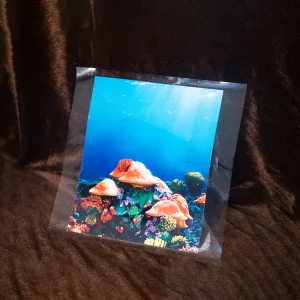
High-Translucency Glassine Backing Paper Labels
View Product Details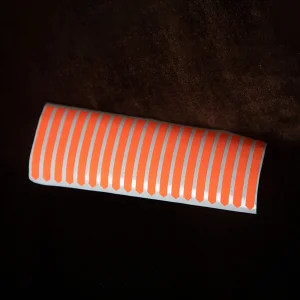
Osaka High-Strength Double-Coated Backing Paper Labels
View Product DetailsThe Osaka Industrial Landscape: Precision Release Paper Demands
Understanding the Keihanshin Manufacturing Engine and its Relentless Standard for Material Engineering
Precision Electronics & Semiconductors
Osaka’s technological hubs—spanning Kadoma, Moriguchi, and Higashiosaka—house globally renowned electronic component manufacturers. These cleanroom assembly environments mandate backing papers with micro-caliper consistency, zero silicone migration, and static-dissipative topcoats to prevent component contamination during ultra-fast automated peel-and-place processing.
Automotive & Heavy Machinery
The Sakai-Senboku coastal industrial zone demands heavy-duty release liners engineered for high-tack rubber adhesives, thermal insulation wraps, and gasket assembly tapes. Backing papers must exhibit high tensile strength along the machine direction (MD) to survive extreme tension without tear or matrix splitting.
Pharmaceutical & Medical Labeling
Osaka is historic Japan’s pharmaceutical capital (Doshomachi district). Medical-grade glassine liners require non-toxic, solventless silicone release coatings compliant with stringent Japanese Pharmacopoeia and international REACH/RoHS directives for automated syringe, vial, and blister pack labeling.
Material Science: Backing Paper Calibrations & Release Coating Chemistry
An engineering deep-dive into how substrate density, silicone crosslinking, and dimensional stability dictate release force reliability.
Substrate Typologies & Physical Characteristics
Backing paper materials—often called release liners—serve as the crucial carrier medium for pressure-sensitive adhesive (PSA) products. In Osaka's advanced converting factories, choosing the right base paper defines production success:
- Supercalendered Glassine Paper (60–90 gsm): Dense, transparent, and highly uniform. Ideal for high-speed automatic optical dispensing line sensors because light easily penetrates the liner to detect label gaps.
- Clay-Coated Kraft (CCK) Paper: Features a smooth clay coating that minimizes silicone absorption, resulting in uniform silicone laydown and superior lie-flat (anti-curl) stability in varying ambient humidity.
- Polyethylene-Coated Kraft (PEK): Combines kraft paper strength with a dual-sided PE moisture barrier, making it indispensable for large-format sheeted graphics and outdoor nameplates exposed to Osaka’s humid summers.
Silicone Release System Calibration (FINAT FTM 3 / FTM 4)
The interaction between the adhesive chemistry (acrylic, solvent, or hot-melt rubber) and the backing paper’s release coat determines key operational parameters:
- Thermal Platinum-Cured Systems: Delivers ultra-low release force (5–15 cN/25mm) and non-migrating silicone stability for sensitive electronic films.
- UV Cationic Curing: Cures at lower thermal thresholds, maintaining base paper moisture balance to completely eliminate paper curling during rotary die-cutting.
- Differential Release Force: Customized front/back release differential (e.g., 1:3 ratio) designed specifically for double-sided industrial mounting tapes used in automotive sub-assemblies.
Technical Matrix: Backing Paper Selection Framework
| Backing Material Type | Grammage (gsm) | Caliper (μm) | Transparency (%) | Tensile Strength (MD) | Primary Industrial Application |
|---|---|---|---|---|---|
| Honey Glassine Paper | 60 - 80 gsm | 52 - 68 μm | 48% - 55% | ≥ 70 N/15mm | High-speed roll-fed automatic label dispensing |
| White Supercalendered Glassine | 62 - 90 gsm | 54 - 76 μm | 42% - 50% | ≥ 75 N/15mm | Pharmaceutical vials, food packaging, barcode rolls |
| Clay-Coated Kraft (CCK) | 80 - 135 gsm | 75 - 120 μm | Opaque (< 10%) | ≥ 110 N/15mm | Sheet-fed stickers, screen printing, decorative decals |
| Double-Sided PEK Liner | 100 - 160 gsm | 110 - 170 μm | Opaque | ≥ 140 N/15mm | Heavy-duty industrial tapes, membrane switches |
| PET Release Film (Polyester) | 36 - 75 μm | 36 - 75 μm | > 92% (Ultra-clear) | ≥ 200 N/15mm | Semiconductor dicing tape, cleanroom optical labels |
China Industry 4.0: Supply Chain Resilience & OEM Advantages for Japan
How Advanced Chinese Converting Facilities Bridge Japanese Precision Standards with Unmatched Cost-Scalability
Automated Co-Extrusion & Coating
Leveraging European high-speed solventless coating lines equipped with inline closed-loop infrared caliper gauges, Chinese smart factories maintain coat weight tolerance within ±0.05 g/m², meeting strict Japanese JIS P-8124 benchmarks.
Complete ISO, RoHS & REACH Compliance
Global procurement teams require full transparency. Our state-of-the-art production ecosystem enforces strict green procurement policies, ensuring zero heavy metals, SVHC compliance, and complete batch traceability from raw pulp to converted roll.
Direct Shipping Logistics to Osaka Port
With direct ocean freight routes connecting Eastern China ports (Xiamen/Shanghai) to Osaka, Nanko, and Kobe ports within 3–5 shipping days, Japanese buyers gain robust inventory buffering without holding excessive warehouse stock.
30+
Years Manufacturing Expertise
±0.05g
Silicone Coating Precision
100%
RoHS & REACH Compliant
3-5 Days
Ocean Freight to Osaka Port
Global Backing Paper Market Trends (2025–2030)
Key Technological Shifts Reshaping Industrial Sourcing in Osaka & Worldwide
Ultra-Thin Liner Down-Gauging
Driven by decarbonization initiatives across Japan, manufacturers are shifting from traditional 78 gsm glassine to ultra-thin 48–54 gsm liners. Down-gauging reduces raw material waste, decreases freight emissions per square meter, and increases roll capacity by up to 30% for high-speed automated application.
Circular Economy & Liner Recycling
Kansai sustainability frameworks (SDGs) are putting pressure on factories to collect spent glassine backing paper. Advanced silicone release coatings now feature water-washable or repulpable formulations, enabling 100% recycling back into industrial kraft paperboard production.
Linerless Label Technology Adoption
In logistics centers like Nanko distribution hubs, linerless thermal labels (labels without backing paper) are gaining traction. However, for complex die-cut shapes, specialized release paper backing remains the irreplaceable standard for high-speed precision operations.
Localized Application Scenarios across Osaka’s Industrial Districts
How Specific Backing Materials solve localized manufacturing challenges across the Kansai Region
Scenario A: Cold-Chain Logistics at Osaka Port (Suminoe-ku)
Challenge: Standard backing paper absorbs ambient moisture in frozen fish and food packaging hubs, causing paper curl and label jam in thermal printers.
Solution: Moisture-resistant sealed glassine liner coated with barrier polyethylene layer. Guarantees 100% lie-flat performance in -25°C cold storage facilities.
Scenario B: High-Precision Component Marking in Higashiosaka
Challenge: Small metal stamping factories require high-tack labels on heavy backing paper that can survive oil exposure and aggressive die-cutting without tears.
Solution: 120 gsm Heavy-Duty Kraft Backing Paper with solvent-based acrylic adhesive, providing extreme burst resistance during automated punch press labeling.
Complete Osaka Industrial Product & Material Showcase
Explore our full line of backing papers, specialized PVC/ABS boards, ticket cards, and instruction manuals manufactured under strict ISO quality systems.
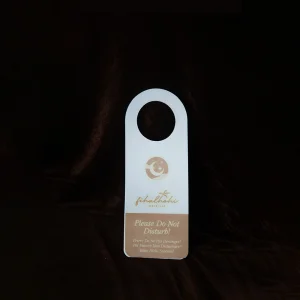
High-Durability Flexible PVC Cards & Substrates
View Product Details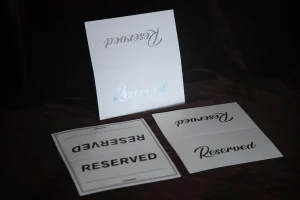
Custom Printed Name Tent Cards for Osaka Events
View Product Details
Moisture-Resistant Anti-Curl Backing Paper Labels
View Product Details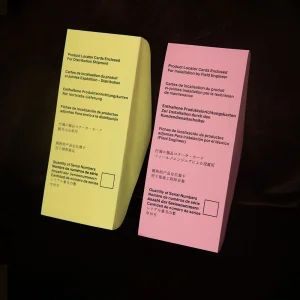
Custom Premium Envelopes & Packaging Paper
View Product Details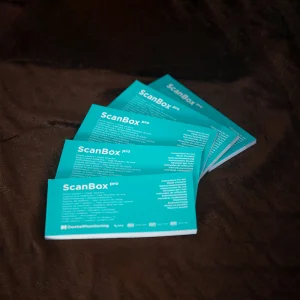
Detailed Booklet-Style Equipment Instruction Manuals
View Product Details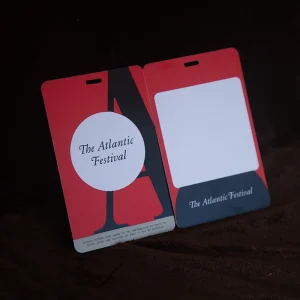
Custom Printed Paperboard Event & Gift Cards
View Product Details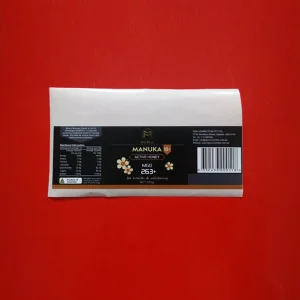
Flexible PE-Based Industrial Adhesive Labels
View Product Details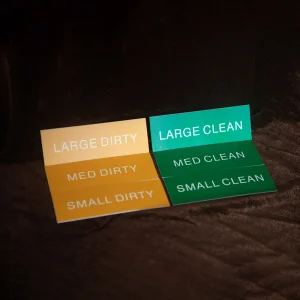
Industrial ABS Dual-Color Engraving Sign Boards
View Product DetailsTechnical & Sourcing FAQ for Osaka Procurement Directors
Expert Guidance on Material Compatibility, Custom Coating Weights, and Export Compliance
What are the key technical differences between Glassine, CCK, and PEK backing paper materials?
Glassine Paper is highly translucent and dense, calendered under extreme pressure to allow optical sensors on high-speed automatic labeling machines to detect label gaps reliably. CCK (Clay-Coated Kraft) paper features a specialized clay layer that prevents silicone soak-in, maintaining superior lie-flat properties for sheet-fed printing. PEK (Polyethylene Kraft) adds a plastic barrier coat on one or both sides, offering maximum moisture stability for large-format outdoor signs or heavy industrial tapes.
How do you ensure zero paper curl in humid environments like Osaka in summer?
Paper curl occurs when the paper fibers absorb or lose ambient moisture unevenly compared to the face film or adhesive layer. We solve this by applying a moisture-balancing poly-coating (PE sealing) on the reverse side of the backing paper or utilizing UV-cationic silicone curing systems, which preserve the natural equilibrium moisture content (EMC) of the base paper pulp during manufacturing.
Can backing paper silicone release force be customized for high-speed automated dispensers?
Yes. Release force is measured in cN/25mm according to FINAT FTM 3 standards. We can precisely calibrate release levels from Ultra-Light Release (3–8 cN/25mm) for high-speed automated dispensing (up to 600 labels per minute) to Tight Release (30–60 cN/25mm) for heavy-duty rotary die-cutting matrix stripping without accidental pre-dispensing.
What regulatory documentation do you provide for imports into Japan?
All backing paper materials and finished adhesive labels shipped to Japan are accompanied by RoHS 2.0 (10 substances) compliance test reports, REACH SVHC declarations, ISO 9001/14001 certification copies, and Certificate of Analysis (COA) detailing caliper, basis weight, tensile strength, and release values for every production batch.
What are the lead times and container shipping options for Osaka and Kobe Ports?
Custom backing paper orders take approximately 7–12 business days for manufacturing and automated slitting. Direct fast-boat shipping from Xiamen Port to Osaka Port or Nanko terminal takes only 3 to 5 days, offering Japanese manufacturers a total lead time under 3 weeks from artwork approval to final factory delivery.
Partner with an ISO-Certified Backing Paper Specialist
Whether you require ultra-clear PET release film, anti-curl glassine liner, or custom-coated industrial kraft backing paper, our engineering team is ready to deliver tailored samples and competitive B2B quotes.
Send Inquiry Now