
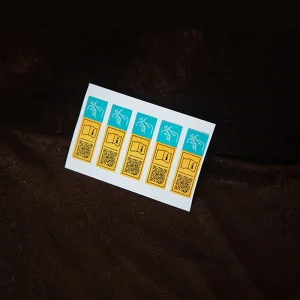
Custom Adhesive Labels with Heavy-Duty Thick Backing Paper
Explore Product Specs
Explore our core engineered liner systems, produced with strict caliper consistency and calibrated silicone release profiles for high-speed automated application.
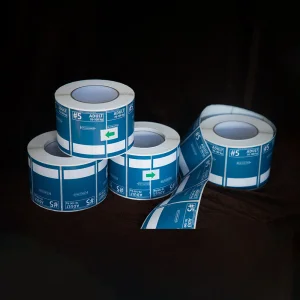
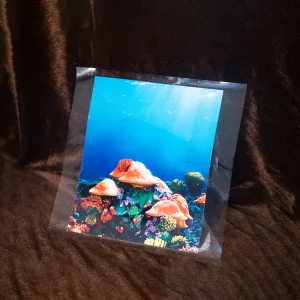
As Singapore anchors its position as Southeast Asia's premier hub for advanced manufacturing, biomedical sciences, and cold-chain logistics under the Manufacturing 2030 Vision, the technical demands placed on pressure-sensitive label components—specifically backing paper materials—have reached unprecedented levels of rigor.
Automated packaging corridors in Jurong and Tuas require release liners engineered for extreme tensile strength and micro-caliper consistency. A web break during high-speed matrix stripping (exceeding 150 meters/minute) results in costly line stoppages for precision electronics and pharmaceutical lines.
Singapore’s year-round relative humidity exceeding 80% induces hygroscopic stress on paper substrates. Without specialized polymer sealing (such as dual-sided PE extrusion or clay coatings), standard backing papers absorb moisture, causing edge-curl, label lay-flat distortion, and sensor read failures on automatic labeling heads.
Perishable food distribution and biomedical shipments passing through Changi Airfreight Centre depend on freezer-grade acrylic and hot-melt adhesives. The backing liner must maintain stable release force across broad thermal shifts—from ambient tropical air to -80°C ultra-deep freeze storage.
The functional efficiency of a self-adhesive label system depends 50% on the facestock and adhesive, and 50% on the backing paper dynamics. A release liner is not waste material; it is a structural carrier optimized for silicone anchor coats, die-cutting anvil protection, and optical sensor transmission.
Selecting the correct backing paper substrate requires balancing tensile strength, translucency, die-cut anvil resistance, and silicone coating stability. The matrix below outlines our core liner specifications engineered for international supply chains.
| Substrate Type | Grammage Range | Caliper Tolerance | Light Translucency | Primary Industrial Use Case in Singapore |
|---|---|---|---|---|
| Supercalendered Glassine (White/Honey/Blue) | 54 g/m² – 90 g/m² | ± 3 µm | 45% – 55% (High) | Automatic high-speed roll labeling, pharmaceutical vials, electronic barcode reels. |
| Clay-Coated Kraft (CCK) Paper | 65 g/m² – 120 g/m² | ± 5 µm | Opaque (< 15%) | Flat-sheet labels, indoor/outdoor sign graphics, laser-engraved ABS backings. |
| Poly-Coated Kraft (PCK / PE-Sealed) | 90 g/m² – 140 g/m² | ± 4 µm | Opaque (< 10%) | Humid ambient warehouse storage, heavy-duty outdoor machinery identification. |
| PET Release Film (Polyester Liner) | 23 µm – 75 µm | ± 1 µm | 90%+ (Ultra-Clear) | Semiconductor cleanrooms, zero-dust optical displays, high-speed thin-film converting. |
Established in February 1992, Xiamen Lianhua Printing Co., Ltd. brings over three decades of conversion expertise to global OEM/ODM partnerships. Our smart facility in Xiamen provides Singaporean enterprises with an resilient supply chain bridge.
Our multi-station 5-roll coating heads apply ultra-thin, uniform solventless silicone layers (0.8 to 1.2 g/m²). Thermal curing is monitored in real-time via laser telemetry, preventing un-cured silicone migration that degrades adhesive tack over time.
Integrated ultrasonic tension systems prevent micro-fractures in glassine paper fibers during high-speed slitting. Caliper variations are contained within ±2.5 micrometers, eliminating die-cutter punch-through risks on automatic converting lines.
Situated directly across the Fujian maritime corridor, Lianhua Printing ships containerized liner stock to the Port of Singapore Authority (PSA) within 3 to 5 transit days, granting Singaporean factories near-shore supply flexibility with optimized scale economics.
Tailored backing paper and specialized material configurations engineered for localized operational environments across Singapore's industrial parks.
Cryogenic labels utilizing moisture-sealed glassine liners. Formulated to withstand condensation during transfer from room temperature to LN2 (-196°C) bio-banks without release liner delamination or adhesive embrittlement.
Ultra-clean PET release films featuring anti-static (ESD) silicone treatments. Prevents airborne particulate attraction and static discharge during automated wafer box labeling and component tray sealing.
Heavy-duty, high-tack tire and container labeling materials with thick kraft backing. Resists tearing when applied to rough, oily, or frosted wooden pallet surfaces and rubberized freight containers.
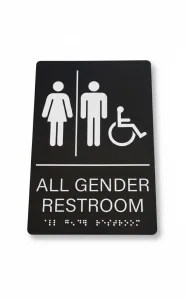
Laser-engravable ABS dual-color boards and tactile Braille architectural plates built for high foot-traffic, UV exposure, and strict ADA/building code compliance across Singapore’s commercial infrastructure.
Browse our complete global export portfolio certified under ISO 9001 quality systems and fully compliant with international REACH & RoHS standards.
Expert answers addressing release force dynamics, humidity control, die-cutting precision, and international compliance for backing paper materials.
Paper is a hygroscopic material that expands and contracts as it absorbs or desorbs moisture from ambient air. In Singapore, where humidity frequently reaches 80%–90% RH, untreated paper backing absorbs moisture from the edges, leading to "wavy edges" or severe lay-flat curling.
Lianhua Printing Solution: We utilize dual-sided Poly-Coated Kraft (PCK) or moisture-sealed Clay-Coated Kraft (CCK) substrates. By extruding a micro-thin polyethylene barrier film on both sides of the raw kraft base prior to silicone coating, atmospheric moisture absorption is sealed out, guaranteeing 100% flat feeding through high-speed automatic applicators.
The choice depends directly on your application speed, optical sensor setup, and die-cutting parameters:
Liner cut-through occurs when the die-cutting blade pierces through the facestock and adhesive layer and strikes into the backing paper, creating micro-notches. This severely weakens the liner's tensile strength, leading to catastrophic web snaps on dispensing machines.
To avoid this, we maintain strict caliper tolerance control (within ±2.5 microns) across the entire master roll width. Furthermore, our glassine substrates undergo intensive supercalendering, creating a highly compressed, uniform anvil layer that withstands precise die blade depth settings without fracturing underlying wood fibers.
Yes. Release force is measured in grams per 25mm width pulled at a 180-degree angle (FINAT FTM 10 test standard). We offer fully customized release profiles ranging from Ultra-Light Release (3g – 8g) for fragile face materials, to Standard Release (10g – 20g) for high-speed labeling, up to Tight Release (30g – 60g) for heavy-duty industrial roll-to-roll applications and differential double-sided tape backings.
All backing paper materials and silicone systems manufactured by Xiamen Lianhua Printing strictly adhere to international environmental protocols. Our products are 100% RoHS and REACH compliant, free from SVHC (Substances of Very High Concern), fluorocarbons, and heavy metals. FSC-certified renewable wood pulp glassine options are also available upon request to support corporate ESG initiatives in Singapore.
Whether you require anti-curl kraft liners, high-translucency glassine reels, or custom silicone release force calibration for Singapore's advanced manufacturing hubs, our engineering team is ready to assist.