
Engineered Backing Paper Products for Hamburg Industrial Applications
High-grade release liners designed for extreme tensile strength, moisture resistance, and high-speed automated label conversion in the Port of Hamburg and Northern German logistics hubs.

Custom Adhesive Labels with Heavy-Duty Thick Backing Paper Company
View Product Specs
High-Quality Adhesive Labels with Anti-Curl & Moisture-Resistant Sealed Backing Paper
View Product Specs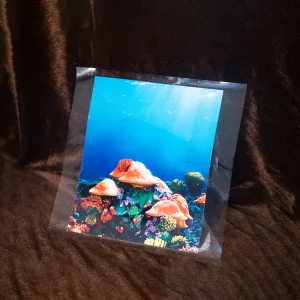
High-Quality Adhesive Labels with High-Translucency Backing Paper Manufacturers
View Product Specs
Custom Heavy-Duty Backing Paper Materials & Structural Liners
View Product SpecsHamburg's Commercial & Industrial Landscape for Backing Paper Sourcing
Why Northern Germany's primary logistics gateway demands ultra-durable, dimensionally stable, and climate-resilient release liner solutions.
Maritime & Port Logistics Sourcing
As Europe's third-largest container port, the Port of Hamburg handles over 7.7 million TEUs annually. Industrial labels utilized across terminals like Altenwerder and Eurogate must withstand high salinity, marine humidity, and extreme mechanical shearing on high-speed labeling conveyers. Release paper stability is crucial to avoid label pre-dispensing during oceanic transit.
Cold Chain & Life Sciences Hubs
With major pharmaceutical clusters and food cold-storage facilities throughout Altona, Harburg, and the surrounding Metropolitan Region (Metropolregion Hamburg), specialized anti-curl release liners are required. Standard glassine tears under sub-zero conditions (-28°C); our moisture-sealed silicone release paper guarantees flawless web tension during rapid automatic application.
Chemical & Heavy Industrial Clusters
Northern Germany's chemical parks (e.g., Brunsbüttel, Moorburg) enforce strict BS5609 Section 2 & 3 certification for GHS chemical drum identification. Backing paper materials must resist chemical spillages, solvent contamination, and extreme heat during industrial curing processes, necessitating high-grammage Clay-Coated Kraft (CCK) and Polyethylene-Coated Kraft (PEK) liners.
Release Liner Engineering: Technical Roadmap & Future Outlook
Information Gain Analysis: Understanding the mechanical interaction between cross-linked silicone polymers, paper fiber densification, and automated die-cutting performance.
1. Substrate Micro-Architecture & Caliper Uniformity
Backing paper (release liner) performance is fundamentally governed by pulp density, surface smoothness, and caliper consistency. For high-speed rotary die-cutting systems used by German converting plants, a caliper tolerance within ±2 microns is critical. Variations cause die blades to score or cut into the release liner, causing catastrophic liner snapping during automated high-speed dispensing (up to 1,200 labels/minute).
We utilize super-calendered glassine paper (54g/m² to 90g/m²) subjected to multi-stage steam calendering. This closes paper surface pores, forming a non-porous foundation that prevents excessive silicone absorption, ensuring uniform silicone coat weights without micro-pinholes.
2. Solventless Thermal Platinum Silicone Systems
The release mechanism relies on cross-linked polydimethylsiloxane (PDMS) networks. Modern European sustainability mandates require total elimination of solvent-based coatings. Our manufacturing lines implement 100% solventless thermal platinum-cured silicone systems.
By controlling thermal curing temperatures between 140°C and 160°C and optimizing cross-linker ratios, we achieve targeted release force profiles ranging from Ultra-Light (3–6 cN/25mm) for high-speed automatic apply systems, to Heavy Release (25–45 cN/25mm) for complex thick-gauge synthetic labels and industrial gaskets.
Backing Paper Material Specifications & Industrial Performance Matrix
| Material Category | Grammage (g/m²) | Tensile Strength (MD/CD) | Moisture Range (%) | Primary Industrial Use in Hamburg |
|---|---|---|---|---|
| Super-Calendered Glassine (Yellow/Honey/White) | 58 - 80 g/m² | > 70 N/15mm (MD) | 6.0% - 7.5% | High-speed automated logistics labeling, FMCG packaging, pharmaceutical dispensers. |
| Clay-Coated Kraft (CCK) Paper | 80 - 135 g/m² | > 110 N/15mm (MD) | 5.0% - 6.5% | Flat-bed die cutting, thick synthetic vinyl/PET labels, industrial warning signs. |
| Polyethylene-Coated Kraft (PEK) | 90 - 150 g/m² | > 130 N/15mm (MD) | 4.5% - 6.0% | Extreme humidity outdoor exposure, shipping containers, marine logistics labels (BS5609). |
| BOPP / PET Release Film Liners | 23μm - 50μm | > 200 N/mm² | < 0.1% | Ultra-clear "no-label look" premium beverage bottles, high-precision electronics manufacturing. |
Macro-Industry Solutions for German & European Supply Chains
Tailored backing paper formulations engineered to address specific environmental and operational challenges across key sectors.
Automotive & Aerospace Parts Identification
Supplying Tier-1 automotive manufacturers in Lower Saxony and aerospace operations in Hamburg-Finkenwerder. Requires high-caliper PEK release liners that maintain lay-flat dimensional stability during multi-color thermal transfer printing and high-temperature adhesive lamination processes.
Hazardous Chemical Containers (BS5609)
Chemical drum labels exported via the Elbe River face ocean immersion and intense UV radiation. Our dual-side PE-laminated release liner ensures zero moisture migration into the adhesive layer prior to application, keeping pressure-sensitive acrylic adhesives perfectly intact.
E-Commerce & High-Speed Express Parcel Hubs
Handling automated sorting at major distribution parks around Northern Germany. Employs 58g/m² honey glassine liners with silicone differential release formulas, facilitating instant peelability for automatic print-and-apply systems operating 24/7 without jam errors.
Regulatory Compliance & Sustainability Standards for Germany
Navigating EU Green Deal, Packaging and Packaging Waste Regulation (PPWR), and strict German environmental certifications.
EU Regulatory Compliance Alignment
European importers and converters based in Hamburg face intense regulatory scrutiny. Our release paper products are fully compliant with:
- REACH Regulation (EC 1907/2006): 100% free from SVHC (Substances of Very High Concern).
- RoHS Directive 2011/65/EU: Zero heavy metal residues in paper or silicone coatings.
- BfR Recommendation XXXVI: Food-contact safe backing paper grades suitable for direct/indirect food labeling.
- FSC™ / PEFC Chain of Custody: Responsibly sourced wood pulp from certified sustainable forestry management.
Circular Economy & Release Liner Recycling
Under the EU's updated Packaging & Packaging Waste Regulation (PPWR), silicone release waste management is paramount. Spent backing paper can no longer be sent to land-fills or energy recovery indiscriminately.
We engineered easily repulpable glassine release paper formulations with minimal silicone coating weight (< 1.0g/m²). This enables efficient de-siliconization during recycling, matching the requirements of circular economy initiatives like CELAB Europe and Cycle4Green.
China Industry 4.0: Supply Chain Resilience & OEM Efficiency
Leveraging Xiamen Lianhua Printing's 30+ years of high-volume manufacturing excellence to deliver cost advantages and technical precision directly to Hamburg maritime terminals.
Automated Co-Extrusion & Slitting Lines
Our modern Xiamen facility operates ultra-wide high-speed coating lines equipped with real-time infrared silicone coat-weight sensors. Closed-loop automated adjustments ensure zero coat-weight drift across 1,500mm web widths, yielding consistent release values end-to-end.
Automated Optical Inspection (AOI)
100% surface vision inspection systems detect microscopic defects, paper dust, pinholes, or silicone skips at line speeds exceeding 300 meters per minute. Defect mapping guarantees that zero compromised backing paper reaches converting equipment.
Direct Ocean Freight Sourcing to Hamburg
Xiamen's deep-water port offers direct container shipping routes to Hamburg Container Terminal Burchardkai (CTB). With moisture-proof export packaging (vacuum-sealed polywrap + rigid edge protectors), materials arrive factory-fresh despite 30-day ocean transit.
Global Procurement Sourcing & Quality Audit Guide
How European supply chain managers and label converters can evaluate release paper performance before high-volume ordering.
FINAT Standardized Test Method Evaluation
We advise procurement teams in Germany to evaluate release paper against global industry standard FINAT test procedures:
- FINAT FTM 3 (Low Speed Release Force): Measures force required to separate pressure-sensitive adhesive face stock from backing paper at 300mm/min. Ensures label lay-flat integrity.
- FINAT FTM 4 (High Speed Release Force): Evaluates release characteristics at 10 m/min to 300 m/min, simulating automatic label application equipment speeds.
- FINAT FTM 10 (Subsequent Adhesion): Measures residual adhesive performance post-release to verify zero silicone transfer/migration onto the adhesive matrix.
Total Cost of Ownership (TCO) Optimization
Selecting cheaper, non-calendered release liners frequently results in high invisible costs: web breakage down-time, blade dulling during converting, and adhesive bleeding in storage.
By transitioning to high-purity dense glassine paper engineered with optimized silicone cross-linking density, converting plants achieve up to 18% faster conversion speeds, lower scrap rates, and zero adhesive bleed under cold storage compression.
Expanded Backing Paper & Industrial Label Materials Selection
Explore our full OEM product lineup designed for international procurement, label converters, and commercial buyers.
High-Quality Adhesive Labels with Anti-Curl & Moisture Sealed Backing Paper
View Product Specs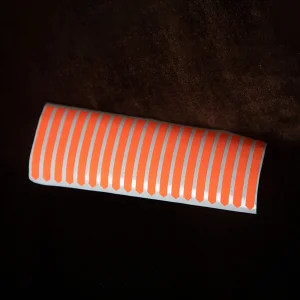
High-Strength Double-Coated Adhesive Labels Manufacturer
View Product Specs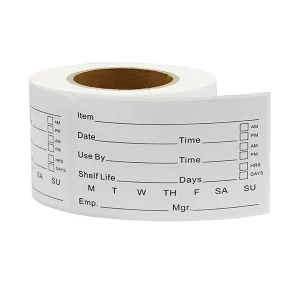
Custom Low Temperature Resistant Freezer Adhesive Labels
View Product Specs
High-Quality Adhesive Labels with High-Translucency Backing Paper
View Product Specs
High-Quality Durable Paper Hangers for Clothing Display
View Product Specs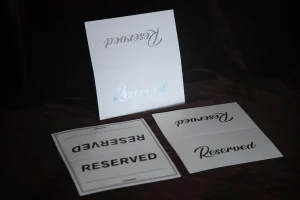
Custom Printed Name Tent Cards for Conferences, Banquets & Hospitality
View Product Specs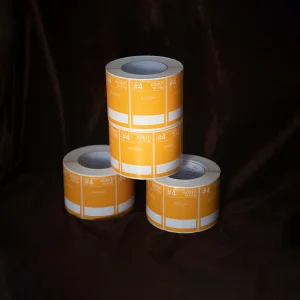
China Affordable and Printer-Friendly Paper-Based Labels Product
View Product Specs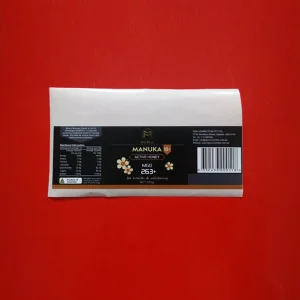
China Flexible PE-Based Adhesive Labels Factory
View Product SpecsBacking Paper Sourcing & Technical Consultation Q&A
Direct answers to technical queries from German label converters, industrial purchasers, and logistics engineers.
Why is high translucency crucial for automated label applicators in Hamburg logistics centers?
Automated print-and-apply dispensing systems rely on optical gap sensors (photoelectric sensors) to detect the space between labels on a roll. High-translucency glassine backing paper allows optical sensors to distinguish between the single liner backing and the face stock accurately. Low-grade opaque paper leads to sensor misfires, misaligned labeling, and line stoppages.
How does anti-curl release backing paper prevent jamming during seasonal climatic shifts in Northern Germany?
Hamburg experiences notable humidity fluctuations between maritime summer conditions and cold, dry winter air. Standard paper liners absorb atmospheric moisture unevenly, leading to edge curling ("waving") or tight tension. Anti-curl backing paper features dual-side moisture-seal poly-coatings or equilibrium steam calendering that stabilizes internal moisture content between 6.0% and 7.5%, ensuring pristine lay-flat performance.
What is the difference between solventless silicone coating and solvent silicone coating for release liners?
Solventless platinum silicone systems use 100% active liquid polymers cured via thermal heat without volatile organic compounds (VOCs). This method yields cleaner liners, zero residual odor, and full EU REACH/RoHS compliance. Solvent-based coatings offer specific release tuning but carry higher environmental risks and potential solvent migration that can degrade sensitive pressure-sensitive adhesives over long storage periods.
How do you ensure zero shipping damage during ocean freight from Xiamen to the Port of Hamburg?
All finished master rolls and slit rolls are poly-wrapped in heavy-duty vapor-barrier shrink film, packed with industrial desiccant bags, protected by 5mm thick high-impact edge protectors, and mounted onto ISPM-15 heat-treated fumigated wooden pallets. Containers are inspected for seal integrity to eliminate moisture ingress during ocean transit.
Can Xiamen Lianhua Printing provide customized release force levels for specialized adhesive formulas?
Yes. Our engineering laboratory conducts customized cross-linking ratio adjustments on our platinum silicone lines. We match release force values specifically to your adhesive chemistries—whether aggressive hot-melt rubbers, solvent acrylics, or removable water-based acrylics—guaranteeing exact release dynamics per FINAT FTM 3 & FTM 4 testing protocols.
Accelerate Your Backing Paper Supply Chain Efficiency
Request technical data sheets (TDS), customized release force sample kits, or a competitive quotation engineered for the Hamburg and broader European market.
Send Inquiry Now